Science
Learn science
Explain matter, energy, living things, Earth, and space by connecting observations to testable models.
Space & the universe
The Solar System, planets, stars, galaxies, cosmology, astronomical observation and the search for life.
The Moon's changing phases
See each phase as a changing view of a sunlit sphere, then use that geometry to explain the Moon's schedule and its eclipses.
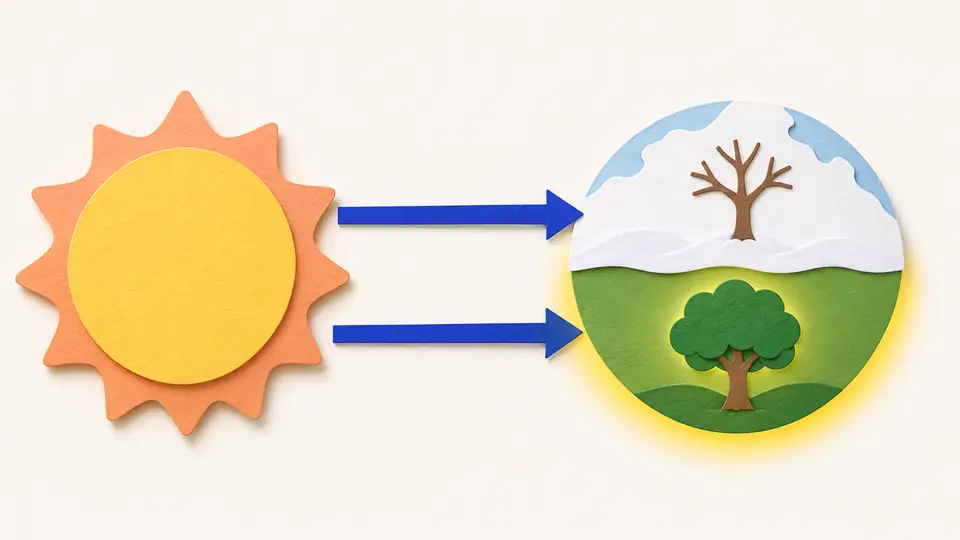
Why the seasons change
Rule out the distance explanation. Then use axial tilt, sun angle and day length to explain why summer is warm and why the warmest month isn't the one with the longest days.
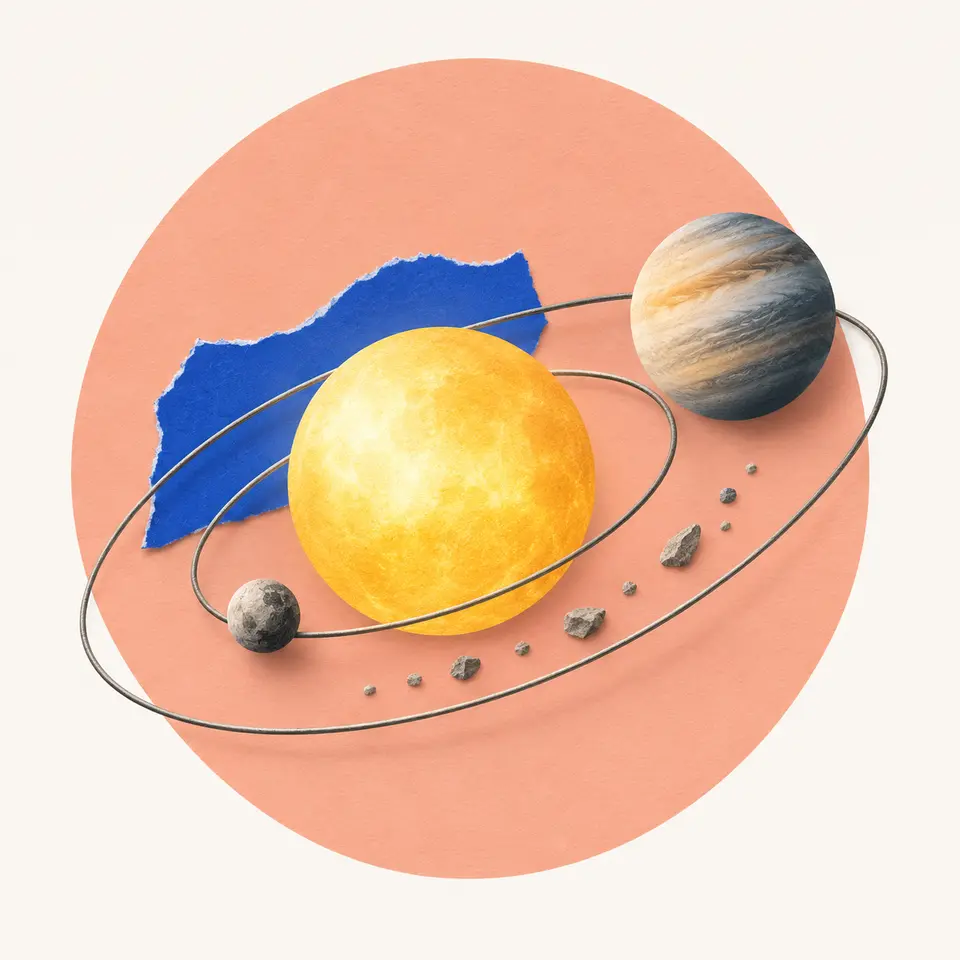
The Solar System
Meet the Sun, eight planets and the smaller bodies around them, get a feel for the real distances, and see why rocky worlds sit close in and giants far out.
The Big Bang and the expanding universe
The universe began hot and dense about 13.8 billion years ago and has been expanding since. See what that claim means, and the three observations that support it.
Forces, energy & matter
Motion, gravity, heat, waves, light, electricity, magnetism, relativity, quantum ideas and fundamental matter.
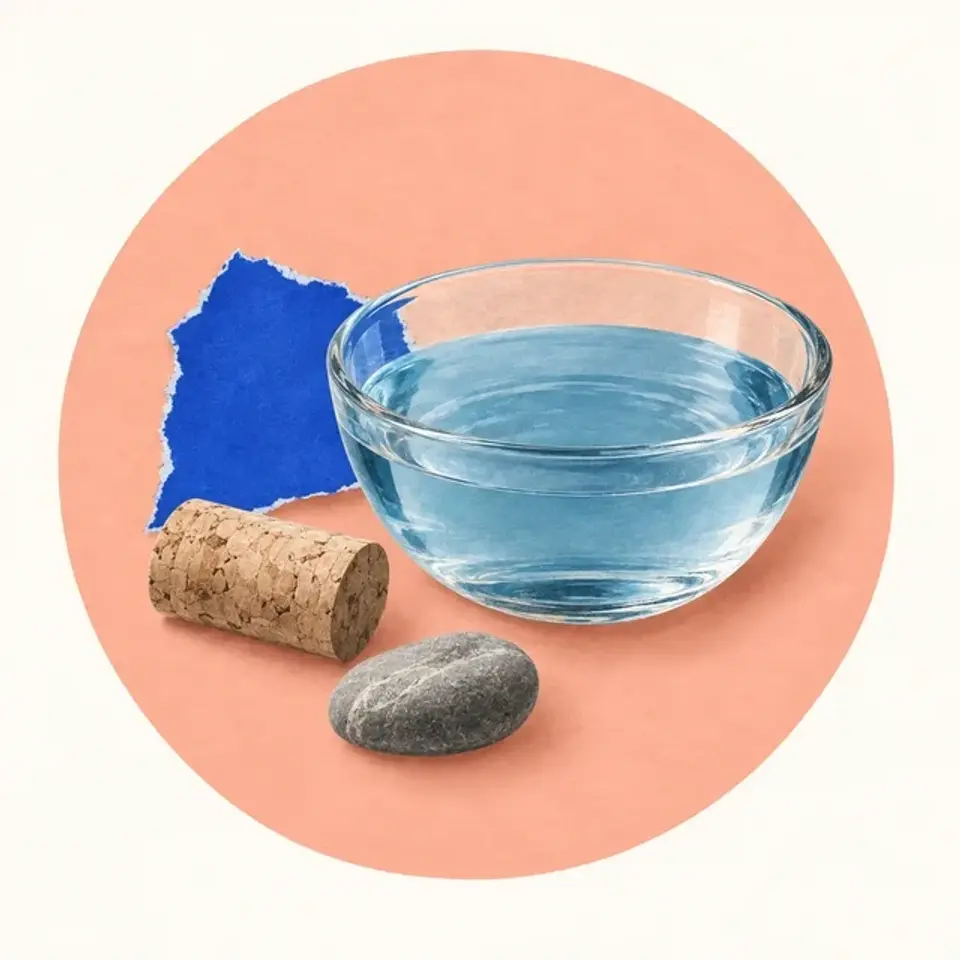
Why things float or sink
Trace the upward push of water to pressure and to the water an object shoves aside. Then predict what cargo, a hull's shape and salt water do to a floating object.
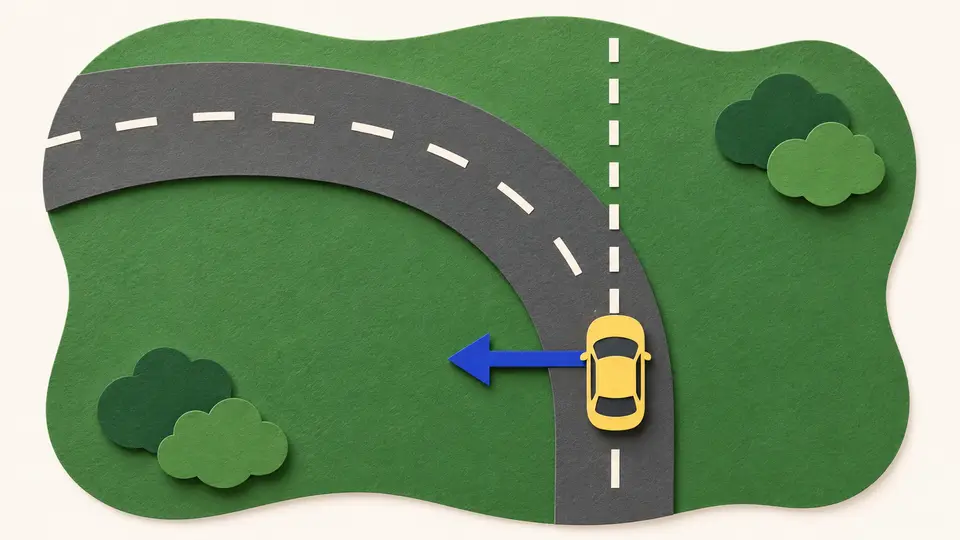
Why things keep moving
Moving things don't stop by themselves. Find out what stops them, what mass really measures, and why astronauts float while gravity is still pulling on them.
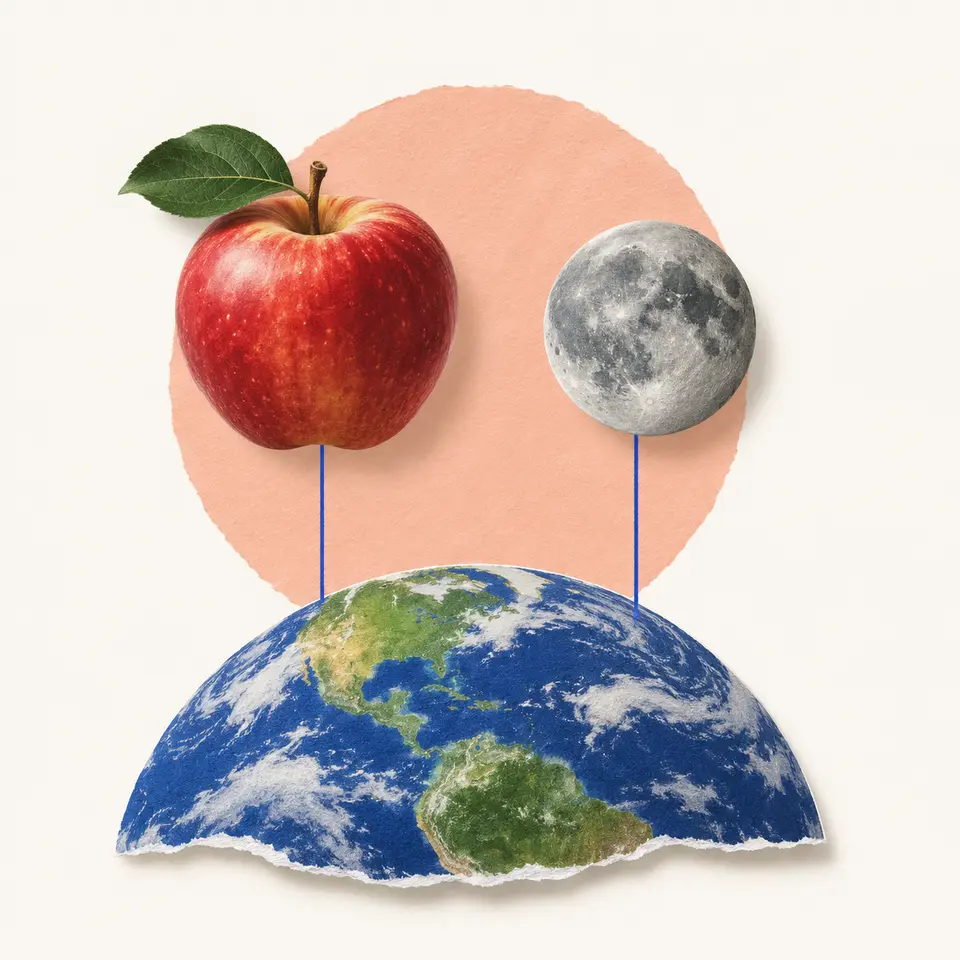
Gravity
Gravity pulls every mass toward every other mass. See why things fall at the same rate, why the Moon doesn't fall down, and how one law covers an apple and a planet.
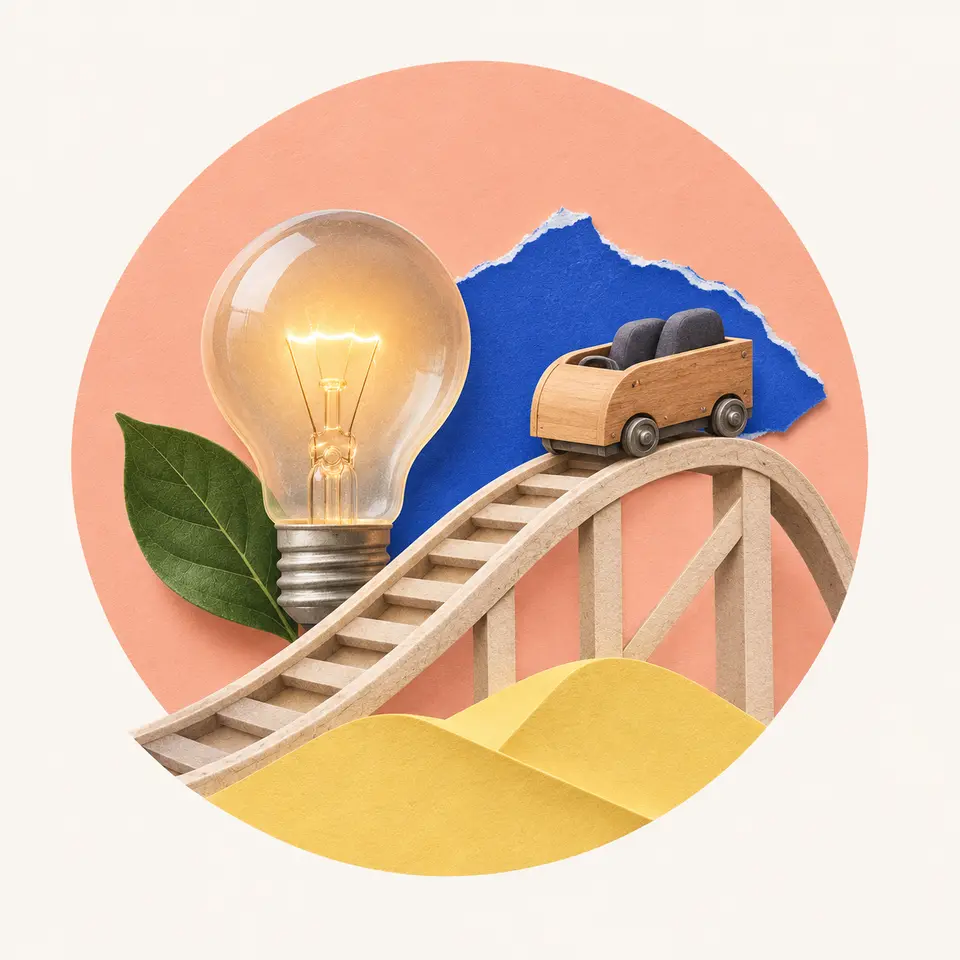
Energy and its conservation
Energy changes form but the total never changes. Follow it through a roller coaster, a light bulb and a power station, trace it back to where it came from, and see how the law was proved.
Chemistry & materials
Atoms, molecules, bonding, reactions, chemical energy, substances and the properties of materials.

Why substances dissolve
Follow particles into solution, separate dissolving speed from solubility, and see why a fizzy drink goes flat.
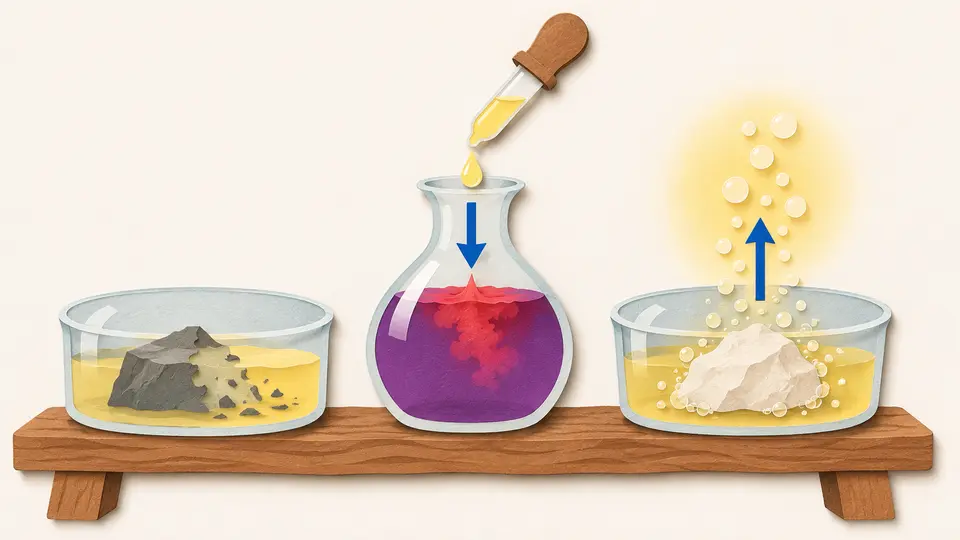
Acids, bases, and what pH measures
See what makes something an acid, how water manages to be an acid and a base at once, and how to read a pH number, including why neutral is 7 only at 25 degrees Celsius.
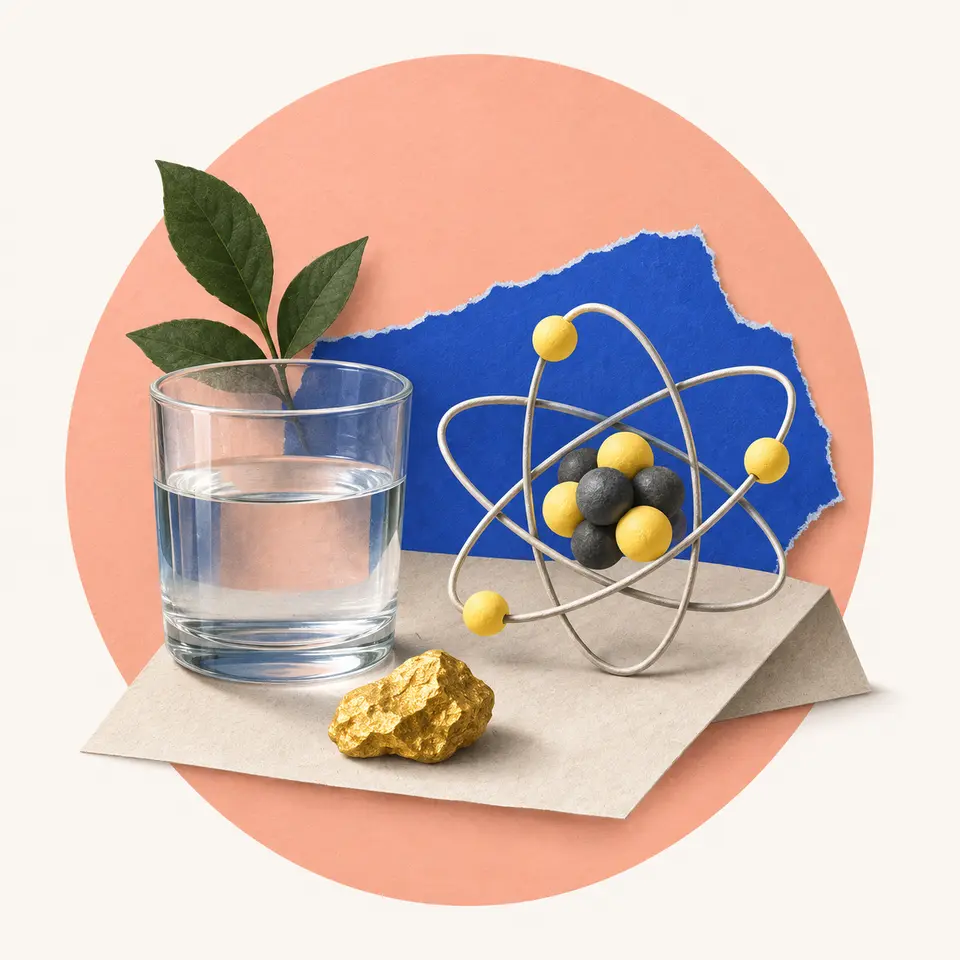
Atoms and elements
All ordinary matter is made of atoms, and each element is one kind of atom. See what's inside an atom, why its proton count makes gold gold, and how we know atoms are real when no one can see one.
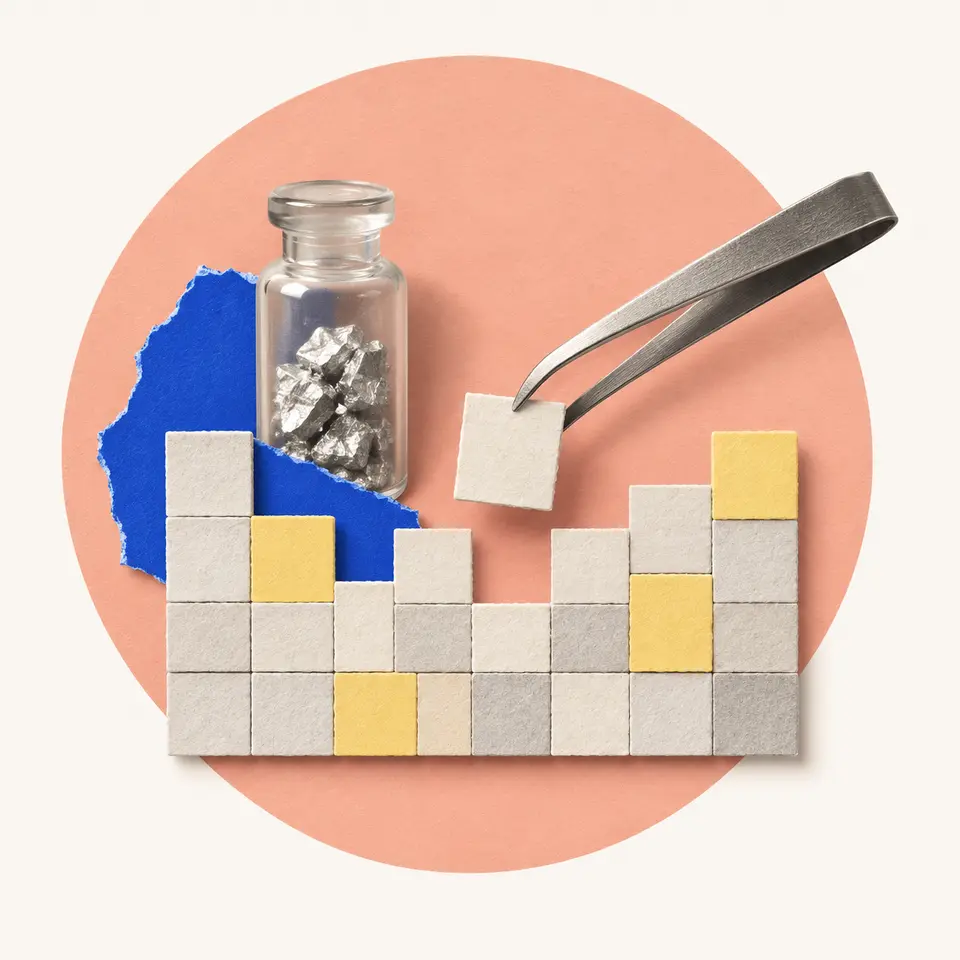
The periodic table
The periodic table lines up elements that behave alike. Learn to read a square, a column and a row, see why columns match, and how Mendeleev predicted elements before anyone found them.
Cells, genes & microbes
Cells, DNA, inheritance, molecular processes, microorganisms, viruses and biotechnology foundations.
DNA, genes, and proteins
Follow genetic information from DNA through the cell's machinery, and see how different cells use different parts of largely the same genome.
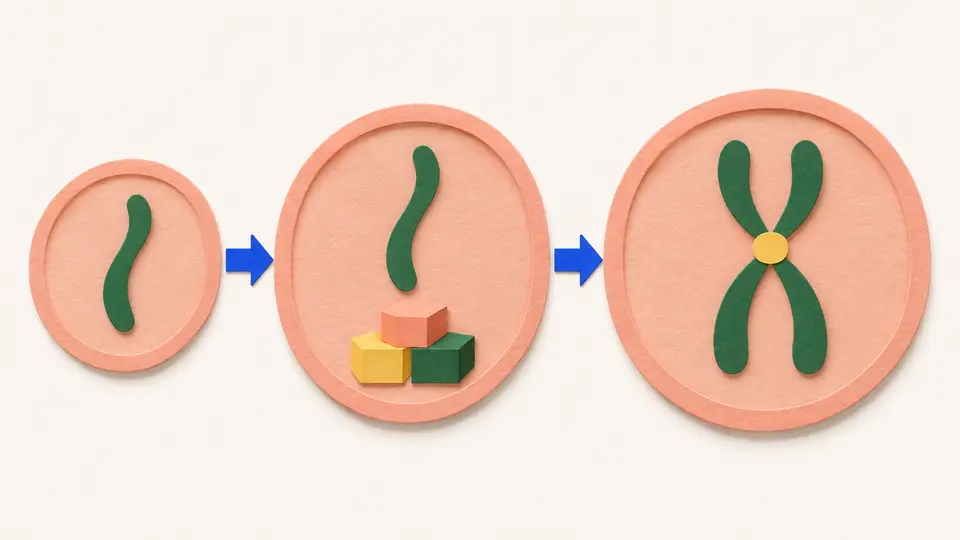
How one cell becomes two
Follow the cell cycle from growth to division and find where its checkpoints sit. Then look at cancer as a failure of that control rather than as fast growth.
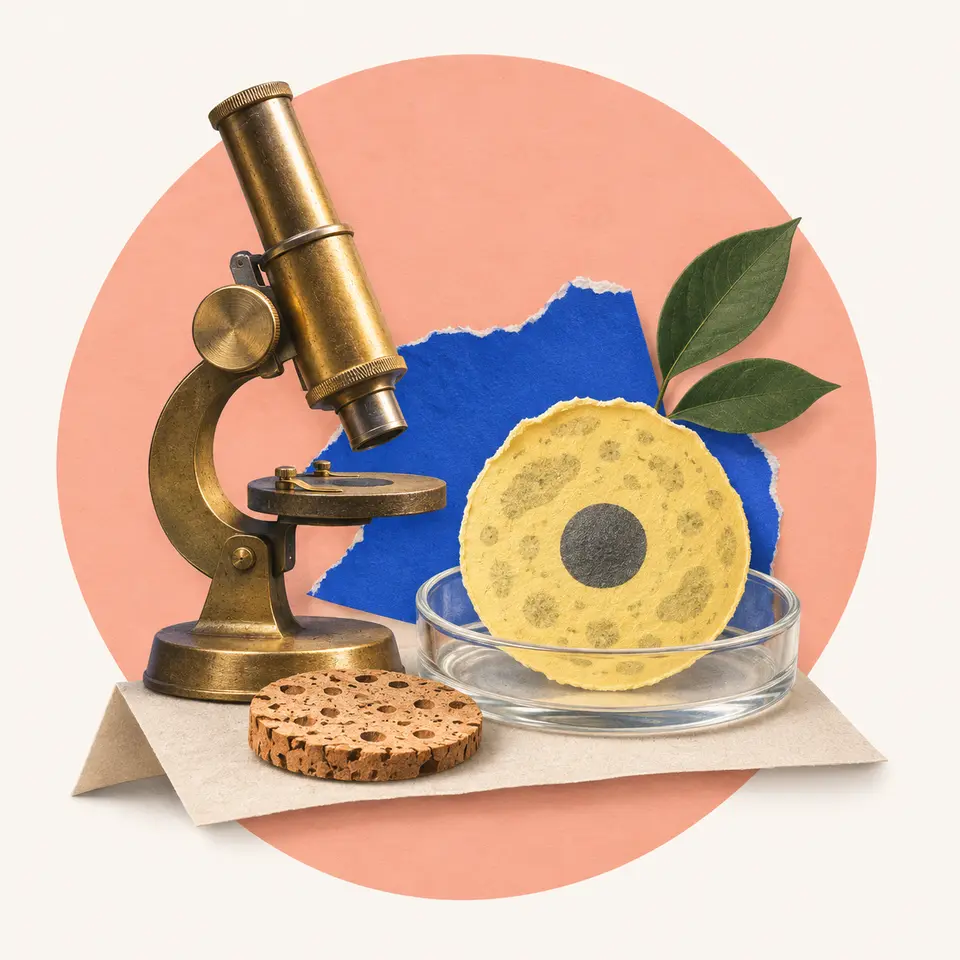
Cells, the units of life
Every living thing is made of cells. See what's inside one, how a bacterial cell differs from yours, and why cells stay so small.
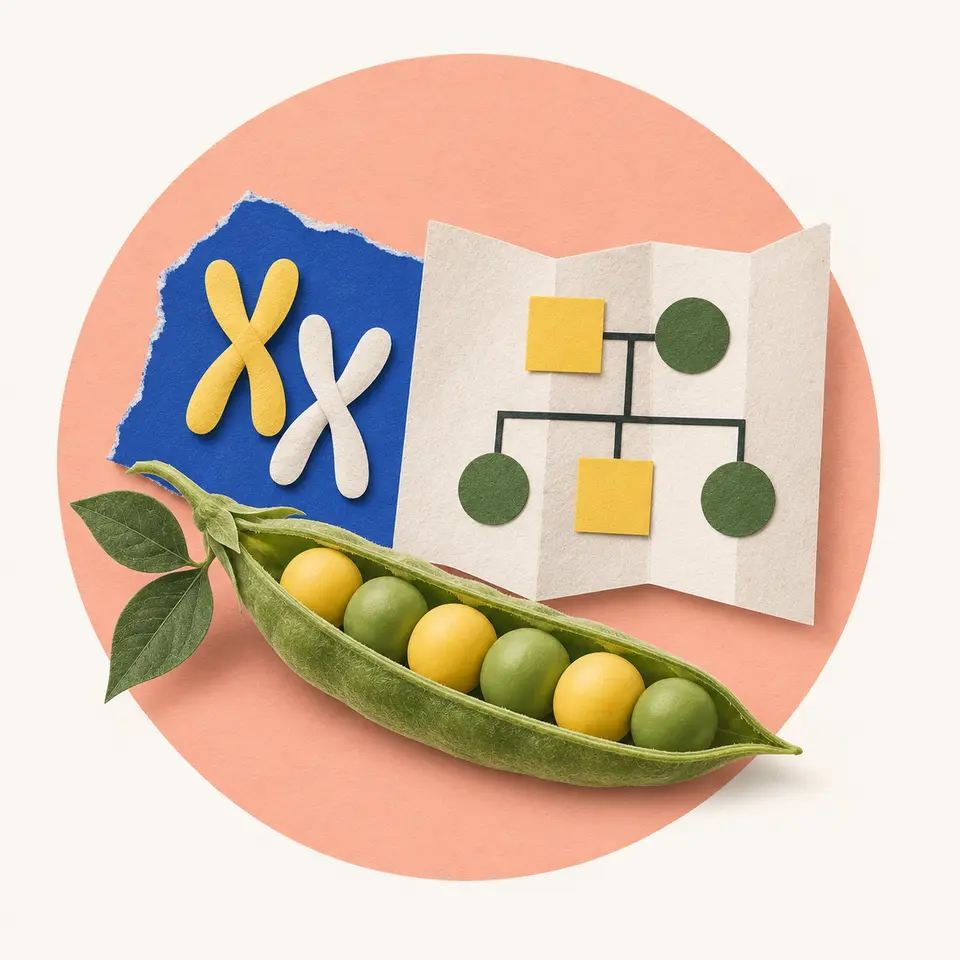
How traits are inherited
Children resemble their parents but aren't copies of them. See how genes come in pairs, how Mendel's peas revealed the rules, and why most human traits don't follow simple ratios.
Living things & evolution
Animals, plants, fungi, comparative body systems, behavior, adaptation, evolution and the diversity of life.
Natural selection without a plan
See how inherited differences and unequal reproduction change a population, with no intention, foresight, or universal ladder of progress involved.
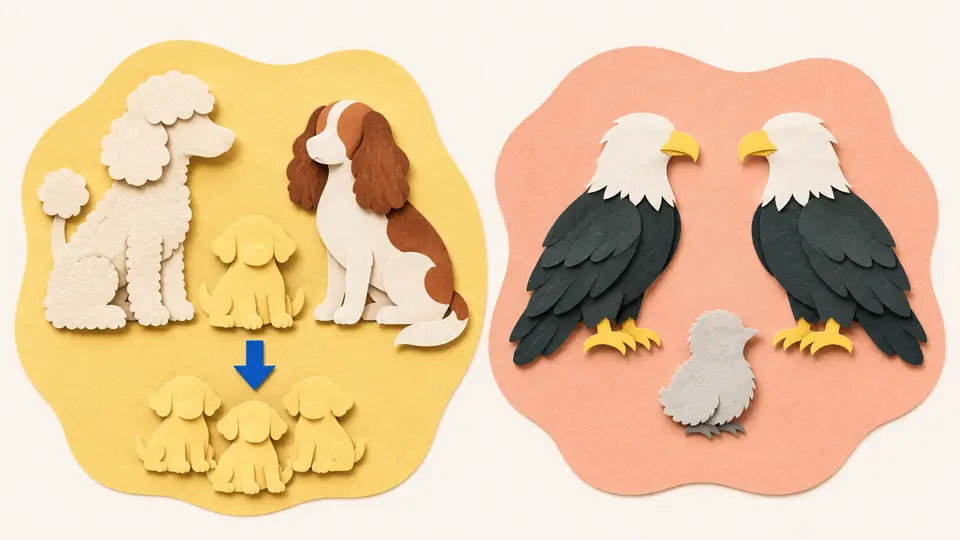
How new species form
Start with what a species is, then follow the two ways populations split and the barriers that keep them from merging again.
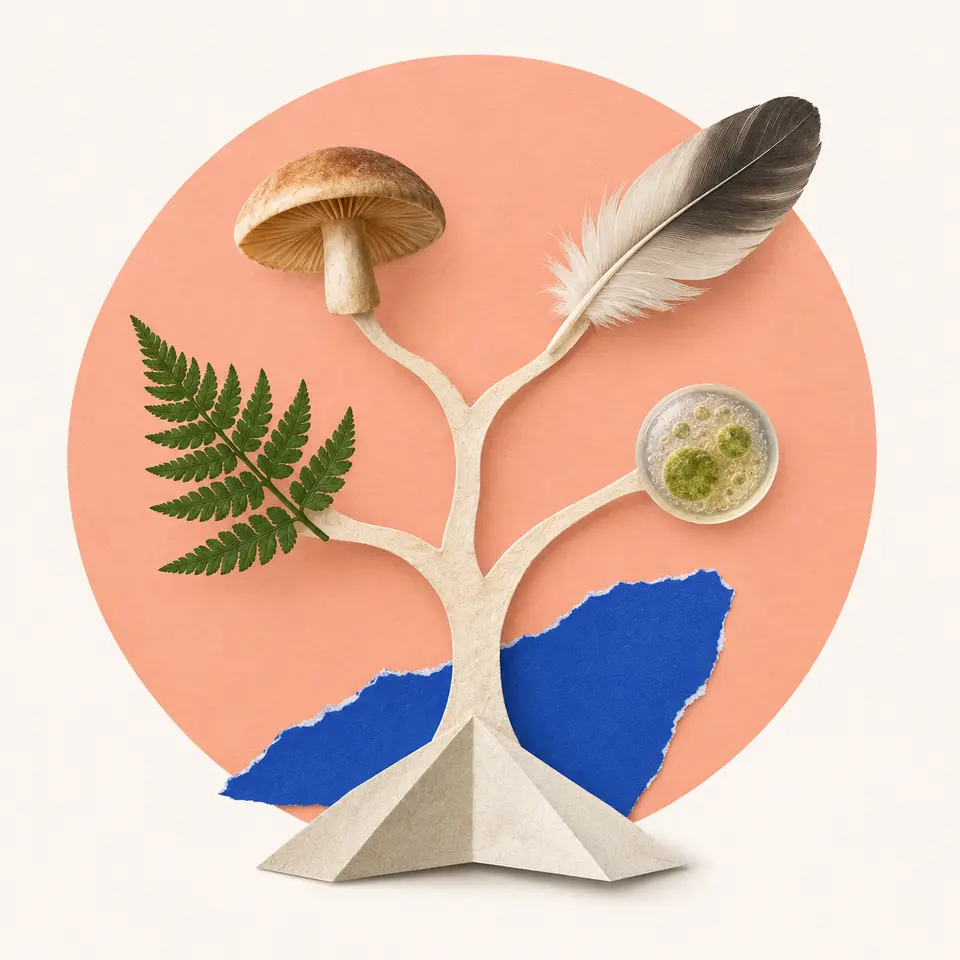
The tree of life and how species are classified
All known life descends from shared ancestors and can be drawn as one branching tree. See how living things are sorted and named, what the main branches are, and how DNA redrew the picture.
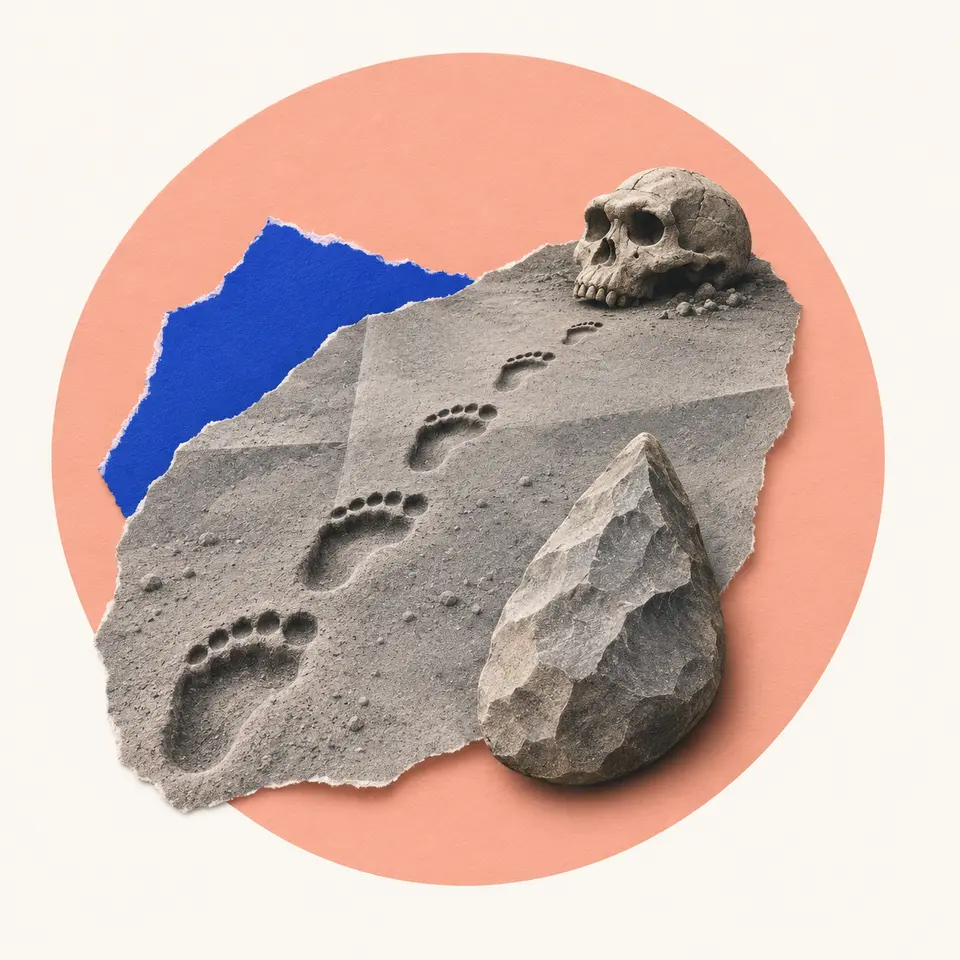
Human evolution
Humans share an ancestor with chimpanzees that lived about 8 to 6 million years ago. Follow the fossils from the first upright walkers to Homo sapiens, and see which of our traits came first.
Earth & its history
Rocks, minerals, plate tectonics, volcanoes, earthquakes, fossils, deep time and planetary history.
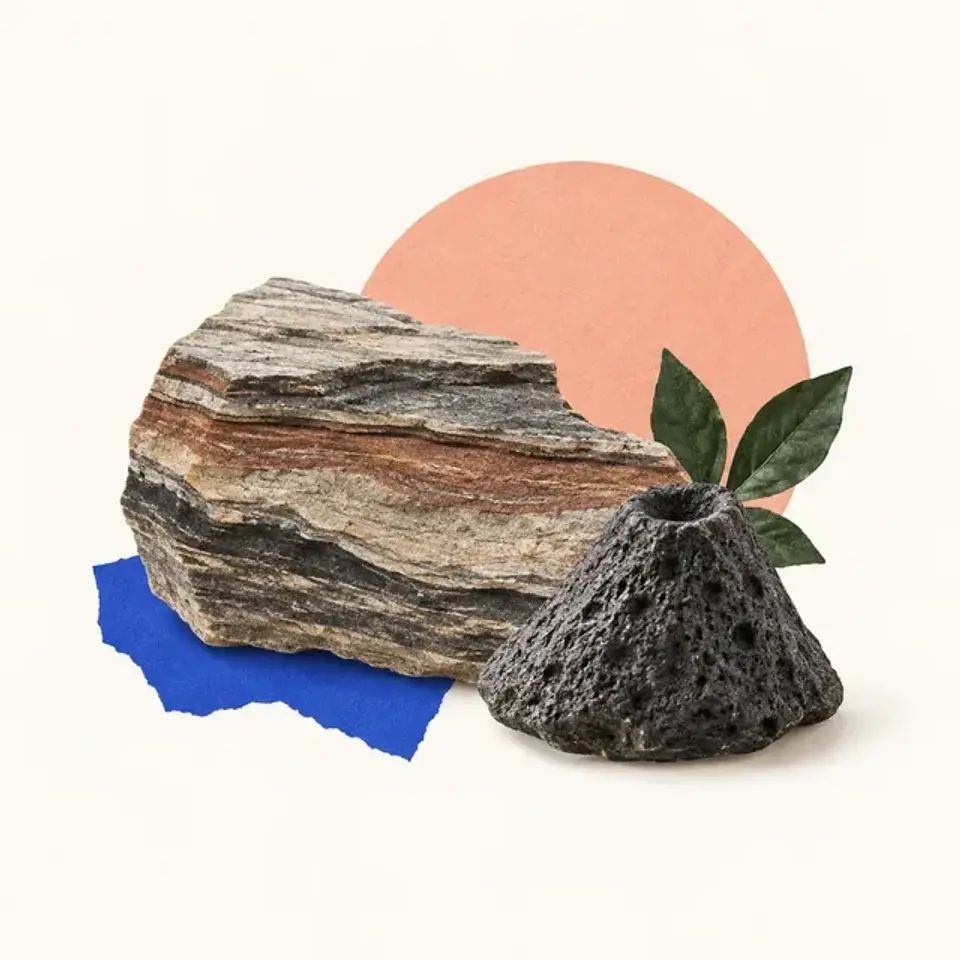
Plate tectonics and moving continents
Earth's outer shell is broken into plates that move a few centimeters a year. See what drives them, what they build where they meet, and how the seafloor and Hawaii's islands recorded the motion.
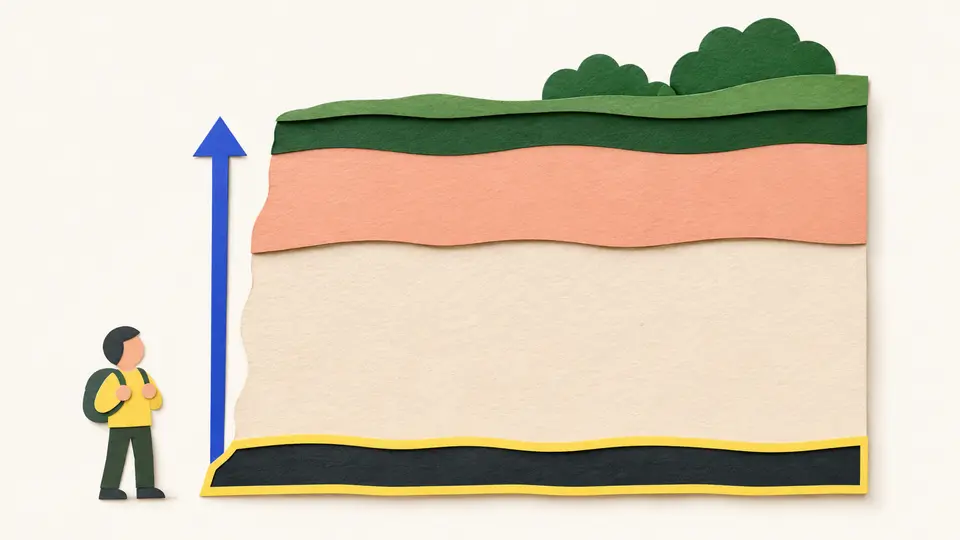
How we know the age of rocks
Rock layers and fossils give the order of Earth's history, and radioactive decay gives the dates. See how the two are joined, and why Earth's own age had to come from a meteorite.
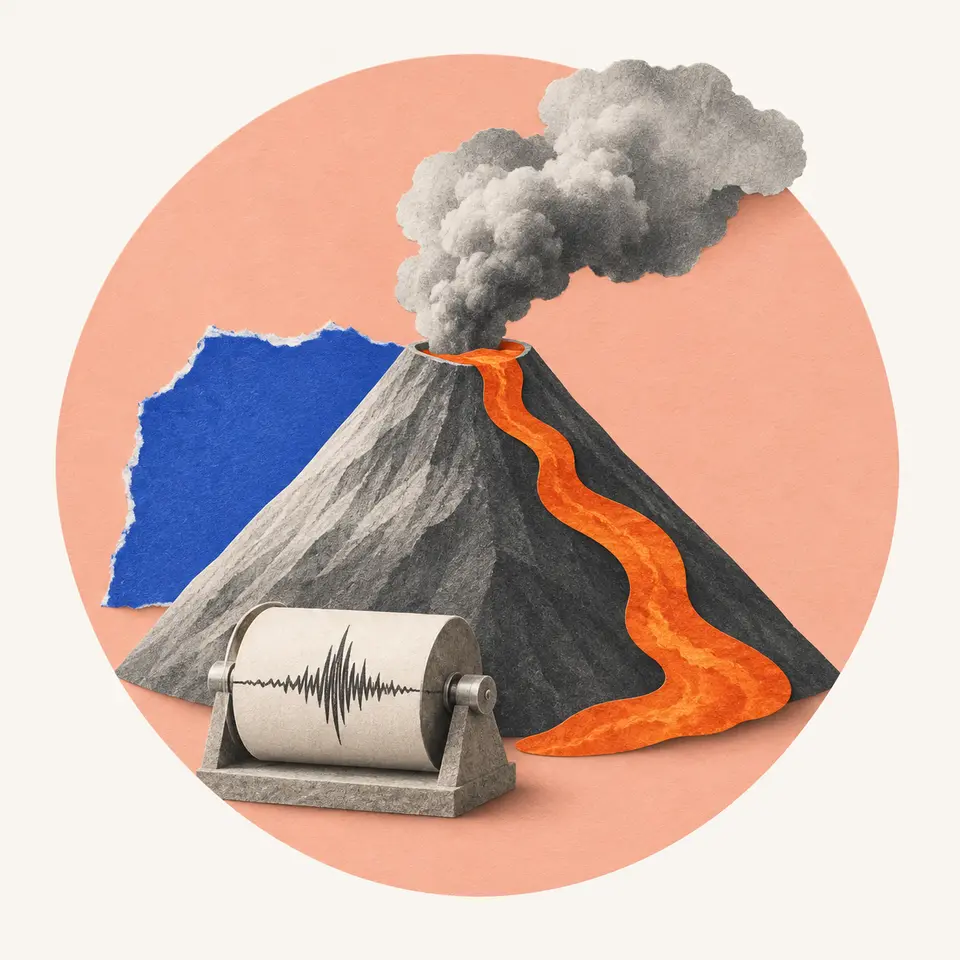
Volcanoes
A volcano is where molten rock reaches the surface. See why volcanoes form where they do, why some ooze and others explode, and how scientists watch for an eruption.
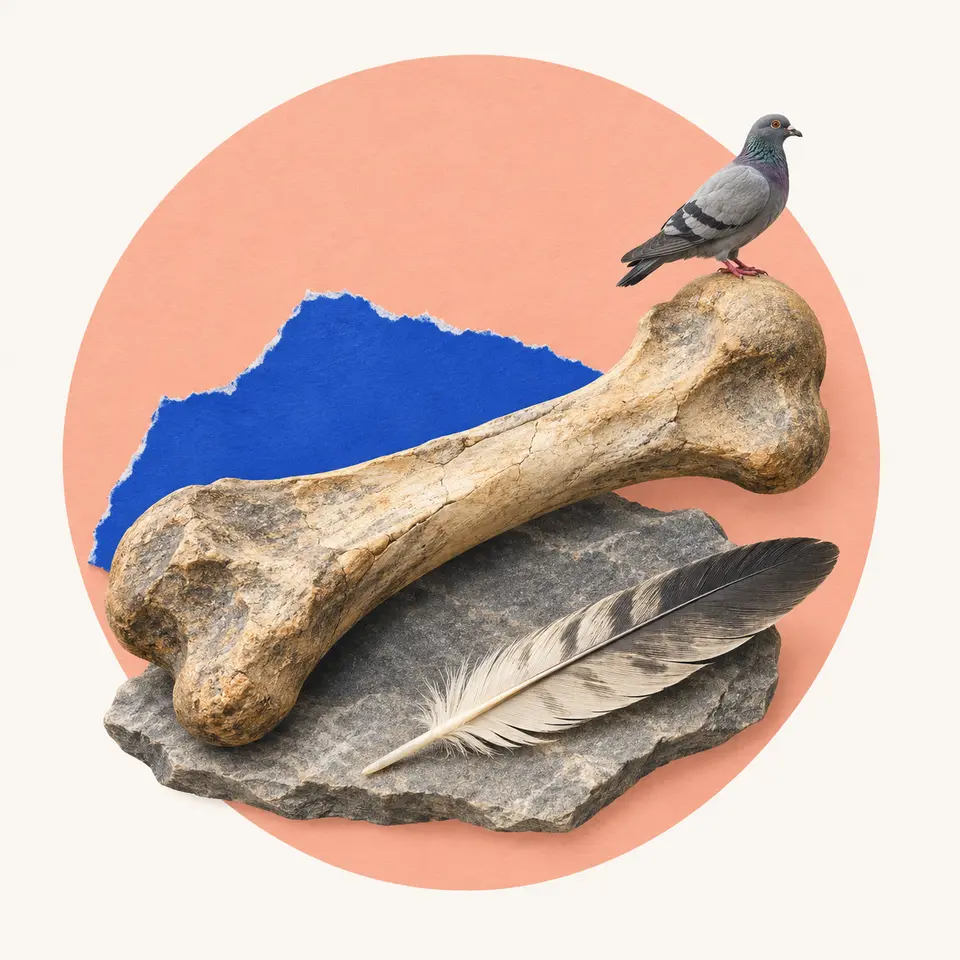
Dinosaurs
Dinosaurs ruled the land for more than 130 million years, and birds are their living descendants. See what makes an animal a dinosaur, how fossils reveal how they lived, and what ended their reign.
Oceans, weather & climate
Ocean circulation, atmosphere, clouds, storms, weather systems, climate processes and the water cycle.
The greenhouse effect
Follow energy into and out of Earth, see how greenhouse gases shift that balance, and tell a forcing from a feedback.
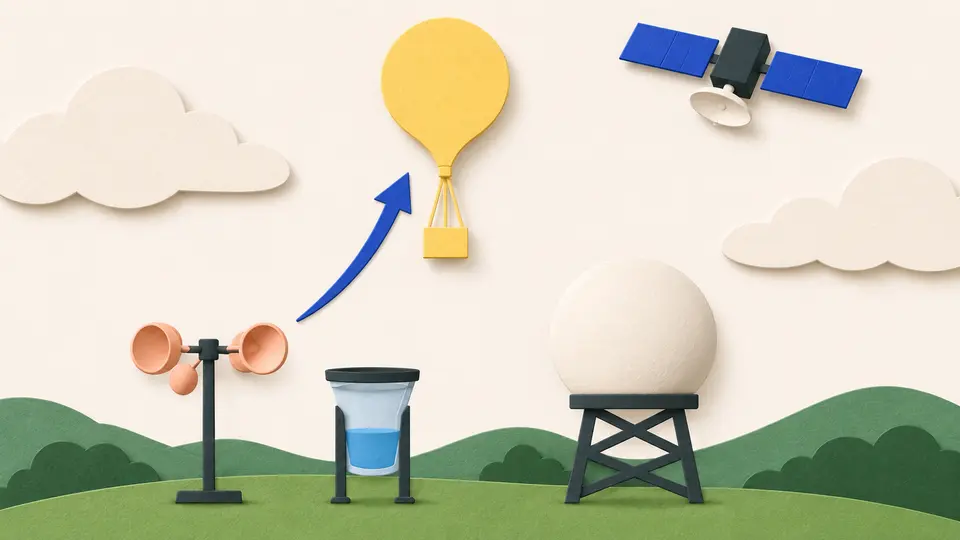
How a weather forecast is made
Follow observations into a model and out the other side as a probability, and find out what a 40% chance of rain does and doesn't claim.
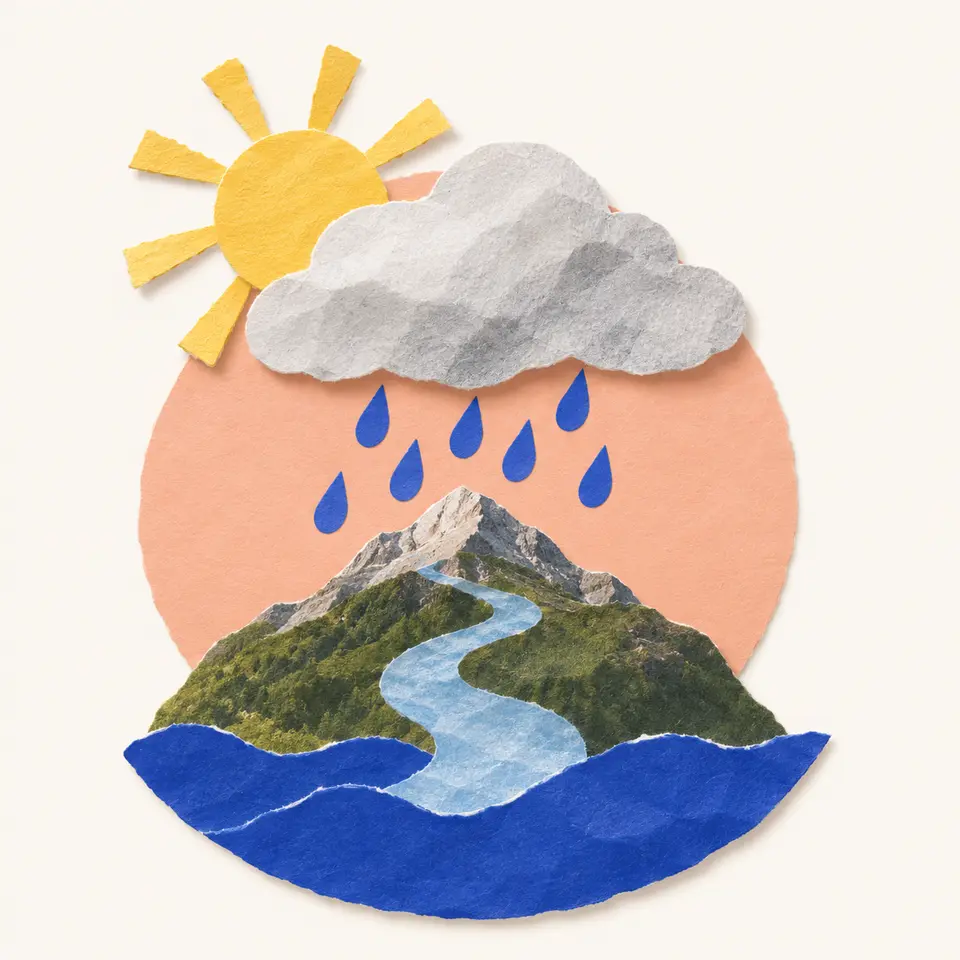
The water cycle
The same water keeps moving between sea, air, land and living things. See what drives it, how long water stays in each place, and why the fresh water people can use is such a small share.
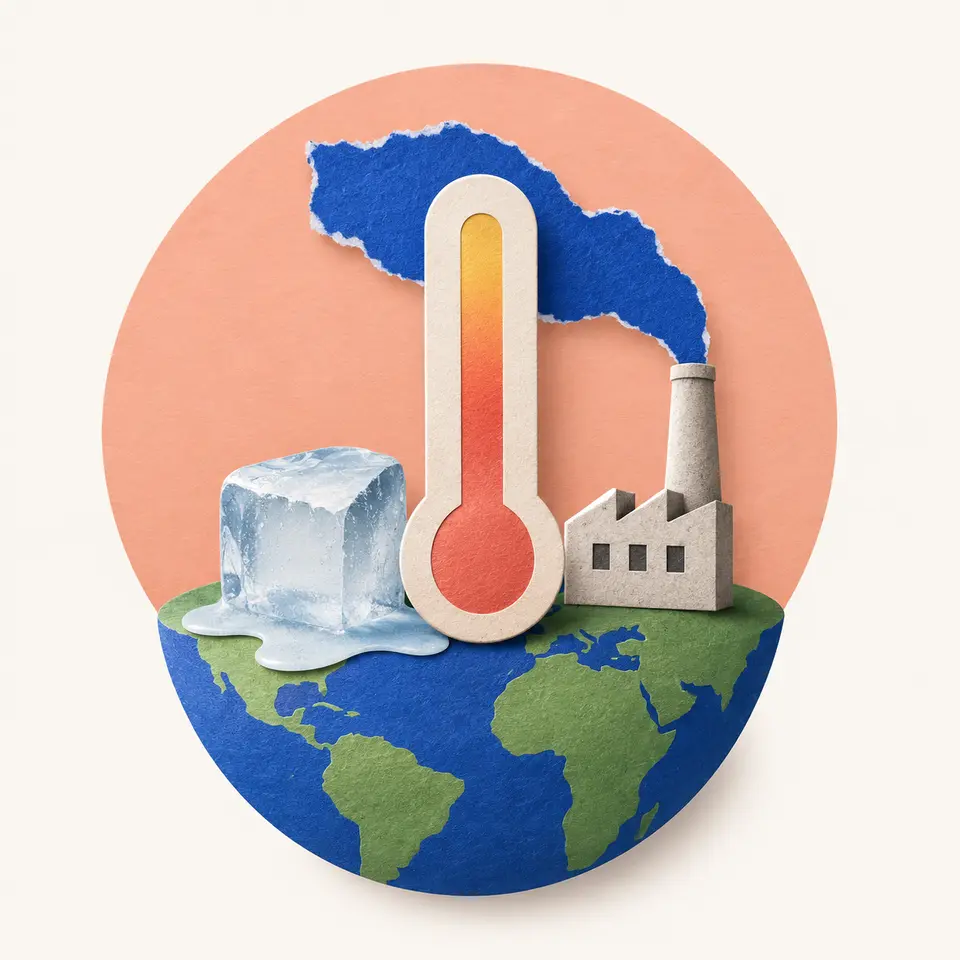
Climate change
Earth has warmed by more than 1 degree Celsius since the late 1800s, mostly from burning fossil fuels. See how the warming is measured, how the cause was pinned down, and what the projections do and don't say.
Ecosystems & the environment
Food webs, interactions between organisms, biodiversity, conservation, pollution and environmental change.
Food webs and ecological knock-on effects
Read who eats whom, tell the flow of energy apart from the recycling of materials, and reason carefully about indirect ecological effects.
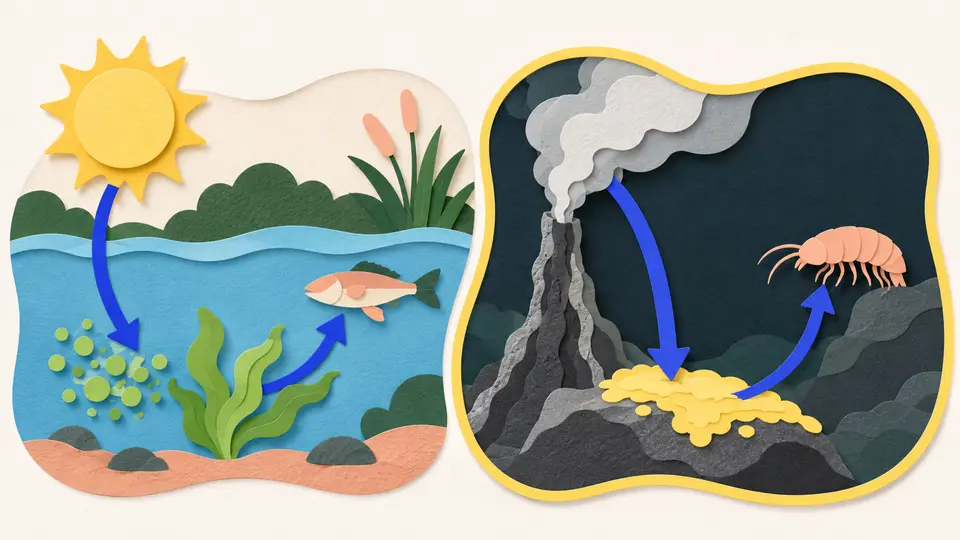
How energy and matter move through an ecosystem
Energy passes through an ecosystem once and leaves as heat, while matter cycles back again. That's why the two have to be tracked separately.
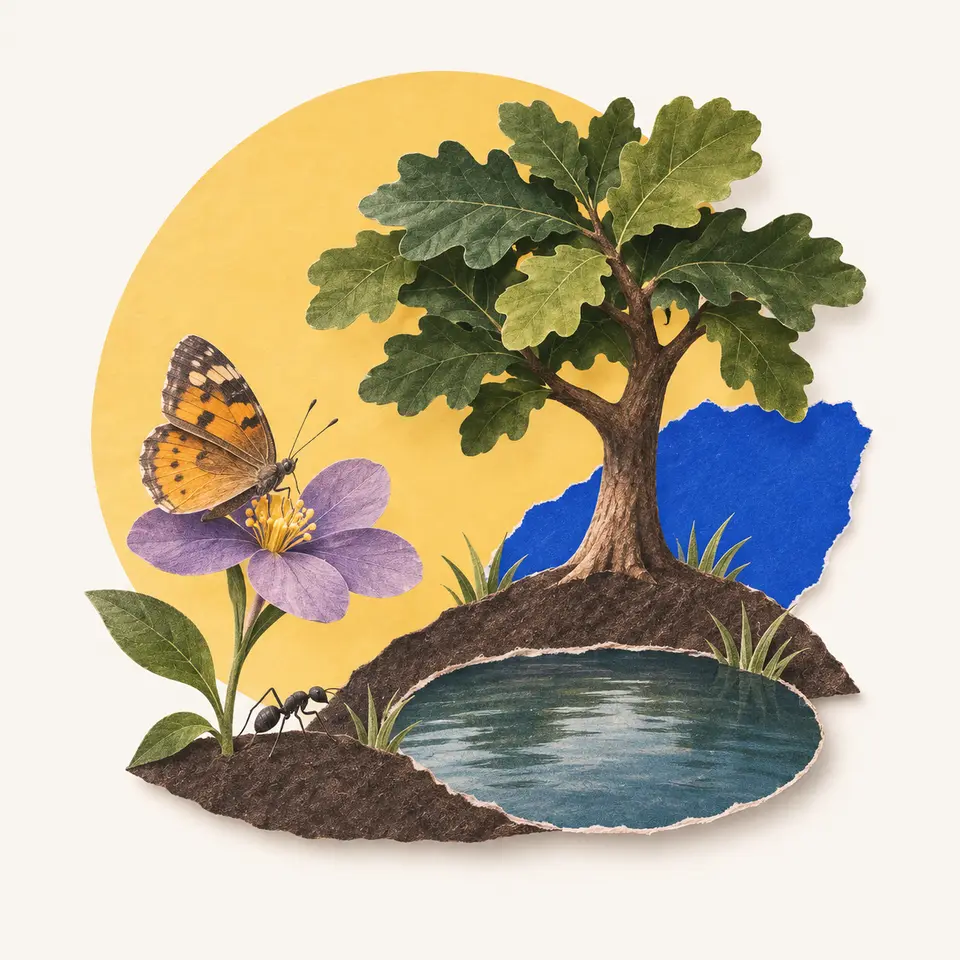
Ecosystems, habitats and niches
An ecosystem is a community of living things plus the place they live in. See how ecologists describe one, what a niche is, and why similar climates grow similar communities on different continents.
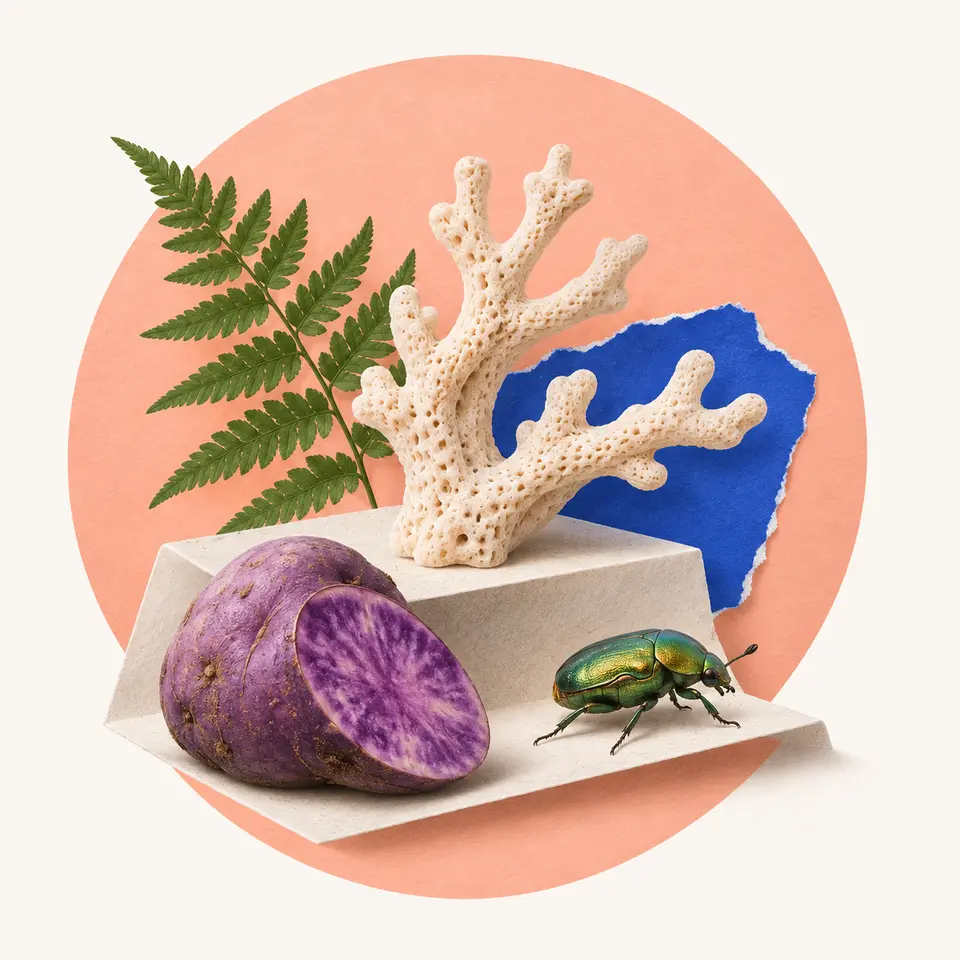
Biodiversity
Biodiversity is the variety of life, counted in genes, species and ecosystems. See how many species there are, why the tropics hold so many, what variety does for us, and how to read the numbers on its loss.
Scientific discovery & evidence
Observation, experimentation, measurement, models, uncertainty, research methods and evaluating scientific claims.
What makes an experiment convincing?
Set up a fair comparison, reduce bias, and judge how far an experiment's result can support a claim.
What a statistical test actually decides
Set up a null and an alternative hypothesis and see which errors a test can make. Then read a result for the narrow claim it actually supports.
How science works
Science tests ideas against the world and against other scientists. See how a guess becomes a test, what 'theory' really means, how sciences without labs test ideas, and how errors get caught.
Albert Einstein
A patent examiner published four papers in 1905 that changed physics, then spent years on a new theory of gravity. See what he did, how he argued with quantum theory, and his life as a refugee and campaigner.
Guided paths in Science
- How science explains familiar puzzlesUse evidence to explain why boats float and sugar dissolves, then move on to cells, ecosystems and a changing planet. 9 topics.
- Science past the easy answerEvery topic here picks up an easy answer and shows what it misses. The route climbs from a push and a proton to the whole planet, then ends on how evidence is judged. 9 topics.