Science · Chemistry & materials
Atoms and elements
All ordinary matter is made of atoms, and each element is one kind of atom. See what's inside an atom, why its proton count makes gold gold, and how we know atoms are real when no one can see one.
What you will learn
- Describe how small atoms are and why light microscopes can't show them
- Explain how the random jiggling of pollen grains in water gave evidence that atoms exist
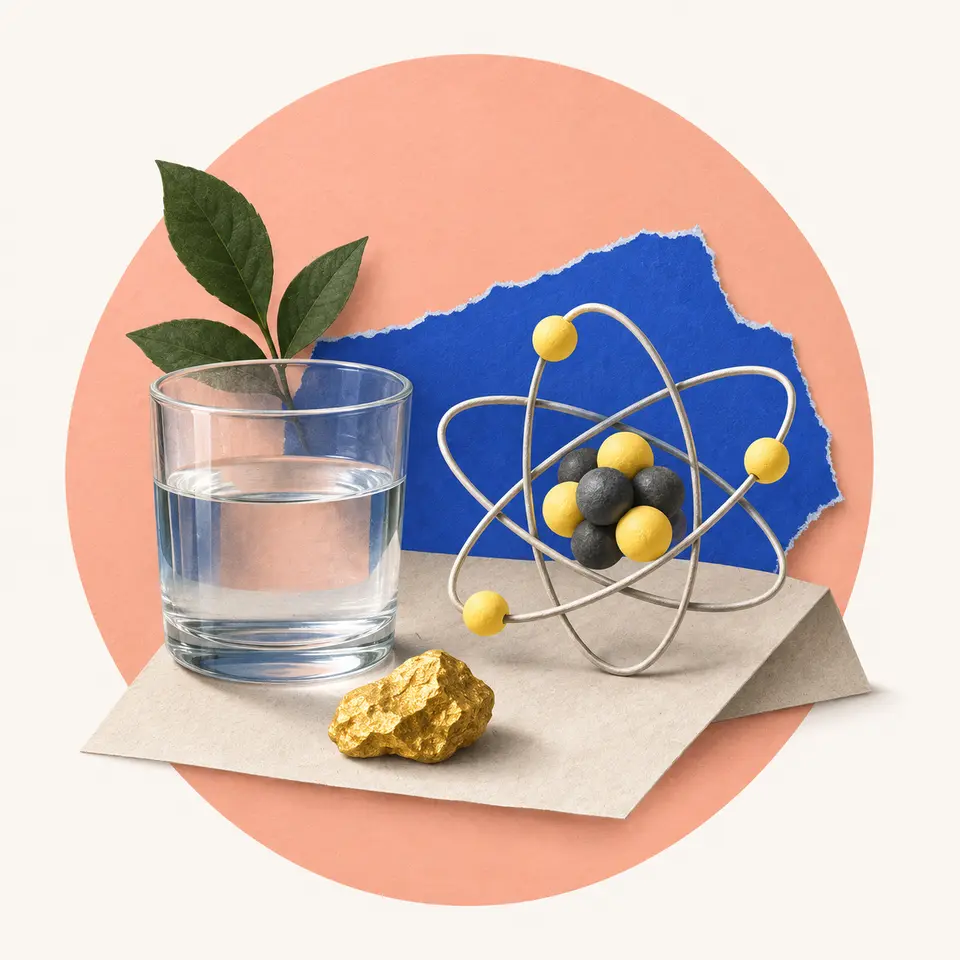
- Describe the proton, neutron and electron and where each sits in an atom
- Explain why the number of protons decides which element an atom is
Lesson 1 of 4 · 4 min
How small atoms are, and how we know they're real
A drop from a medicine dropper holds about 0.05 milliliters of water. Inside it are roughly 1.7 billion trillion water molecules, each made of three atoms. Count one atom a second and you'd need thousands of times the age of the universe to finish.
An atom is the smallest piece of an element that can take part in a chemical change. Atoms are typically about 100 picometers across, which is a ten-billionth of a meter. A human hair is about a million carbon atoms wide.
Atoms are smaller than the wavelength of light, so no ordinary microscope can show one, however strong its lenses. For most of history, atoms were only an idea. Leucippus and Democritus proposed them in Greece in the fifth century BC, and the word means uncuttable.
In 1827 the botanist Robert Brown watched pollen grains in water under a microscope. The grains jittered about constantly, though nothing seemed to push them. In 1905 Albert Einstein explained the jitter. Water molecules strike each grain from every side, a few more on one side, then on another, so the grain gets knocked about at random.
Einstein's math made predictions about the jitter that could be checked. In 1908 Jean Perrin tested them, and they held. That turned atoms and molecules from a useful idea into physical fact, and Perrin won the 1926 Nobel Prize in Physics.
Today you can see atoms more directly. The scanning tunneling microscope, developed in 1981, makes images of single atoms on a surface without using light at all.
Try to recallHow did the jiggling of pollen grains in water give evidence that atoms and molecules exist?
Pollen grains in still water jitter at random. Einstein explained this as water molecules hitting each grain unevenly from different sides. His explanation made predictions, and Perrin's measurements in 1908 matched them, which convinced scientists the molecules were real.
Atoms are far too small for light to show. The jitter of pollen in water proved they're real anyway.
Lessons in this topic
How small atoms are, and how we know they're real
Get a feel for how tiny atoms are, why no ordinary microscope can show one, and how jittering pollen grains convinced scientists that atoms exist.
What's inside an atom, and what makes gold gold
Meet the proton, the neutron and the electron, see where each sits in an atom, and learn why the number of protons alone decides which element an atom is.
Same element, different mass or charge
See how atoms of one element can differ in mass, as isotopes, or in charge, as ions, and why neither change turns them into a different element.
From solid balls to a nucleus with orbits
Follow the picture of the atom from Dalton's solid balls through Thomson's electrons and Rutherford's gold foil to Bohr's orbits, and see what each step explained.
Three quick stories from this topic
Gold made from mercury
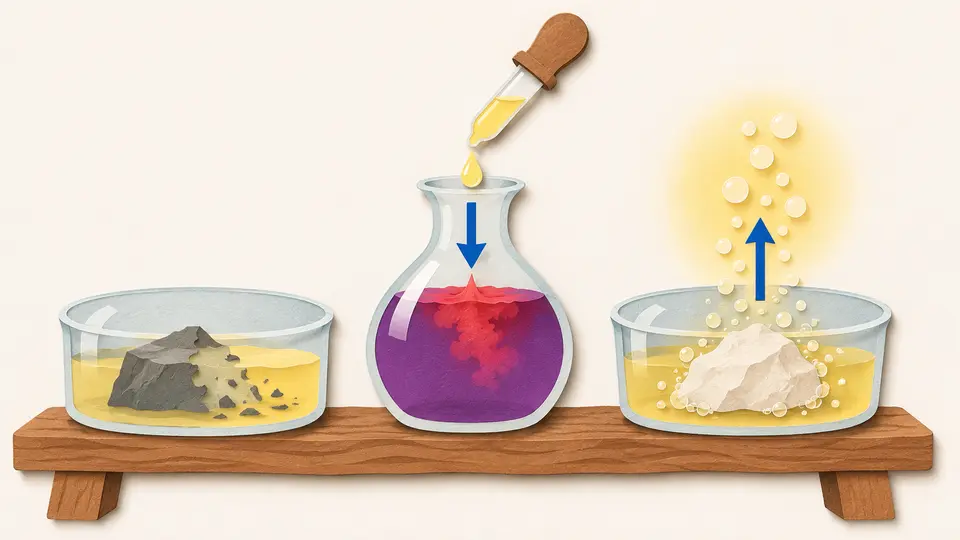
A physicist turned mercury into gold in 1924 by firing neutrons at it
Hantaro Nagaoka did what alchemists never could, because chemistry leaves every nucleus alone. Gold is gold because it has 79 protons, so making it means changing the nucleus itself.
Why alchemy failed
Chemical reactions rearrange atoms and move electrons, but the nucleus decides the element. No mixing or heating can change it.
No gold rush
A 1941 repeat of the experiment found the new gold was radioactive. Making gold in a reactor would cost far more than the gold is worth.
A million atoms wide
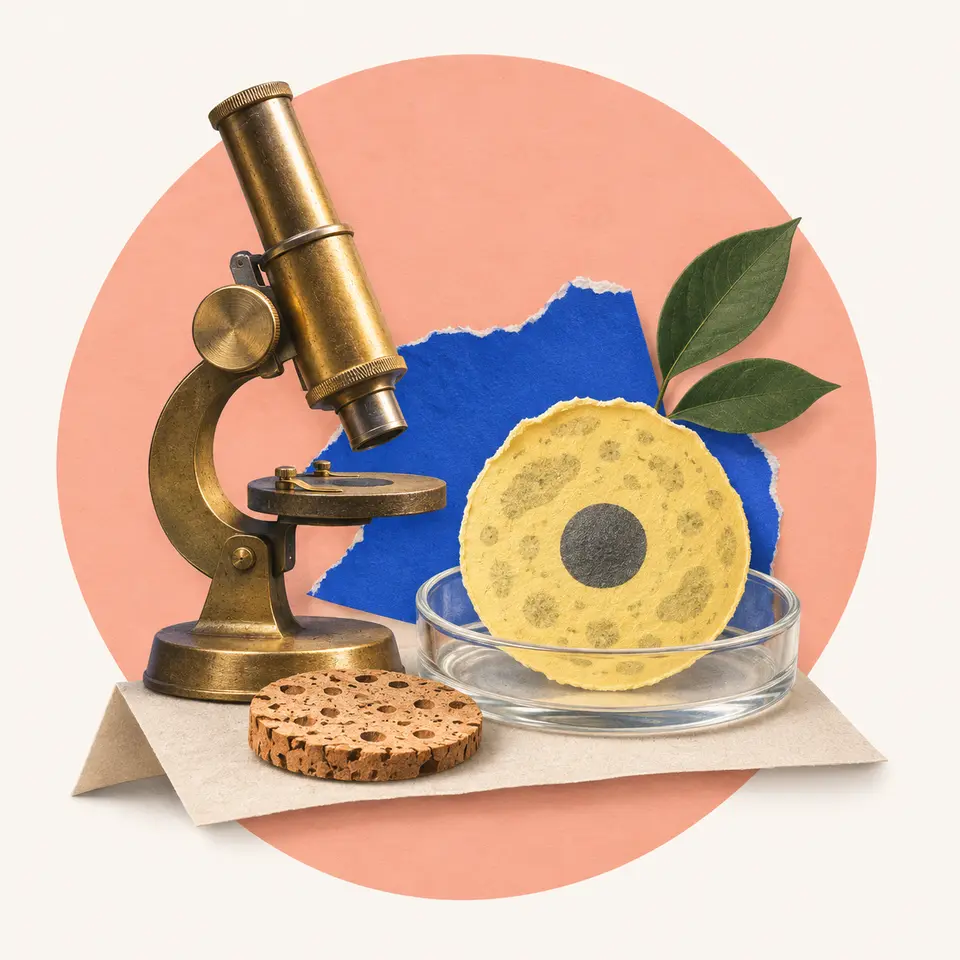
A single human hair is about a million carbon atoms wide
Atoms are typically about 100 picometers across, a ten-billionth of a meter. That's smaller than the wavelength of visible light, which is why no ordinary microscope, however strong, can show you one.
Too small for light
Visible light waves are thousands of times wider than an atom, so they can't pick out a single one. Light microscopes hit that limit.
Seeing them anyway
Since 1981, the scanning tunneling microscope has made images of single atoms on a surface without using light at all.
Ice that sinks
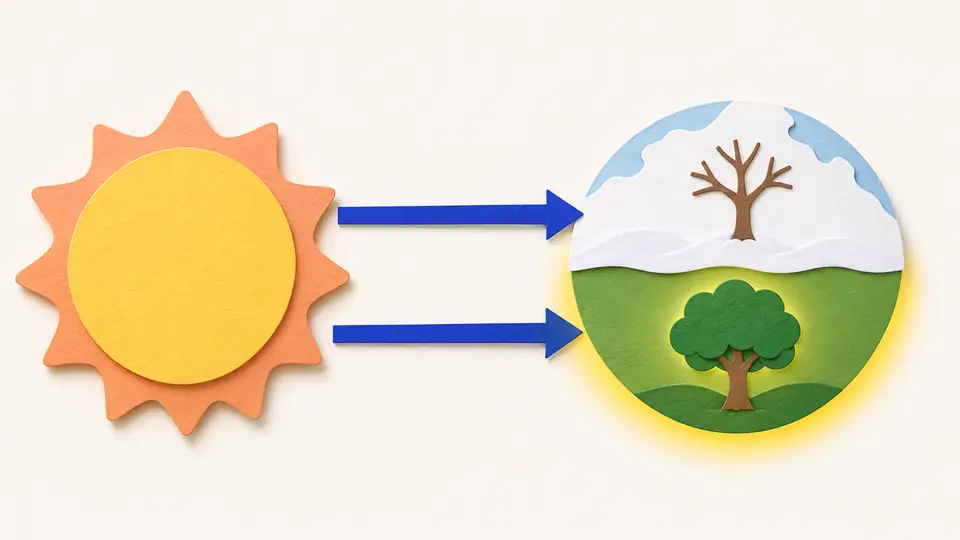
An ice cube made of heavy water sinks to the bottom of a glass of ordinary water
Heavy water uses deuterium, a hydrogen atom with an extra neutron in its nucleus. That neutron makes the water about 11% denser, and the ice cube heavy enough to drop.
Same element, more mass
Deuterium has the same single proton as ordinary hydrogen, so it's still hydrogen. It's an isotope, the same element with a different number of neutrons.
Not radioactive
Heavy water isn't radioactive. Its extra mass changes how it floats, freezes and melts, but its chemistry stays close to ordinary water's.
Sources
- Drop (unit), Wikipedia
- Avogadro constant, Wikipedia
- Nucleosynthesis, Wikipedia
- Chemistry 2e, 2.1 Early Ideas in Atomic Theory, OpenStax, Rice University
- Atom, Wikipedia
- Brownian motion, Wikipedia
- Jean Perrin, Wikipedia
- Scanning tunneling microscope, Wikipedia
- Gold, Wikipedia
- Chemistry 2e, 2.3 Atomic Structure and Symbolism, OpenStax, Rice University
- Heavy water, Wikipedia
- Isotope, Wikipedia