Engineering & Inventions
Learn engineering
Trace how designed systems manage forces, energy, materials, and constraints, from familiar tools to shared infrastructure.
Machines & robotics
Mechanisms, engines, fluid and thermal systems, sensors, control, automation and robotic movement.
How feedback keeps a machine on target
Cruise control holds your speed on a hill it can't see. Follow the loop that does it, from measuring the gap to correcting it, and find out why correcting faster can cause new problems.
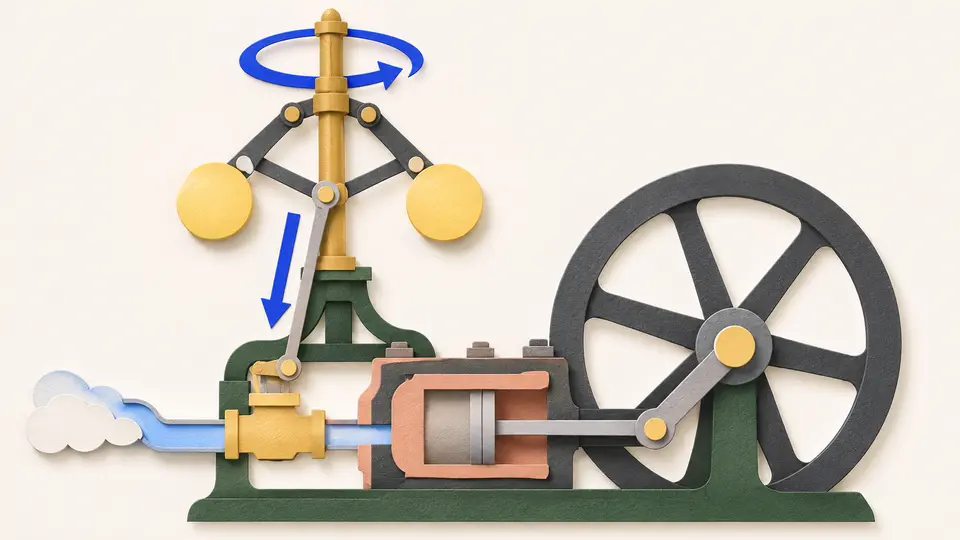
Why automatic controllers overshoot and oscillate
A controller that corrects too hard, or on an out-of-date reading, swings past its target and back. Meet the three-term PID controller, the way engineers tune it and the failures no tuning can fix.
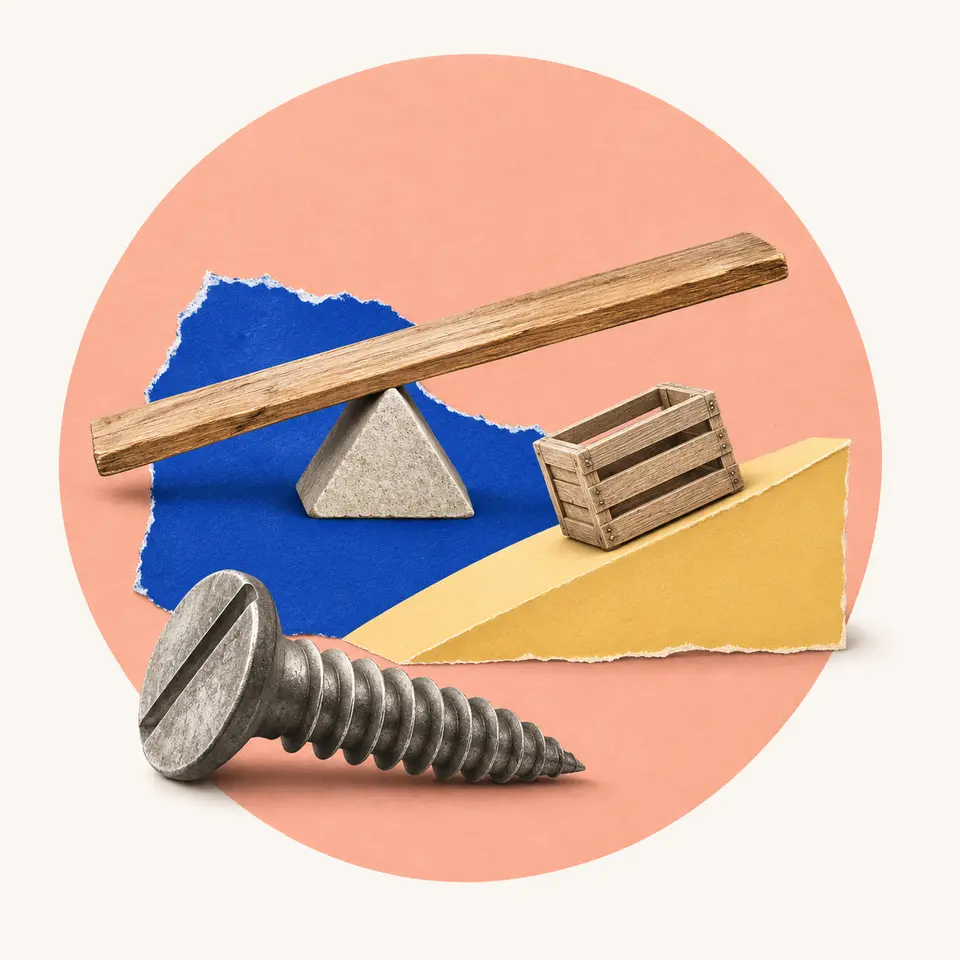
Simple machines and mechanical advantage
Levers, pulleys, ramps, wedges, screws and wheels all trade distance for force. See how each does it, why none saves any work, and how to find them inside a bicycle or a crane.
How robots work
A robot senses, decides and acts in a loop. See what its sensors, computer and motors each do, why walking is harder for it than chess, and how much of today's robots is still a person at the controls.
Electronics & communication
Circuits, electronic components, signals, measurement instruments and communication hardware.
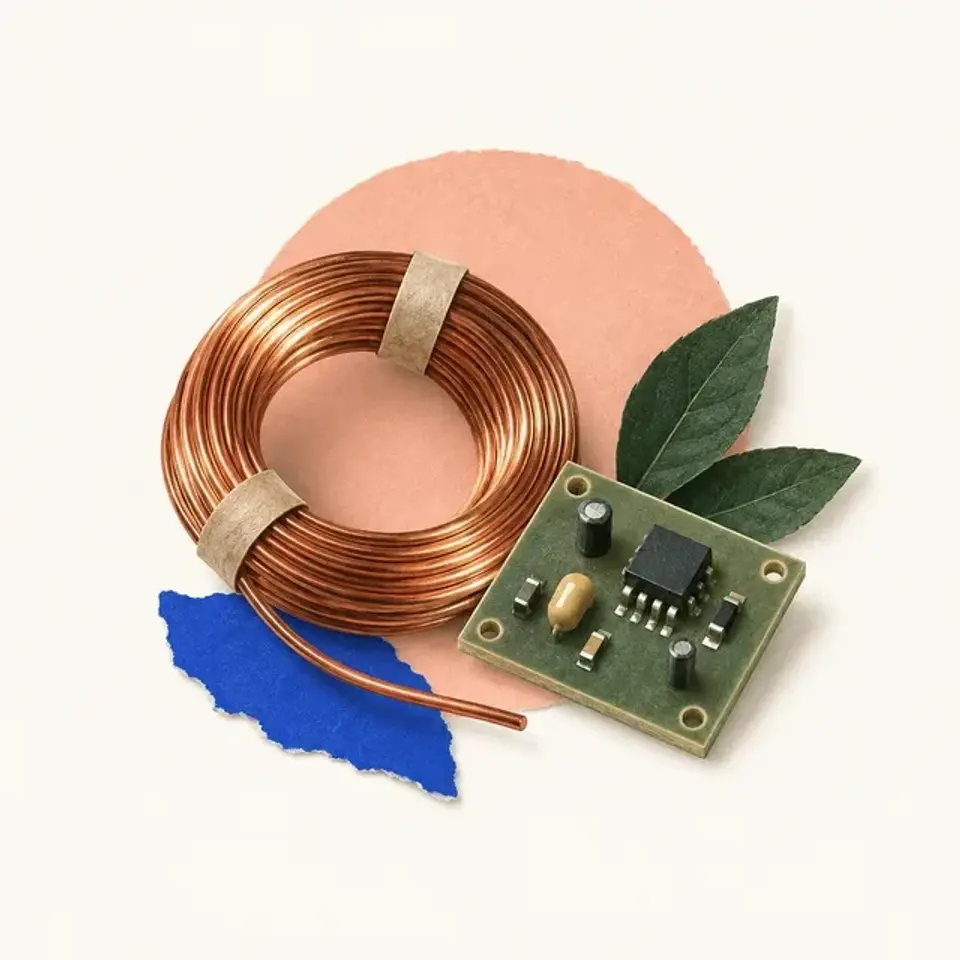
How a sensor turns temperature into a number
Follow a temperature reading from a bead whose resistance changes with heat to the digits on a display, and find out what those digits can and can't promise.
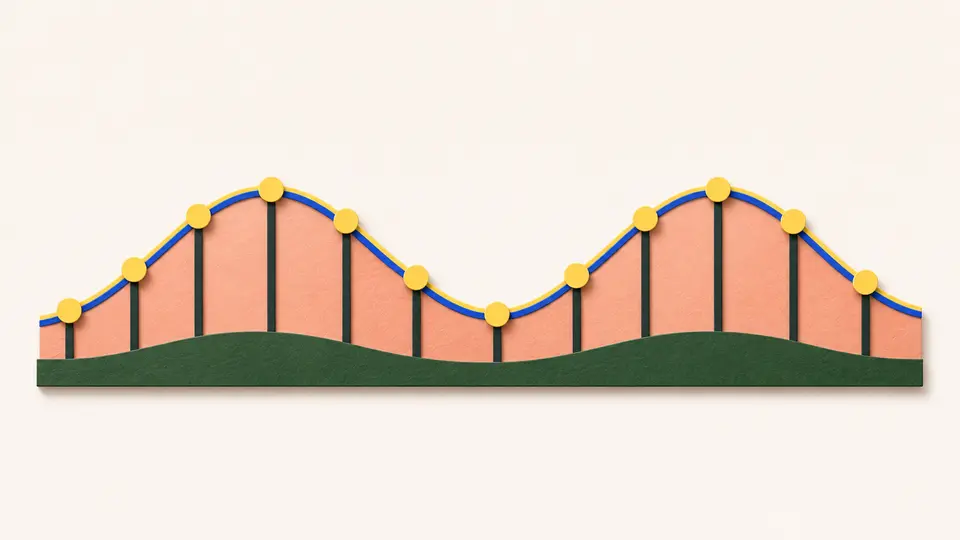
Why sampling too slowly creates signals that aren't there
Measure a signal often enough and the samples hold all of it. Measure a little too slowly and its fast parts come back disguised as slow ones, with nothing in the data to give them away.
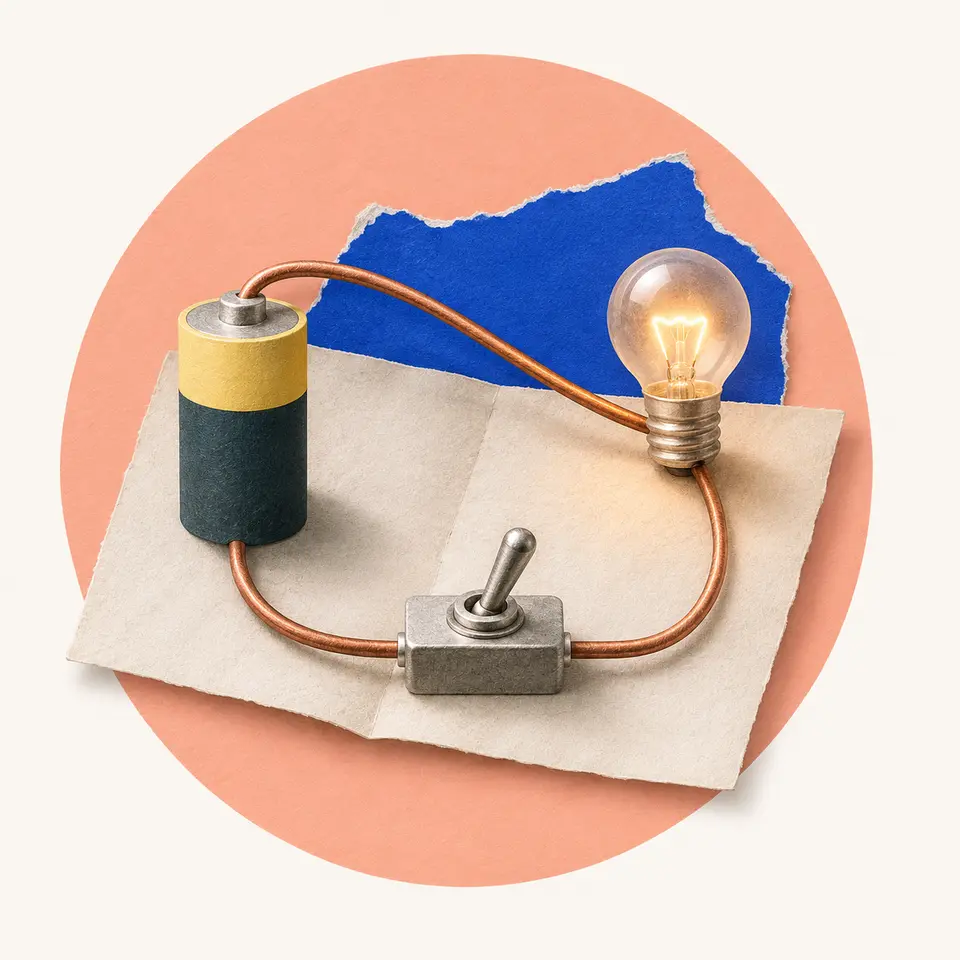
How electric circuits work
A circuit is a loop that lets charge carry energy from a source to whatever does the work. Learn what voltage, current and resistance measure, how they connect, and why a short circuit trips a breaker.
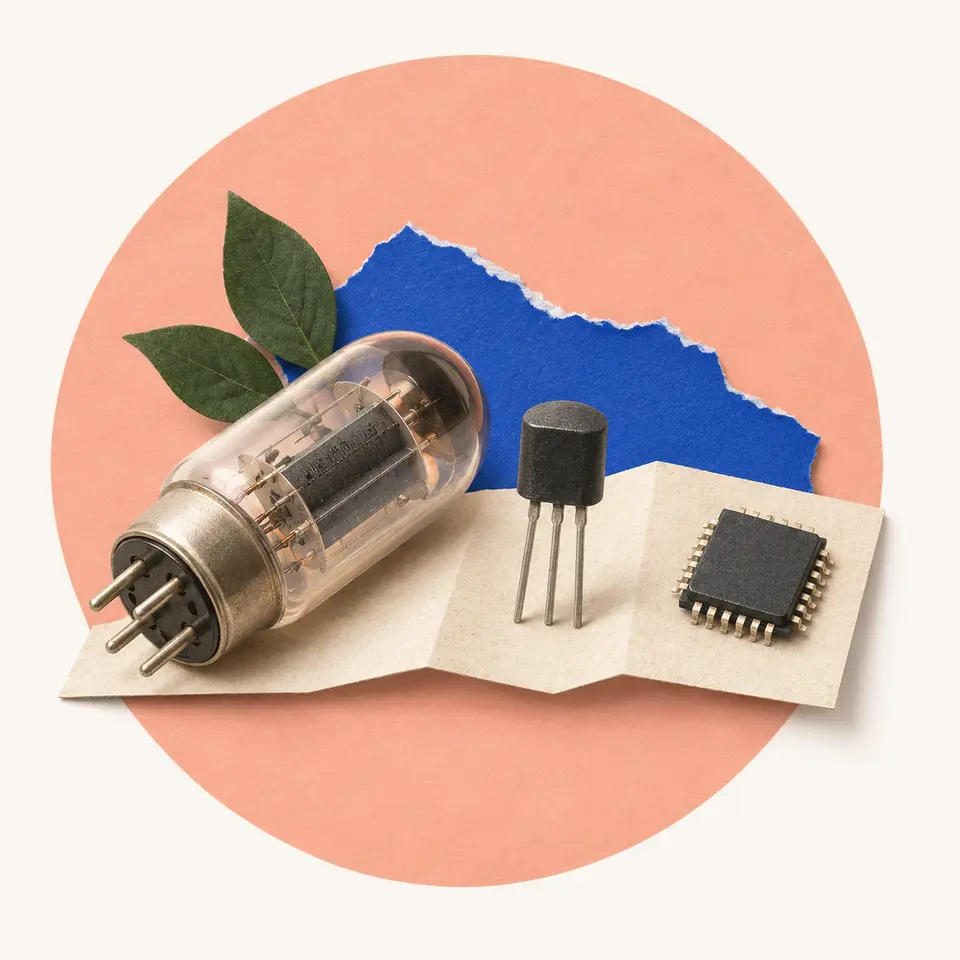
The transistor
A transistor is a switch with no moving parts, worked by a small voltage. See how it switches and amplifies, how Bell Labs built the first one in 1947, and how billions now fit on one chip.
Buildings & infrastructure
Structures, roads, bridges, tunnels, water systems, construction, reliability and maintenance.

How bridges carry a load
Trace weight through beams, arches, cables and supports, and see why shape matters as much as material.
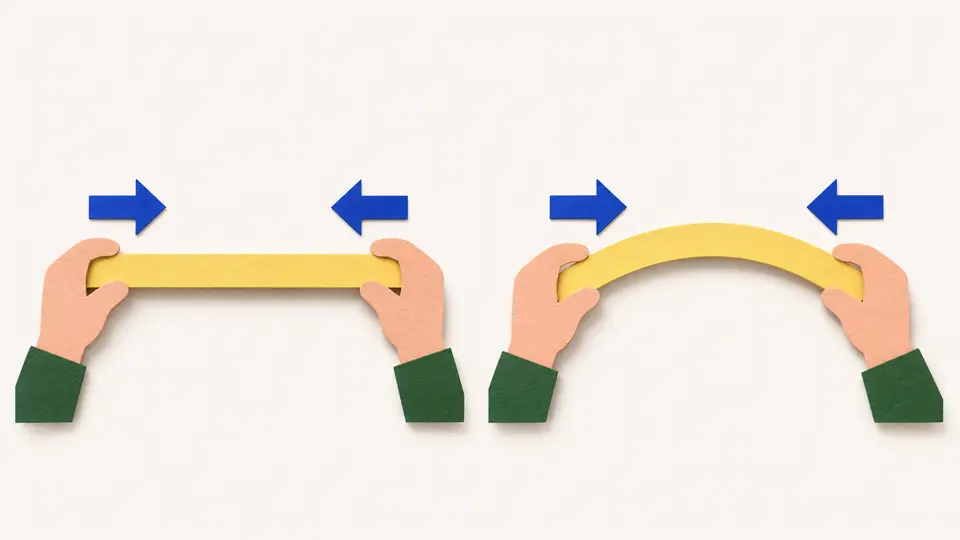
Why a strong column still folds
A column can fold sideways while its material is nowhere near its limit. See what buckling is, why length and end supports matter more than strength, and where engineers let it happen on purpose.

How buildings stand up
Every building has to carry its own weight, its contents and the wind down to the ground. Follow those loads through floors, beams, columns and foundations, and see what the soil underneath has to do.

Skyscrapers
A tall building is limited less by its weight than by wind, elevators and money. See what made the first skyscrapers possible in 1880s Chicago, how today's towers fight the wind, and what sets the height record.
Materials & manufacturing
Material selection, industrial chemistry, production methods, fabrication, process engineering and making products at scale.

Why engineers choose one material over another
How stiffness, strength, toughness, mass and shape make a material right for one job and a poor choice for another.
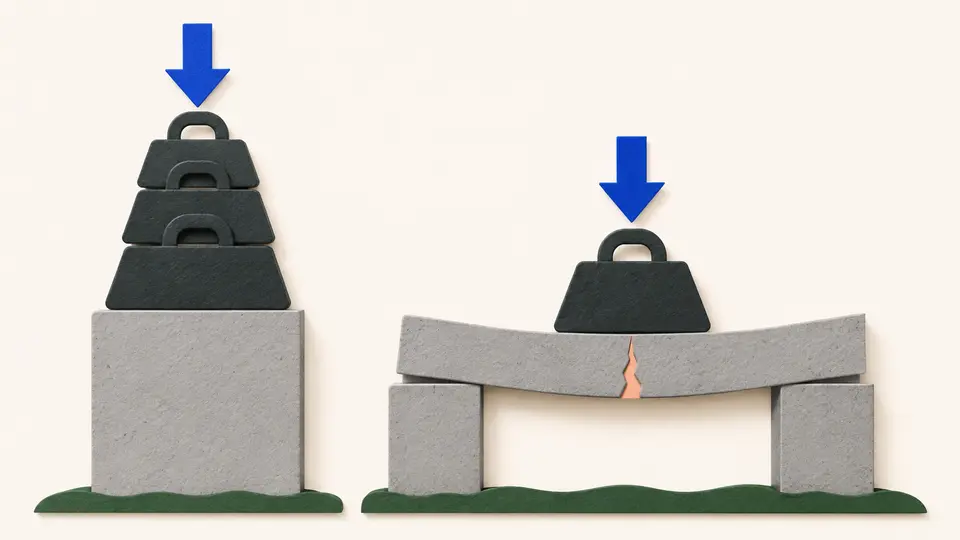
Reinforced concrete and the steel hidden inside it
Concrete cracks when it's pulled, and a little steel in the right place fixes that. See why the two materials work together, how a beam is made to sag before it fails, and what rust does in the end.
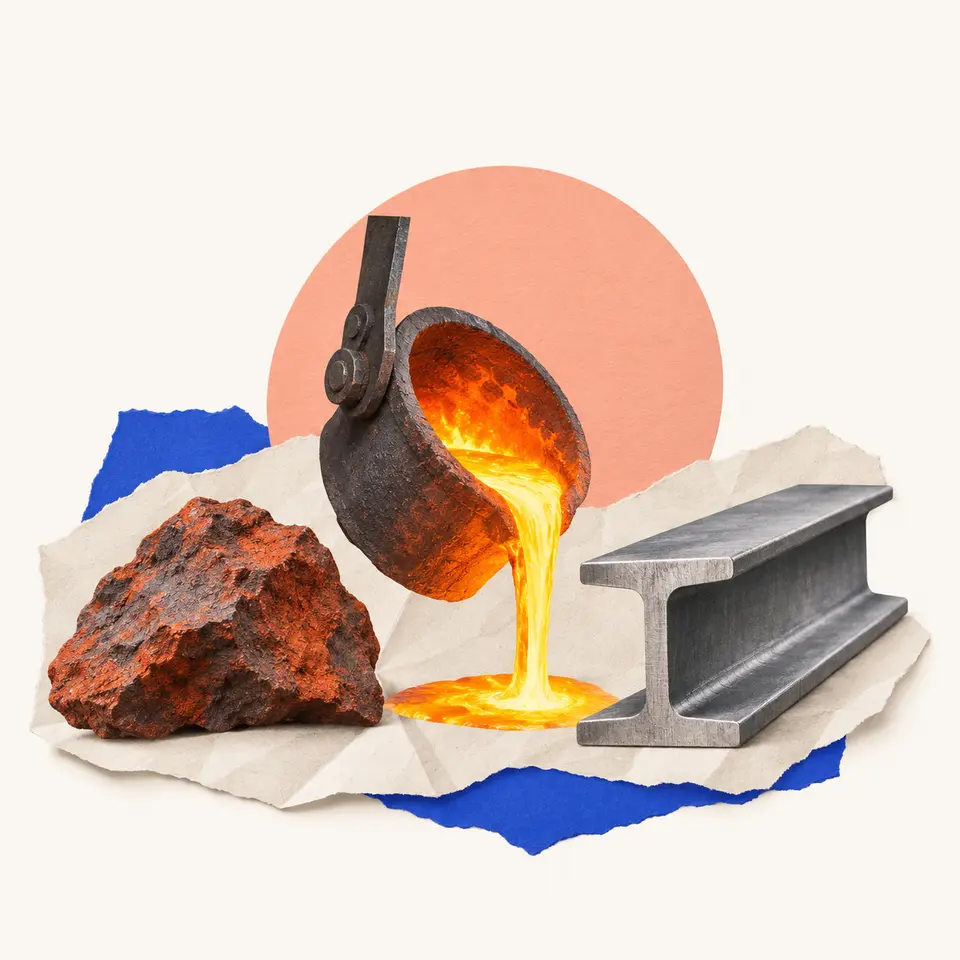
Iron and steel
Steel is iron with a small, controlled amount of carbon. See how a blast furnace turns ore into iron, how the Bessemer converter made steel cheap, and why steelmaking is now one of the hardest industries to clean up.

Plastics
Plastics are long chain molecules that can be shaped into almost anything. See what the main kinds are, how a pellet becomes a bottle or a pipe, and why the durability that makes plastic useful is also the problem.
Energy & power
Electricity generation, conversion, storage, grids, fuels, heat systems and energy efficiency.

How a heat pump moves heat
See how a machine warms a house with heat taken from freezing outdoor air, follow its refrigerant around the loop, and learn to read the performance number on its spec sheet.
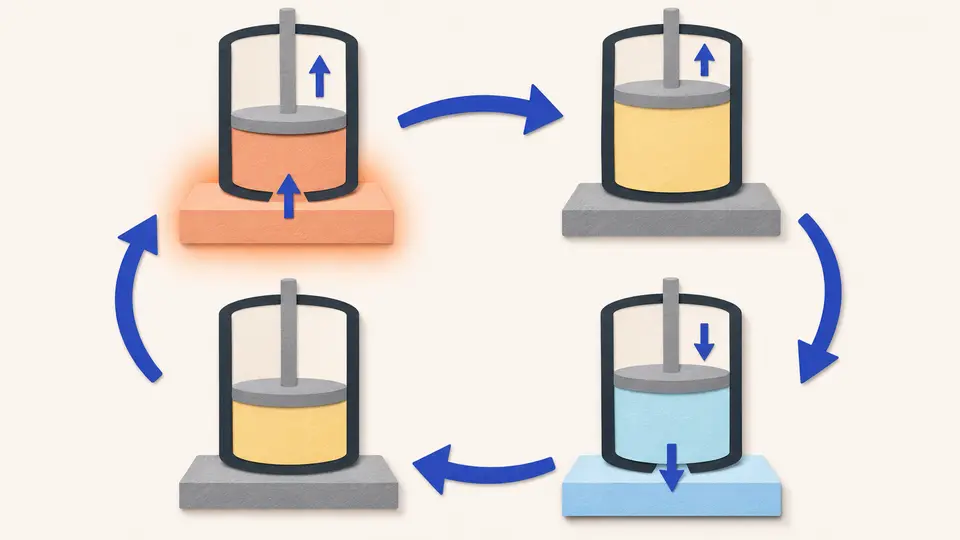
The efficiency limit no engine can beat
Two temperatures set the most work any engine can get from heat, and the most heat any heat pump can move. See where the limit comes from and how far below it real machines run.
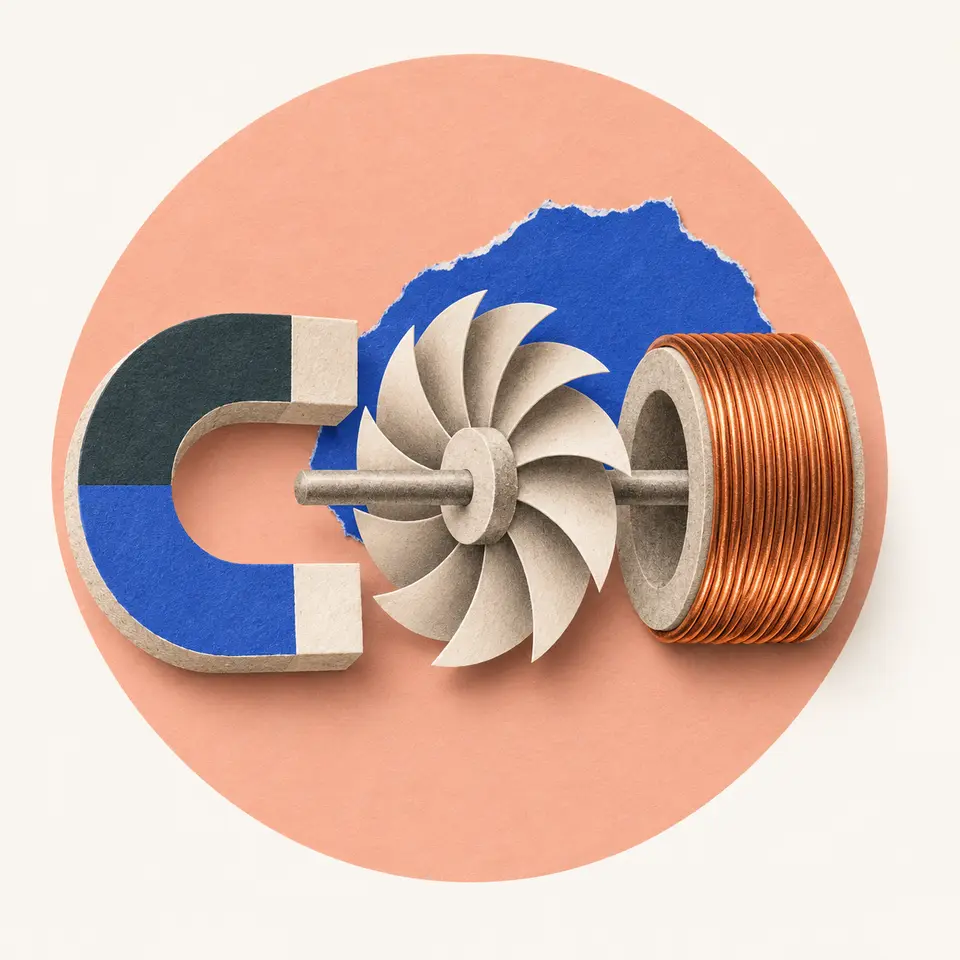
How electricity is generated
Almost every power station spins a magnet inside coils of wire. See how a generator works, how steam, water and wind turn it, why steam plants waste most of their heat, and why solar panels are the exception.
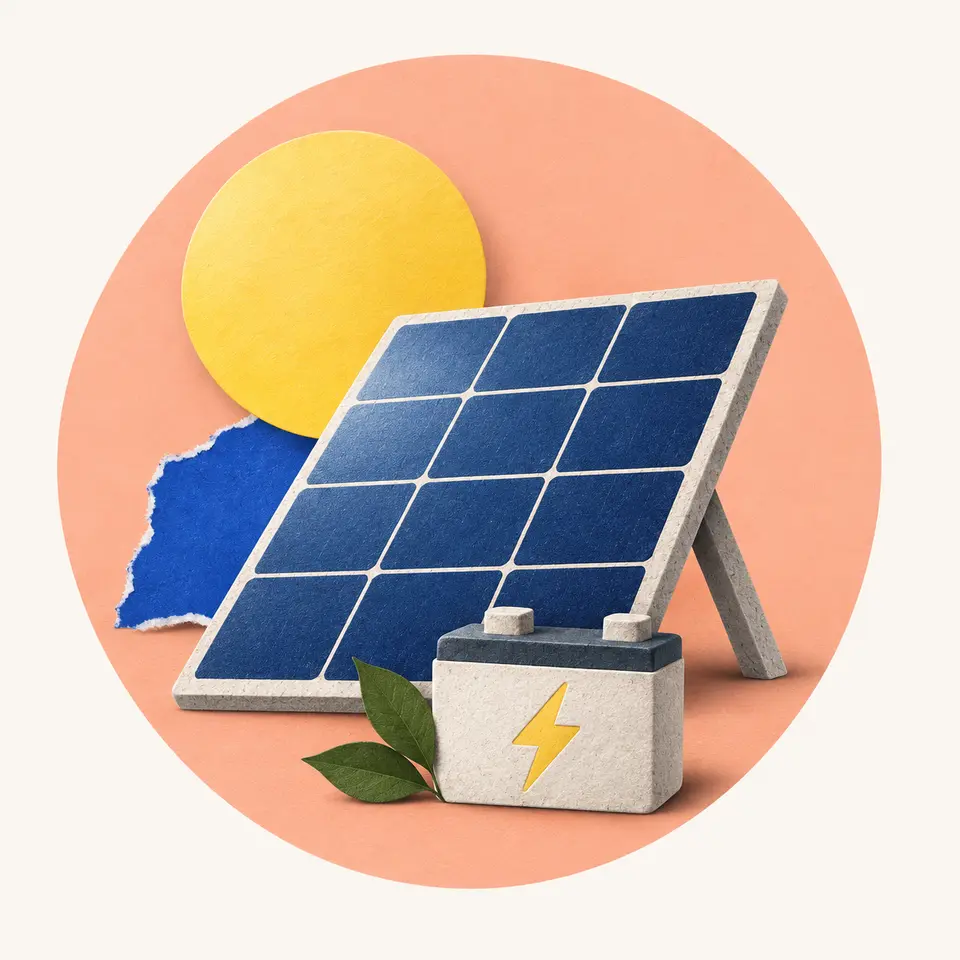
Solar power
A solar cell turns sunlight straight into electricity with no moving parts. See how it works, what a panel's rating means, why panels became so cheap, and what happens when the sun goes down.
Transport & aerospace
Cars, trains, ships, aircraft, spacecraft and the design of systems that move people or goods.
How an aircraft stays controllable
Learn the three ways an aircraft rotates, how small hinged surfaces produce each one, why an airliner's tail pushes down, and what really turns an aircraft.
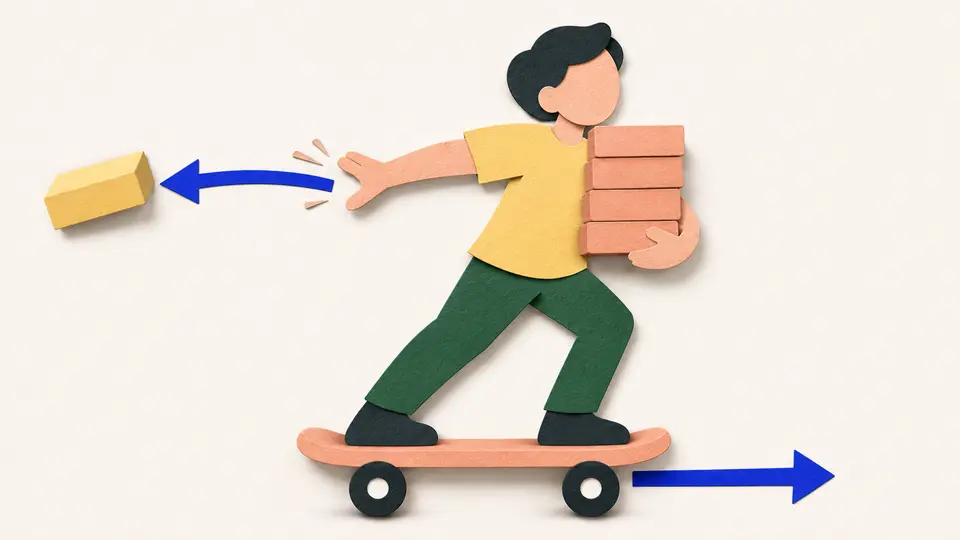
Why a rocket throws most of itself away
Reaching orbit takes a speed no single tank can buy. The way around it is to build a rocket that turns into a smaller rocket, twice.

How airplanes fly
A wing stays up by pushing air down. See how lift really works, why the usual 'longer path' story is wrong, how four forces balance in steady flight, and what happens in a stall.
How a car works
Follow power from the engine to the road. See what the clutch, gears and differential do, how a press on a pedal stops more than a ton of metal, and why a safe car is built to crumple.
Design & invention
Engineering problem-solving, prototypes, trade-offs, testing, standards, failure analysis and the development of inventions.
The Tacoma Narrows collapse and what it taught
In 1940 the Tacoma Narrows Bridge twisted itself apart in a 42 mph wind. See what the famous film can't show, how a steady wind fed the twist, and how engineers tested the fix.

Why a system with backups still fails
Every defense has holes, and the holes move. See why an accident needs several of them to line up, how spare parts make failure look almost impossible on paper, and how a backup can leave a system less safe.
How engineers design things
Engineering starts with a vague want and a list of limits. See how engineers turn it into testable requirements, weigh trade-offs, test and revise, and decide when a design is good enough.
Thomas Edison
Edison didn't invent the light bulb alone, and his bigger invention was a lab that turned out inventions to order. See what his team built, how the bulb became a system, and where his fame overshoots.
Guided paths in Engineering & Inventions
- The limits engineers have to design aroundMeet the limits engineers can't wish away, one per topic, along with what they do about each. The route starts with a single column and ends with whole systems. 7 topics.
- Measure, design and learn from failureGo from sensors and feedback control to the practical limits of materials, bridges and machines, then learn from a bridge that failed. 7 topics.