Language & Communication
Learn language and communication
Investigate how languages work and how speech, writing, translation, and media shape what people communicate.
How language works
Sounds and signs, words, grammar, meaning, pragmatics and the structure of language.

How a sentence carries meaning
Swap two words and a chase reverses. See how word order, grouping and context give a sentence its meaning, and where each one leaves room for a second reading.
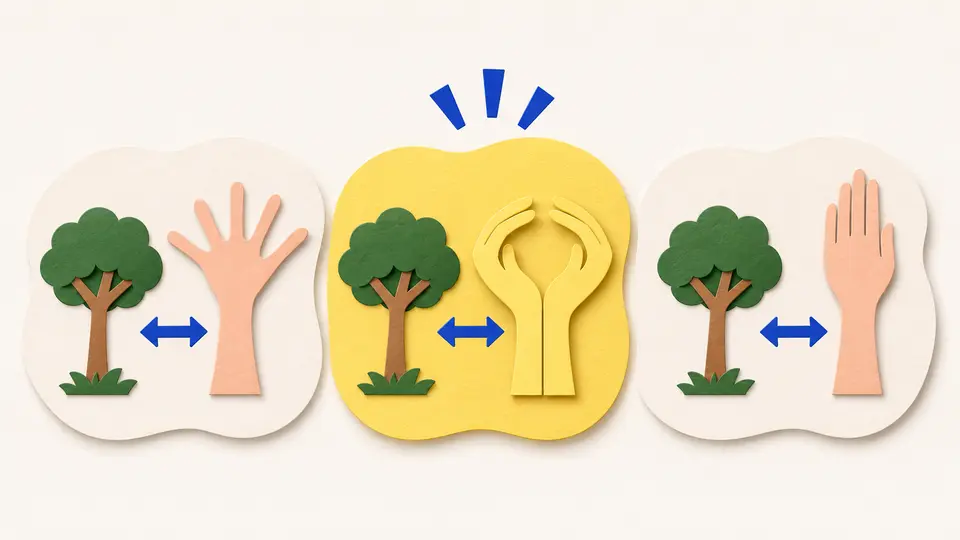
How signed languages use space
Find out how a sign language builds words from the hands and face, and how it turns the space around a signer into grammar.

The sounds of speech
Every spoken language builds its words from a small set of sounds. See how the mouth and throat make them, why p and b differ by one setting, and why sounds your own language ignores are hard to hear.

Grammar and where its rules come from
Every language has grammar, and its speakers follow it without being taught. Tell the rules that make a language work from the rules of style taught at school, and see how far grammars differ.
Languages, dialects & change
Language families, dialects, accents, contact, word histories and language change.

Why languages change
English from a thousand years ago is unreadable today, though nobody decided to change it. See how change spreads, how borrowing differs from descent and how linguists rebuild languages nobody wrote down.
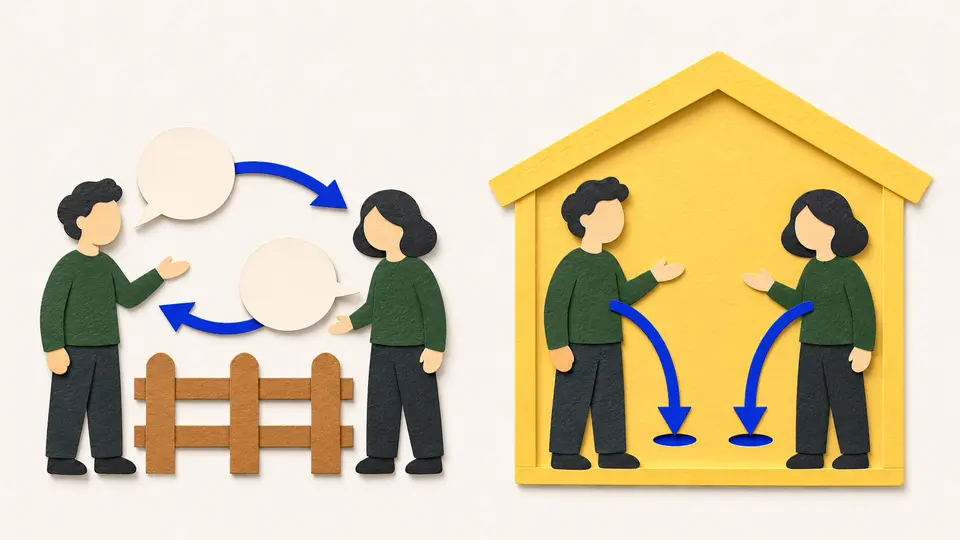
Why some dialects carry prestige
One dialect becomes the standard through history and institutional backing, never through better grammar. See how listeners judge speakers by dialect, and the rules inside the forms they look down on.

Language families of the world
About 7,000 languages are spoken today, and most belong to families that descend from one older language. Meet the largest families, see where they're spoken, and learn why some languages have no known relatives.

The history of English
English began as the speech of Germanic settlers in Britain and took in thousands of Norse and French words. Follow it through Beowulf, Chaucer and Shakespeare to a language with more second-language speakers than native ones.
Writing systems & reading
Scripts, spelling, literacy, reading processes and relationships between written and spoken or signed language.

How writing systems represent language
A written sign can stand for a sound, a syllable or a word. Compare alphabets, syllabaries, scripts that skip vowels and the Korean alphabet that stacks into blocks.
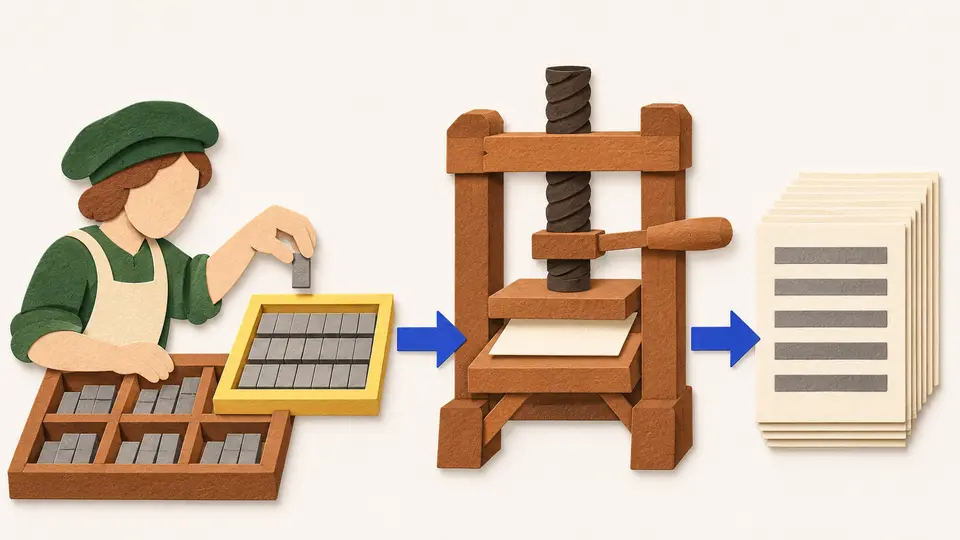
Why English spelling lags behind speech
English letters stopped matching English sounds centuries ago. See how the vowels moved, how silent letters got in, what the mismatch costs new readers and why reform keeps failing.

The alphabet and where it came from
The letters on this screen go back nearly 4,000 years to people who borrowed Egyptian pictures to write their own Semitic language. Follow the alphabet through Phoenician, Greek and Latin, and see why A began as an ox head.

How children learn to read
Speech comes to children without lessons and reading doesn't. See what a child must learn to turn letters into words, what the research says about phonics, and why schools fought over it for decades.
Conversation & body language
Dialogue, listening, turn-taking, gesture, nonverbal communication and communication in social settings.

How people mean more than their words say
A question can be a request, a remark about a work shift can be a no, and some questions have no safe yes-or-no answer. See how context carries the rest of the message.
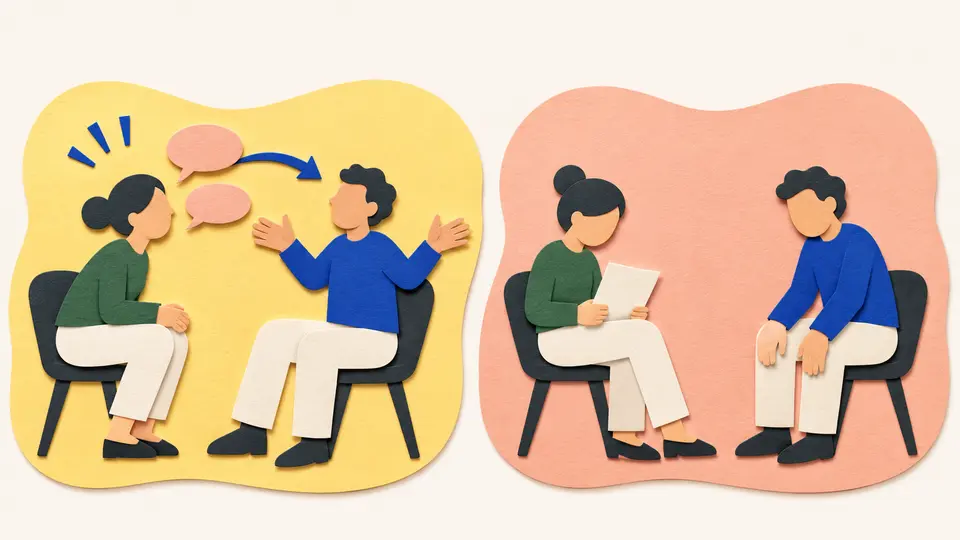
How listeners confirm understanding
Small sounds like uh-huh keep a speaker talking, and asking someone to say it back catches what a yes would hide. See how listeners signal understanding, from Japanese aizuchi to a pilot reading back a clearance.

Body language and what it can tell you
Gaze, posture and distance carry real information, though far less reliably than popular books claim. See what the body adds to talk, where the '93%' figure came from, and what happened when famous claims were retested.

Turn-taking in conversation
Speakers swap turns with gaps of about a fifth of a second, faster than anyone can plan a reply. See how people know when to start, what overlaps and pauses mean, and how talk gets repaired when it goes wrong.
Writing, speaking & persuasion
Composition, explanation, public speaking, rhetoric, argument and adapting messages to audiences.

Explaining a difficult idea clearly
Start from the reader's question, say who does what, give the page a shape to scan, and test whether readers can actually use what you wrote.
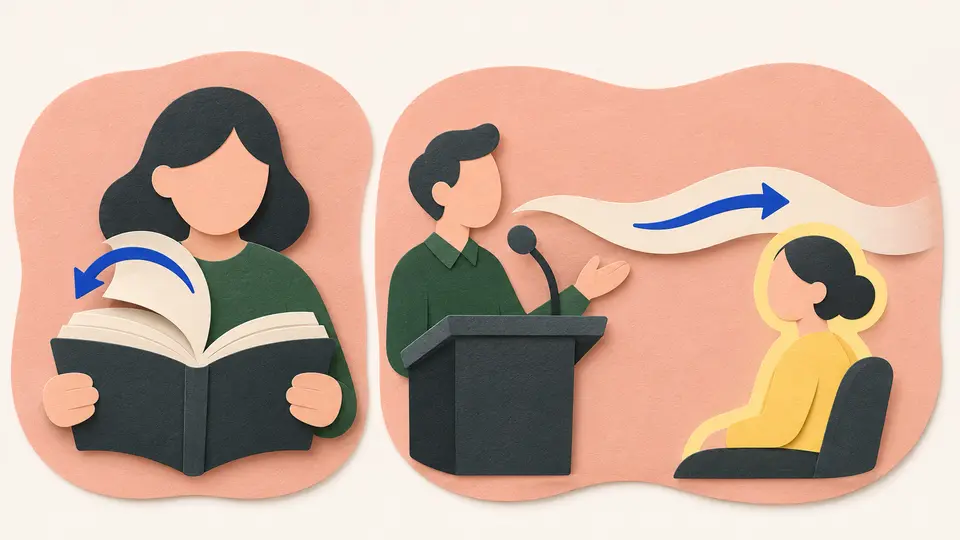
How speakers help listeners keep up
Find out how speakers order and signpost a talk so listeners who hear it only once can follow and remember it.

Rhetoric and ethos, pathos and logos
Aristotle sorted persuasion into the speaker's character, the audience's feelings and the argument itself. See how each works, how to spot them in a speech or an advert, and why rhetoric got a bad name.

Public speaking and stage fright
Why your body panics before a speech, why the audience sees less of it than you feel, and how voice, rehearsal, exposure and good notes help you speak well anyway.
Translation & intercultural communication
Translation, interpreting, multilingual meaning and communication across cultural settings.

Translating a joke
Why can a correct translation lose the joke? Follow real Simpsons puns into German, Ukrainian and Russian and see what each translator kept.
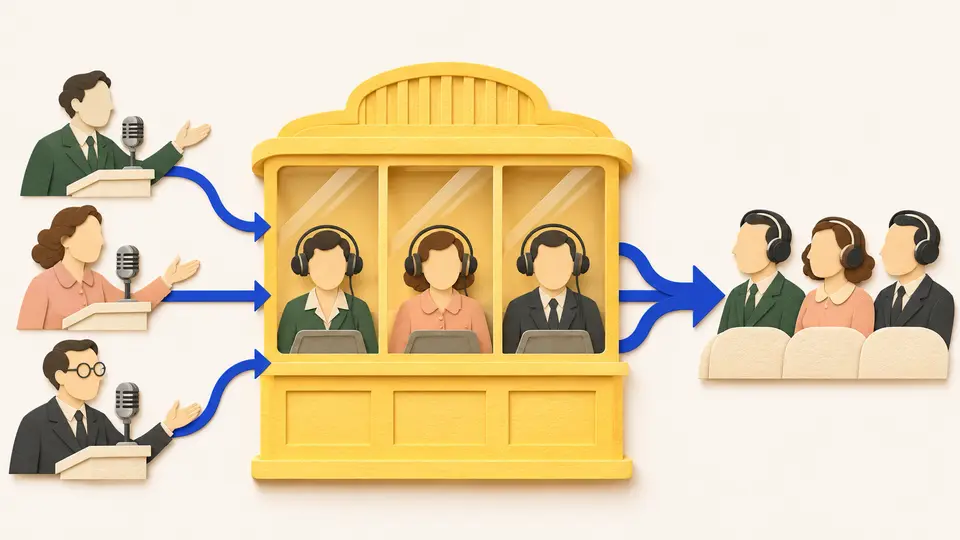
How interpreters keep up with a speaker
See how interpreters carry a speech into another language within seconds, and what working that fast costs them.

How translation works
Why word-for-word translation fails, how a text's purpose decides what faithful means, the old argument over moving the reader or the author, and how professionals draft and check their work.

Communication styles across cultures
How directness, hierarchy and formality vary between cultures, what Hall's and Hofstede's models claim and where they fall short, and how pilots and clinicians check they've been understood.
Media & information literacy
Journalism, advertising, information sources, misinformation and evaluating communicated claims.

Checking a claim beyond its website
See why professional fact checkers leave a web page to judge it, how to follow a citation back to what it shows, and why five sites that agree can still be one source.
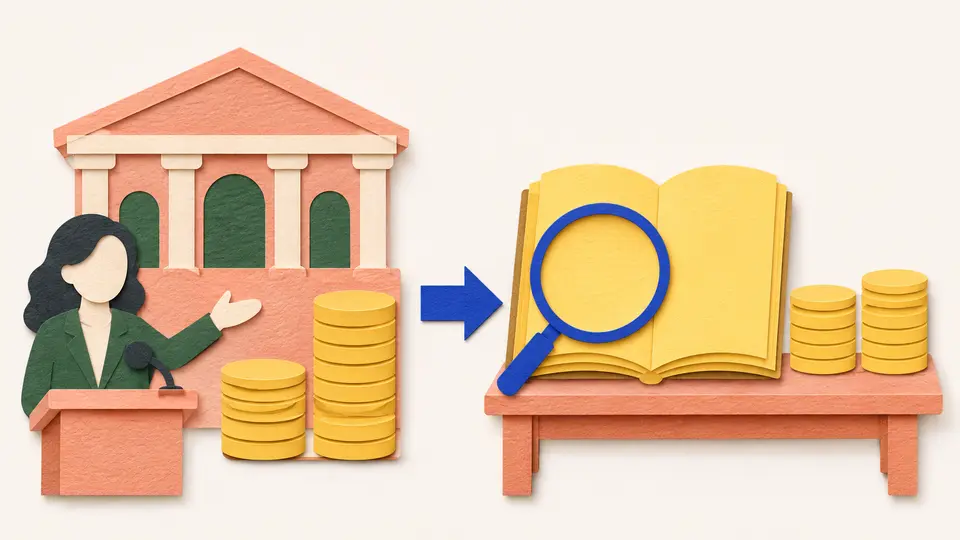
Telling news from opinion and ads
Learn the test that separates a factual claim from an opinion, what the labels above a story promise, and how to spot an ad made to look like reporting.

How news is made
Follow a story from tip to headline. See why most events never become news, what editors demand before quoting an unnamed source, why one agency report runs everywhere, and who pays for it all.

Propaganda
See what makes persuasion propaganda, the techniques it uses on whole populations, how governments organized it from the world wars to the Cold War, and what the evidence says about whether it works today.
Language learning & multilingualism
Language acquisition, bilingualism, language-learning processes and the experience of using multiple languages.

Why understanding can come before speaking
Understanding a language and speaking it are separate skills, and understanding usually comes first. See the evidence from children and new learners, and use it to judge your own progress.
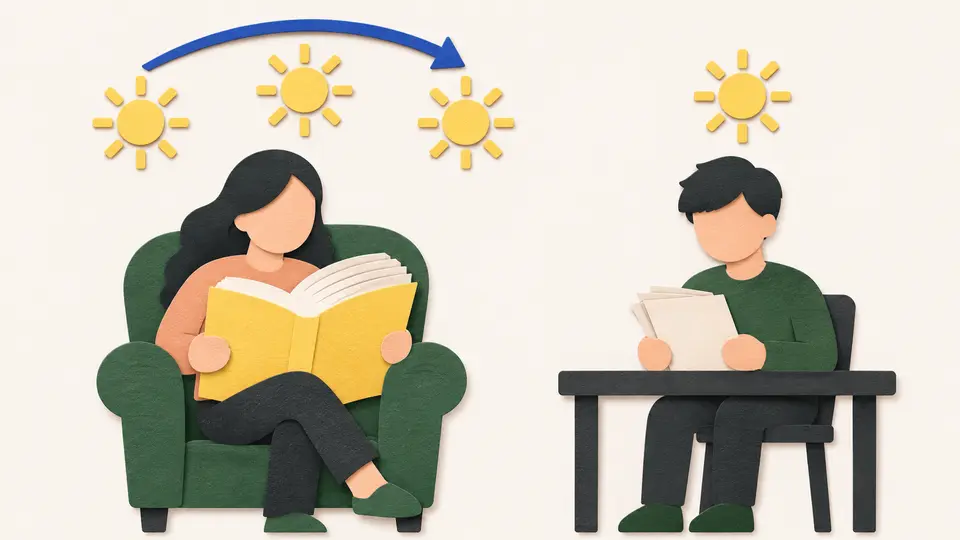
How readers pick up new words
Readers pick up new words from the sentences around them, but it takes a lot of reading for the words to stick.

How children learn to talk
Babies go from crying to sentences in about three years with no lessons. See the stages from babble to grammar, what children's mistakes reveal, what they need from the people around them, and how far that varies.

How adults learn a second language
What has to happen for an adult to learn a language, how the main teaching methods compare, what the US diplomats' hour estimates assume, and what app studies can and can't show.
Guided paths in Language & Communication
- Language by eye and by earFollow language as it reaches you, first by eye, from a signer's hands to a news page, then by ear, from a speaker's accent to live interpreting. 8 topics.
- From words to understandingFollow meaning through sentences, writing systems, context and translation, then use what you've learned to explain ideas and check claims. 8 topics.