Language & Communication · Languages, dialects & change
The history of English
English began as the speech of Germanic settlers in Britain and took in thousands of Norse and French words. Follow it through Beowulf, Chaucer and Shakespeare to a language with more second-language speakers than native ones.
What you will learn
- Describe where Old English came from and how it marked a word's role with endings
- Explain what Norse settlers added to English and how the old endings began to fade
- Explain how French became the language of England's rulers and how English won its place back
- Describe what French gave English, including the real story of pairs like cow and beef
Lesson 1 of 4 · 4 min
Old English and the Viking words inside it
The poem Beowulf opens with "Hwæt! We Gardena in geardagum." That means roughly "Listen! We have heard of the Spear-Danes in days of old." It's English, yet most English speakers today can't read a word of it.
Old English came to Britain with Germanic settlers from the North Sea coast, in what's now northwest Germany, southern Denmark and the Netherlands. They arrived from the 400s, after Roman rule ended. Their speech pushed the Celtic languages back into Wales, Cornwall and most of Scotland.
Old English showed who did what mostly with case endings. A noun changed its ending to show it was the subject, the object or the owner. The word that did the job of "the" had nine different forms. That's why Old English looks more like modern German than like the English you speak.
From 865 a large Viking army conquered much of northern and eastern England. Many Scandinavians then settled to farm, in an area later called the Danelaw. They spoke Old Norse, a Germanic language close enough to Old English that speakers could probably understand each other with some effort.
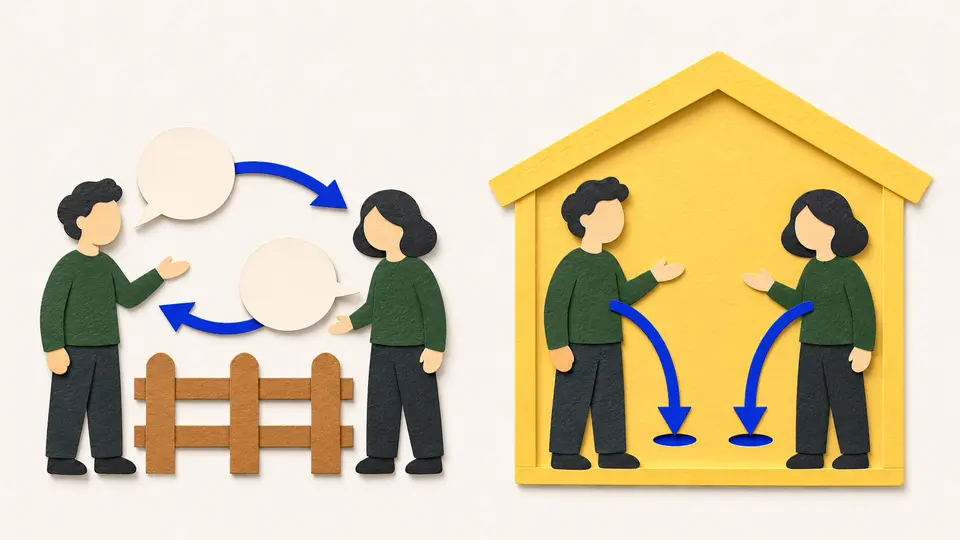
Settlers and locals traded, farmed and often lived side by side, so words crossed over. English took hundreds of everyday Norse words still in use, among them they, egg, sky, leg, take and window. Window was the Norse vindauga, "wind eye". Place names ending in -by mark Norse settlements.
In the same centuries the case endings wore away. The vowels at the ends of words weakened, so different endings came to sound alike. By the end of the Middle Ages, those nine forms of "the" had shrunk to one.
Why it happened is still argued. Endings vanished earliest in the north and east, where Norse settlers lived, so one view says Norse contact sped the loss. Another blames Celtic speakers learning English as adults. Both may be partly right.
Try to recallHow did Norse settlers in England change the English language?
Norse settlers lived alongside English speakers and gave English everyday words such as they, egg, sky and window. Their contact probably also sped up the loss of case endings, which faded first in the north and east where they settled.
Old English was a Germanic language that marked each noun's role with an ending. Norse settlers gave it words like they, egg and sky, and as the two peoples mixed, those endings began to fall away.
Lessons in this topic
Old English and the Viking words inside it
See why Old English reads like a foreign language, and how Norse settlers gave English everyday words like they, egg and sky.
1066 and the French words in English
See how Norman French became the language of England's rulers for three centuries, what it left behind, and why the cow and beef story is too neat.
Printers, Shakespeare and the first dictionaries
See how London printers spread one written English, why Shakespeare reads more easily than Chaucer, and how dictionaries fixed spelling.
How English became many Englishes
See how settlers carried English to America, where it drifted on its own, and how empire planted it in India and Nigeria as a second language.
Three quick stories from this topic
When beef meant a cow
For centuries after 1300, beef could mean a living cow as well as its meat
Beef, pork and mutton came from French, but in Middle English they could name the animals too. The tidy split between farm words and dinner words only settled after 1500.
The Ivanhoe story
Walter Scott's 1819 novel Ivanhoe made popular the idea that Saxon peasants raised the animals and Norman lords ate them.
What it does show
The split took centuries to form, which shows how long French kept its prestige in England.
Egges or eyren
Around 1490 an Englishwoman took a merchant asking for eggs to be speaking French
The printer William Caxton told the story. The merchant asked for "egges", the newer word from Norse. She only knew the older English "eyren", and understood once another traveler used it.
A printer's headache
Caxton told it to show how much English varied from place to place. A printer had to pick one form, and each choice reached many readers.
The winner
Egges won. The Norse word pushed out the old English plural, and print helped one form spread.
Window means wind eye
The English word window comes from a Norse word meaning wind eye
Viking settlers in England spoke Old Norse, and their vindauga, "wind eye", named an opening that let air in. English took it along with they, egg, sky and leg.
Neighbors, not raiders
Norse settlers farmed and traded alongside English speakers in the north and east, so their everyday words passed into English.
Still in use
Several hundred Norse words survive in English, and many are among the commonest words people say.
Sources
- History of English, Wikipedia
- Beowulf, Wikipedia
- A history of English (Textbooks in Language Sciences 9), Language Science Press, Míša Hejná and George Walkden, 2022
- List of English words of Old Norse origin, Wikipedia
- Influence of French on English, Wikipedia