Language & Communication · Languages, dialects & change
Language families of the world
About 7,000 languages are spoken today, and most belong to families that descend from one older language. Meet the largest families, see where they're spoken, and learn why some languages have no known relatives.
What you will learn
- Explain why counts of the world's languages differ
- Describe how unevenly speakers are spread across the world's languages
- Explain what makes a group of languages a family, and why lookalike words aren't proof
- Name the largest language families and where each is spoken
Lesson 1 of 4 · 4 min
Why nobody agrees how many languages there are
Glottolog, a catalogue run by a Max Planck institute, listed 7,685 spoken first languages in November 2026. Ethnologue's 2021 edition listed 7,139. Both are careful. They disagree by more than 500.
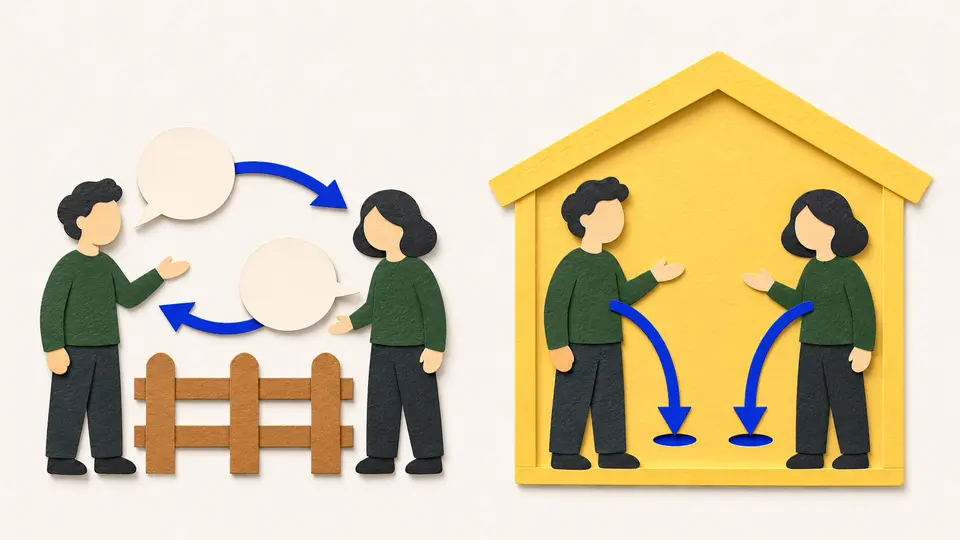
The gap comes mostly from one decision. Where does a dialect end and a separate language begin? Ethnologue asks whether speakers can understand each other, called mutual intelligibility, and whether they share a literature or identity. Not every scholar uses the same tests.
A 2026 estimate that includes signed languages put the total near 7,500. Glottolog itself calls its classification the editors' best guess. So the honest answer is about 7,000 to 7,700, depending on who draws the lines.
The languages are wildly unequal. By Ethnologue's figures, 389 languages, nearly 6%, have over a million speakers. Together they cover 94% of the world's people. The other 94% of languages share the remaining 6% of people.
Twenty of the largest languages alone are spoken by half of humanity. Most of the rest are spoken by small communities, most of them under 10,000 people. About half of all languages are described as endangered.
The small ones cluster. Papua New Guinea, with about 840 living languages, is the most diverse country on Earth. The Americas, West Africa and South Asia also hold hundreds of small families, so they hold most of the world's languages, though not most of its speakers.
Try to recallHow can it be true both that most people speak one of a few big languages and that most languages are small?
About 6% of languages have over a million speakers, and they cover 94% of people. That leaves the other 94% of languages with only 6% of people. So a typical person speaks a big language, while a typical language is small.
The world has about 7,000 to 7,700 languages, depending on where you split dialect from language. A few dozen of them carry most people, while most languages are small.
Lessons in this topic
Why nobody agrees how many languages there are
See why careful counts of the world's languages differ by hundreds, and how unevenly the world's people are spread across them.
The giant families of the world's languages
Learn what makes languages a family, how linguists tell real kinship from lookalike words, and where the five largest families are spoken.
Basque and the languages with no relatives
Meet languages that no one has linked to any family, and see why claimed links for them keep failing.
How far back can we trace languages
See why the methods that prove language families run out after several thousand years, and why giant proposals like Altaic and Nostratic stay disputed.
Three quick stories from this topic
Basque in Roman stone
Roman-era inscriptions in France preserve words close to modern Basque girl and man
Latin inscriptions from ancient Aquitania record names like Nescato and Cison. Modern Basque has neskato, young girl, and gizon, man, which shows the language was there before Rome.
Europe's only isolate
Basque has no proven relative. It's surrounded by Spanish and French, but related to neither.
Older than its neighbors
Most scholars think Basque is the last survivor of the languages spoken in Europe before Indo-European arrived.
Madagascar's Pacific cousins
Malagasy, spoken off the coast of Africa, belongs to the same family as Māori
Both are Austronesian, a family that stretches from Madagascar to Easter Island. It probably began in Taiwan, where all but one of its main branches are still found.
A family that crossed oceans
Austronesian spread by sea across the Indian and Pacific oceans, and today about 386 million people speak one of its languages.
One of the two biggest
Austronesian and Niger-Congo each hold about a fifth of the world's languages.
Few languages, most people
About 6% of the world's languages are spoken by 94% of its people
By Ethnologue's figures, 389 languages have over a million speakers each. That leaves thousands of other languages sharing the remaining 6% of the world's people.
Half of humanity
Twenty of the largest languages alone are spoken by half the world's population.
Where the small ones are
Papua New Guinea has about 840 living languages. The Americas, West Africa and South Asia also hold hundreds of small families.
Sources
- Glottolog information, Glottolog, Max Planck Institute for Evolutionary Anthropology
- Ethnologue, Wikipedia
- Language, Wikipedia
- Languages of Papua New Guinea, Wikipedia
- Basque language, Wikipedia
- Austronesian languages, Wikipedia