Science · Cells, genes & microbes
DNA, genes, and proteins
Follow genetic information from DNA through the cell's machinery, and see how different cells use different parts of largely the same genome.
What you will learn
- Explain how DNA stores information in a sequence of bases.
- Tell DNA, a gene, and a protein apart.
- Describe what messenger RNA does when a cell uses a protein-coding gene.
- Explain how translation links an RNA sequence to the order of amino acids in a chain.
Lesson 1 of 4 · 3 min
What's written in DNA?
Human DNA is a chain of about 3 billion chemical units called bases, and nearly every cell in your body carries the same DNA. Read along it and you won't find miniature eyes, muscles, or skin. You'll find a molecule that stores information.
There are only four kinds of base, written A, T, C, and G. Their order carries the information, much as the order of letters decides what a sentence says.
The letter comparison only goes so far. DNA is a chemical, and nothing in the cell reads it the way you read a page.
Its bases sit on two strands wound into a double helix, a shape like a twisted ladder. Each rung is a pair of bases. A always pairs with T, and C with G. That rule is called complementary pairing.
So wherever one strand has an A, the other has a T. Know one strand and you can work out the other.
That's how DNA gets copied. Each strand acts as a template, a pattern for building a new partner, so each new cell gets an exact copy.
A gene is a stretch of DNA that does a particular job. Human genes run from a few hundred base pairs to more than 2 million.
About 19,900 of them carry instructions for proteins, and together those take up only about 1% of your DNA.
Many other genes don't code for a protein. Instead they help control other genes, so "protein recipe" describes only some genes.
Proteins are a different kind of molecule. They carry out many of the cell's jobs and form parts of its structure.
Take the gene called HBB. It holds the instructions for beta-globin, part of the hemoglobin that carries oxygen in your red blood cells.
The gene supplies information, and the cell's machinery uses it to build the protein. So a gene and its protein are related, but they aren't the same object.
In human cells, most DNA sits in the nucleus, and a small amount is in the mitochondria.
More than 99% of your 3 billion bases are the same as everyone else's. And nearly every cell in your body holds the same DNA, yet a nerve cell and a skin cell do very different jobs. They differ in which parts of that information they actually use.
Try to recallIn one or two sentences, explain how DNA, a protein-coding gene, and a protein are related.
DNA stores information in its sequence of bases. A protein-coding gene is a segment of DNA whose information the cell's machinery uses to make a protein.
Lessons in this topic
What's written in DNA?
See how four bases store information, why the two strands make DNA easy to copy, and how a gene differs from the protein built from it.
How a cell turns a gene into a protein
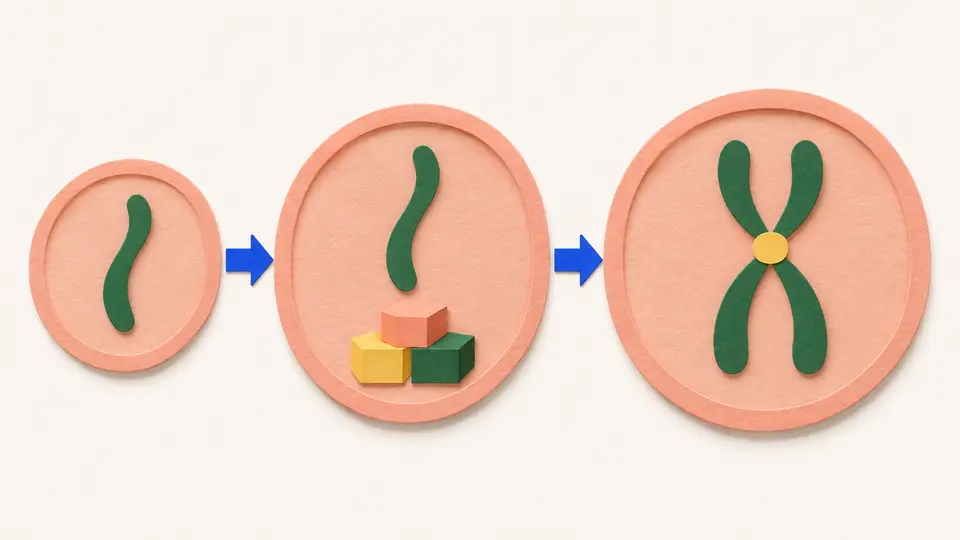
Follow a gene's information from DNA to messenger RNA to a chain of amino acids, and see why the DNA itself stays in the nucleus.
Why isn't a nerve cell a skin cell?
See how cells with the same DNA end up doing different jobs by switching different genes on and off.
What one changed base can do to a protein
Predict how a swapped, added or deleted base changes a protein, and see why most changes in a gene do nothing at all.
Three quick stories from this topic
Same DNA, different genes on
A nerve cell and a skin cell hold the same DNA, and each uses only a fraction of its genes
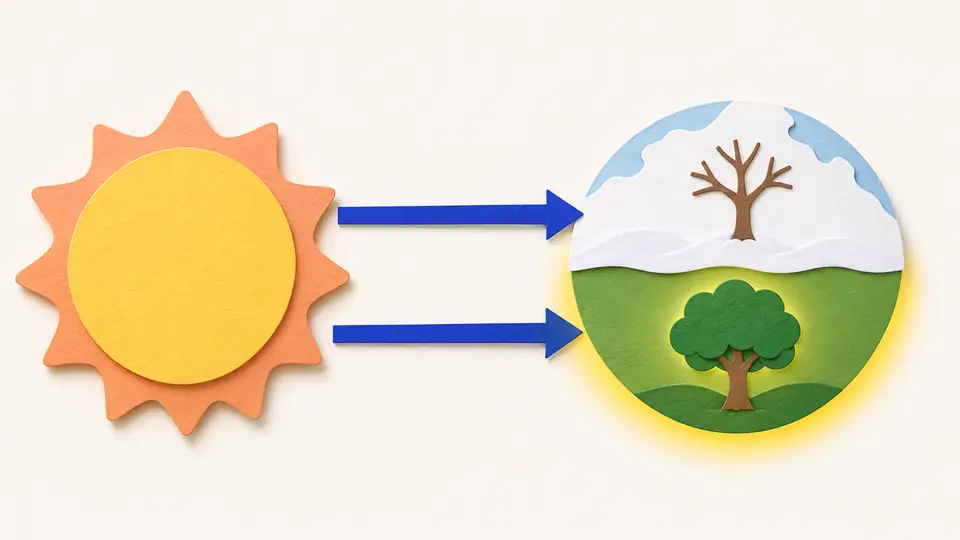
Each cell turns on only some of its genes at any given time and keeps the rest switched off. Different kinds of cell switch on different sets during development, which is what makes a brain cell look and act unlike a liver cell.
Expression controls output
Regulation helps determine which functional products a cell makes. That lets cells take on specialized jobs, both during development and in mature tissues.
A gene can be present but quiet
Having the sequence doesn't mean the cell is actively making much of its product. Reading the DNA tells you what's there, and measuring activity tells you what's being used.
Only 1% codes for proteins
Only about 1% of your DNA is made up of genes that code for proteins
The other 99% doesn't hold instructions for any protein. Scientists once thought it was junk with no purpose. At least some of it controls when and where genes are turned on and off.
What the 1% holds
Humans have about 19,900 protein-coding genes. They range in size from a few hundred base pairs to more than 2 million.
What the rest can do
Noncoding DNA includes sites where proteins attach to switch genes on or off. It also forms telomeres, which protect the ends of chromosomes during copying.
Trillions of DNA changes a day
Your body's cells pick up trillions of single-letter DNA changes on an average day
That's the National Human Genome Research Institute's estimate for the body's 37 trillion cells. The changes come from copying errors and from exposures like sunshine. Almost all fall where they don't matter, and cells correct some of them.
Most variants do nothing
Only a small percentage of gene variants cause genetic disorders. Most have no effect on health or development.
Cells repair their DNA
Each cell has enzymes that recognize and repair errors in DNA, often before the gene is used to make a protein.
Sources
- What is DNA?, MedlinePlus Genetics, US National Library of Medicine
- What is a gene?, MedlinePlus Genetics, US National Library of Medicine
- What is noncoding DNA?, MedlinePlus Genetics, US National Library of Medicine
- How do genes direct the production of proteins?, MedlinePlus Genetics, US National Library of Medicine
- HBB gene, MedlinePlus Genetics, US National Library of Medicine
- Can genes be turned on and off in cells?, MedlinePlus Genetics, US National Library of Medicine
- Point mutation, National Human Genome Research Institute, Talking Glossary of Genomic and Genetic Terms
- Do all gene variants affect health and development?, MedlinePlus Genetics, US National Library of Medicine