Science · Scientific discovery & evidence
How science works
Science tests ideas against the world and against other scientists. See how a guess becomes a test, what 'theory' really means, how sciences without labs test ideas, and how errors get caught.

What you will learn
- Tell a hypothesis apart from the prediction it produces
- Explain why a good test is one whose result could show the idea is wrong
- Define fact, law and theory as scientists use the words
- Explain why a scientific theory isn't a guess waiting to become a law
Lesson 1 of 4 · 4 min
How a guess becomes a test
By the 1840s, the planet Uranus was misbehaving. Astronomers used Newton's laws to predict where it should be, and it kept drifting off that path. Something was wrong, and there were two candidates.
Either Newton's law of gravity failed that far from the Sun, or an unseen planet was tugging on Uranus. The French mathematician Urbain Le Verrier backed the second idea. That idea is a hypothesis, a proposed explanation for something observed.
A hypothesis alone can't be checked against the sky. So Le Verrier worked out what it implied, the spot where the hidden planet should be right then. That's a prediction, what you'd expect to observe if the hypothesis is true.
A handy way to keep them apart is the sentence "I expect to see A because of B." B is the hypothesis. A is the prediction it produces.
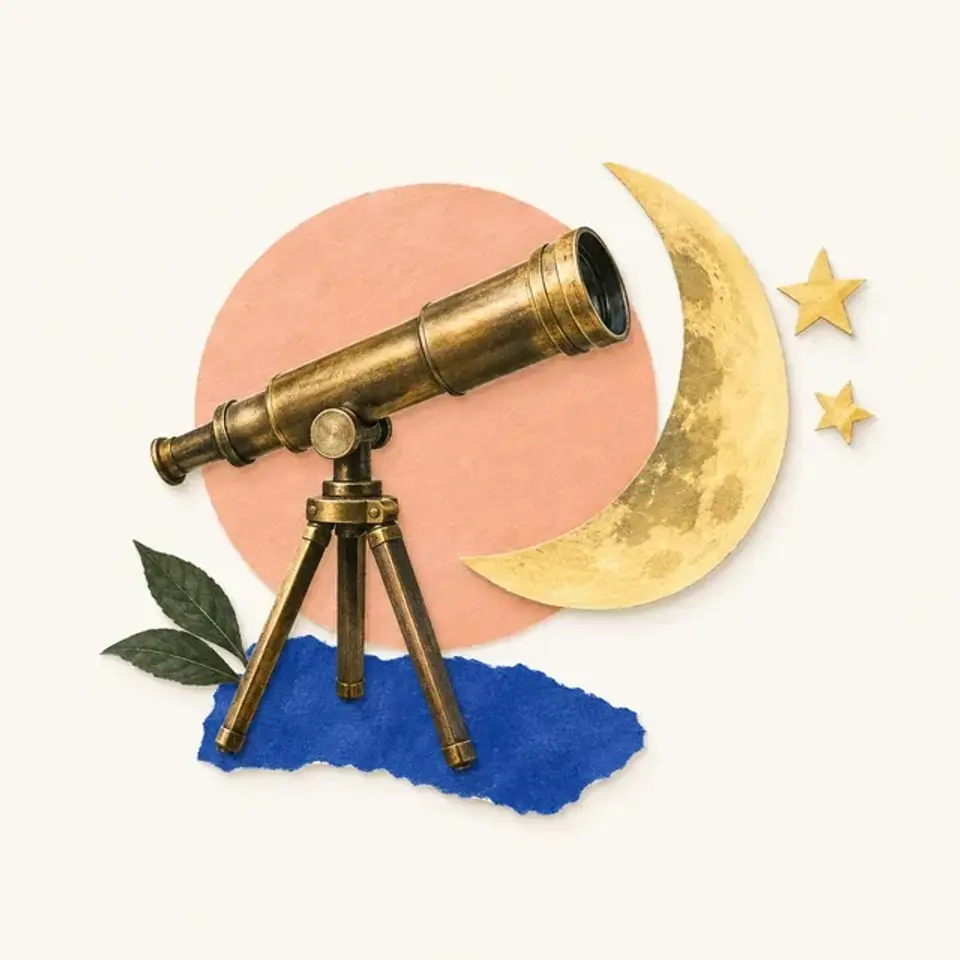
Le Verrier sent his numbers to Johann Galle at the Berlin Observatory. On the night of 23 September 1846, Galle found Neptune in less than an hour, within 1 degree of the predicted spot.
What made that a strong test is that it could have failed. An empty patch of sky would have counted against the idea. A test only tells you something if some result would show the idea is wrong.
Le Verrier's method did fail once. In 1859 he blamed odd wobbles in Mercury's orbit on another unseen planet, later called Vulcan. Astronomers searched for decades and never confirmed it. Einstein's 1915 theory of gravity later explained Mercury's orbit without any extra planet.
Say a friend claims a lucky charm works, but only when it wants to. No result could ever count against that claim, so no test can check it.
Try to recallWhy was Le Verrier's prediction of where Neptune would be a strong test of his idea?
It named a specific spot in the sky, so the idea could have failed. If Galle had found nothing there, the unseen-planet idea would have been in trouble. The later Vulcan search shows such predictions really can fail.
A hypothesis is a proposed explanation, and a prediction is what you'd expect to see if it's true. You can now judge a test by asking whether some possible result would have shown the idea was wrong.
Lessons in this topic
How a guess becomes a test
Follow the hunt for Neptune to see how a hypothesis turns into a prediction, and why the best tests are ones an idea could fail.
What scientists mean by fact, law and theory
Learn what the three words mean in science, and why calling something "just a theory" gets the word backwards.
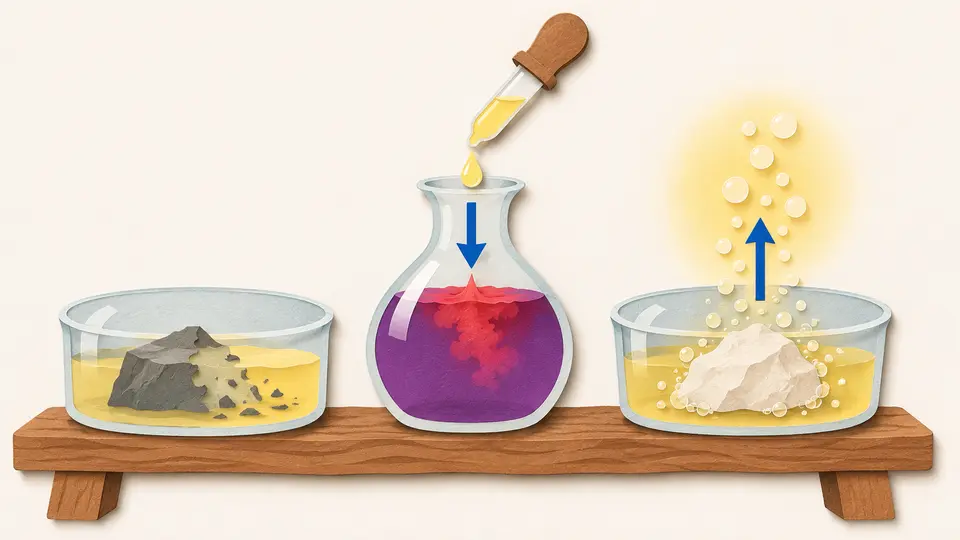
Testing ideas you can't put in a lab
See how geologists and astronomers test ideas about the past and the far away, and why no single step-by-step method fits every science.
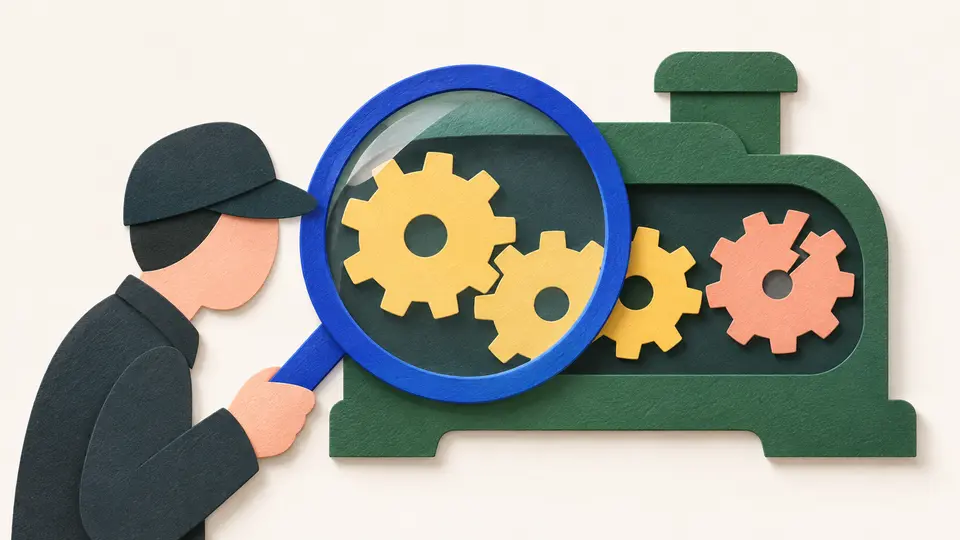
How scientists catch each other's mistakes
Follow the 2011 faster-than-light scare to see how outside checking catches errors, then see what a scientific consensus is and how it changes.
Three quick stories from this topic
4,000 feet of coral
A 1951 drill went through more than 4,000 feet of coral before reaching volcanic rock
Coral only grows in shallow, sunlit water. So a coral pile that thick on Eniwetok atoll meant the volcano below had slowly sunk while the reef kept growing upward.
Two ideas, one drill
A reef on an underwater mountain would sit as a thin layer. A reef around a sinking volcano would stack up hundreds of feet thick.
Testing the past
Geologists can't rerun an island's history, but each idea predicted different rock underground, and the drill decided between them.
The loose fiber cable
A 2011 result showing particles beating light came down to a loose fiber cable
The OPERA experiment clocked neutrinos arriving about 60 billionths of a second early over more than 730 km. A loose link between a GPS receiver and the master clock made the trip look 73 billionths of a second shorter.
Asking for help
The team found no fault itself, so CERN invited physicists everywhere to scrutinize the work and repeat the measurement.
Checked and settled
In 2012 four experiments at the same Italian lab measured neutrinos moving at the speed of light, as physics predicts.
Neptune found by math
Neptune was found in under an hour, within 1 degree of where math said it would be
In September 1846 Johann Galle in Berlin aimed a telescope where Urbain Le Verrier had calculated an unseen planet must be. Le Verrier had worked backward from the way Uranus strayed from its predicted path.
Two possible answers
Uranus's drift meant either Newton's law of gravity failed far from the Sun or a hidden planet was pulling on it. Finding Neptune showed Newton's law still held.
Some luck too
Later critics argued both Le Verrier and John Couch Adams overestimated the planet's distance and got its position nearly right partly through a fluke of timing.
Sources
- Discovery of Neptune, Wikipedia
- Testing scientific ideas and The logic of scientific arguments, Understanding Science, University of California Museum of Paleontology
- Vulcan (hypothetical planet), Wikipedia
- 2011 OPERA faster-than-light neutrino anomaly, Wikipedia