Philosophy & Ethics · Ethics & moral choices
Is being good a matter of character?
Virtue ethics emphasizes moral character where other theories emphasize rules or outcomes. See how Aristotle thought good character is built and what it aims at, then test the view against its critics.
What you will learn
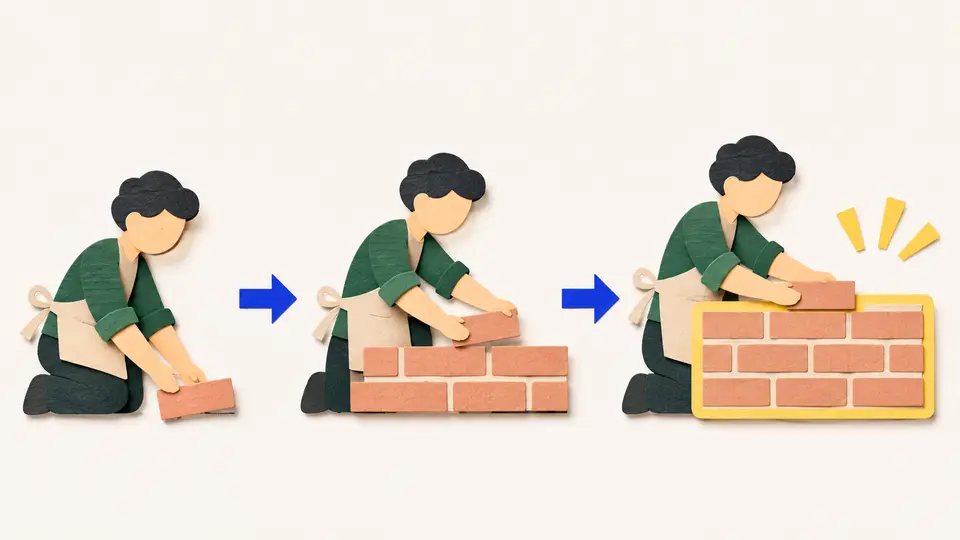
- Explain Aristotle's claim that virtues of character come from habit, as builders learn by building
- Distinguish doing what a just person would do from acting as a just person acts
- Explain Aristotle's doctrine of the mean using courage and the trainer who sets an athlete's diet
- Evaluate whether the doctrine of the mean amounts to more than advice to be moderate
Lesson 1 of 4 · 6 min
How do you become brave?
Nobody becomes a builder by reading about building. You become one by building. Aristotle thought courage, honesty and fairness are learned the same way, and that idea is the starting point of virtue ethics.
Virtue ethics is one of three main approaches to how we ought to live. The other two judge actions by duties and rules, or by their consequences. Virtue ethics puts moral character first.
Aristotle explains how character forms in Book II of his Nicomachean Ethics. Moral virtue, he says, comes about as a result of habit. Even its Greek name, ethike, is a slight variation on ethos, the word for habit.
Nature alone can't produce it. A stone naturally falls, and you couldn't train it to rise by throwing it up ten thousand times. People are different. We're adapted by nature to receive the virtues and made perfect by habit.
So we get the virtues as we get crafts, by doing. Which habits we form from our very youth, Aristotle says, makes "all the difference." His examples are plain ones. "Men become builders by building and lyreplayers by playing the lyre," he writes, and "so too we become just by doing just acts, temperate by doing temperate acts, brave by doing brave acts."
He had little patience for people who only study the subject. They "take refuge in theory," he wrote, like patients who listen attentively to their doctors and do none of the things they're ordered to do.
That raises a puzzle, and Aristotle states it himself. If you become just by doing just acts, it seems you must already be just to do them. His answer separates the act from the person.
An act counts as just, he says, when it's the kind of act a just person would do. But the just person isn't simply whoever does such acts. It's "the man who also does them as just and temperate men do them."
Doing them that way has three conditions. You must know what you're doing. You must choose the act, and choose it for its own sake. And the act must come from "a firm and unchangeable character."
Aristotle adds a sign to go by, the pleasure or pain that follows an act. Take temperance, which is self-control over bodily pleasures. Someone who gives up those pleasures and delights in doing so is temperate. Someone who's annoyed at it is self-indulgent.
Modern virtue ethicists make the same point. Rosalind Hursthouse and Glen Pettigrove describe a virtue as a disposition that "goes all the way down," unlike a mere habit such as drinking tea. It shapes what a person notices, values, feels and chooses, as well as what she does.
So someone who deals honestly only because honesty is the best policy, or for fear of being caught out, isn't acting as an honest person does. The honest person treats "That would be a lie" as a strong reason not to say certain things.
Try to recallTwo neighbors each return a lost wallet to its owner. On Aristotle's account, what would you need to know before calling either of them just?
Returning the wallet is the kind of act a just person would do, but on Aristotle's account the act alone doesn't make the doer just. You'd need to know that each neighbor knew what they were doing, chose to return the wallet for its own sake, and acted from a firm and unchangeable character. A neighbor who returned it only in hope of a reward did a just act without acting as the just person does.
On Aristotle's account you don't wait to become brave and then act. You do what a brave person would do, again and again, until it's what you choose and what you enjoy. The same act can be practice in one person and settled character in another.
That leaves the question of which act is the right one. Aristotle's answer is that virtue aims at a mean, a point between too much and too little.
Lessons in this topic
How do you become brave?
Aristotle held that you become brave or honest the way a builder learns to build, by doing it. See why he thought so, and why doing one just act still doesn't make you a just person.
Why Aristotle's middle way isn't the midpoint
See what Aristotle meant by a mean between two vices, why it changes from person to person, and whether it amounts to more than advice to be moderate.
Why good intentions need practical wisdom
See why virtue ethicists say kindness and courage can go wrong without practical wisdom, and whether their theory can tell you what to do.
Do people really have character?
Experiments suggest that small changes in a situation can decide whether people help. See why two philosophers concluded that most people lack character, and how virtue ethicists answer.
Three quick stories from this topic
No such thing as character
A philosopher concluded from experiments on helping that character may not exist
Gilbert Harman wrote that in 1999. In one experiment he and John Doris relied on, 70% of people who were alone went to help a woman crying out in the next room. Beside a stranger who did nothing, 7% did. A trait like compassion shouldn't switch off that easily.
What a trait is supposed to do
If you call someone compassionate, you expect it to show across situations and over time. Harman and Doris argued that the experiments justify believing most people lack traits like that.
The reply from Aristotle
Many virtue ethicists answer that the theory never claimed most people are virtuous. Aristotle himself called goodness rare.
Angry in the right way
Aristotle said anyone can get angry, and the hard part is getting angry in the right way
Being angry with the right person, to the right extent, at the right time, with the right motive and in the right way "is not for every one, nor is it easy," he wrote. He concluded that goodness is rare.
Not a call for mildness
Aristotle's mean isn't moderation in everything. Sometimes a little anger fits the situation, and sometimes the circumstances call for great anger.
Why it's hard
He argued that it's possible to fail in many ways and to succeed in only one, so missing the mark is easy and hitting it is difficult.
Ethics and doctor's orders
Aristotle compared studying ethics without practicing it to ignoring your doctor's orders
Most people "take refuge in theory," he wrote, like patients who listen attentively to their doctors and do none of the things they're told. Such patients don't get well. On his account you become brave the way you become a builder, by doing it.
Character as a craft
"Men become builders by building and lyreplayers by playing the lyre," Aristotle wrote, and "so too we become just by doing just acts, temperate by doing temperate acts, brave by doing brave acts."
Why habit and not nature
A stone can't be trained to rise by throwing it up ten thousand times. People differ, he argued, because we're adapted by nature to receive the virtues and made perfect by habit.
Sources
- Virtue Ethics, Stanford Encyclopedia of Philosophy
- Nicomachean Ethics, Book II, translated by W. D. Ross, The Internet Classics Archive, MIT
- Empirical Approaches to Moral Character, Stanford Encyclopedia of Philosophy
- Aristotle's Ethics, Stanford Encyclopedia of Philosophy