Philosophy & Ethics · Meaning & the good life
Epicurus on pleasure, desire and death
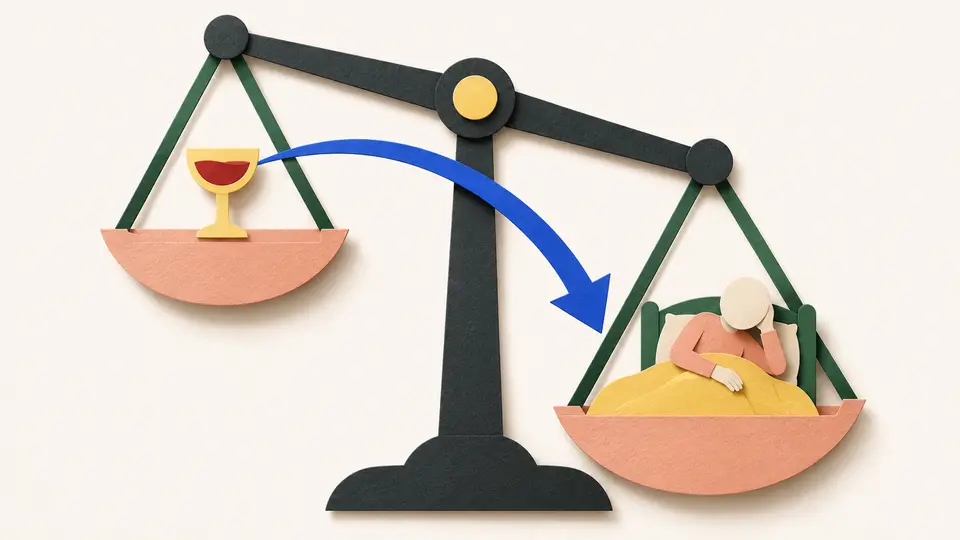
Epicurus said pleasure is the goal of life, and by pleasure he meant freedom from pain and fear. See what that asks of your desires, then weigh his case that death is nothing to fear.
What you will learn
- Explain what Epicurus meant by pleasure and why he said not every pleasure is worth choosing
- Distinguish moving from static pleasure, and explain the objection that a painless state is merely neutral
- Classify desires using Epicurus's three kinds, and explain which ones he thought you should satisfy
- Explain why Epicurus thought depending on luxuries makes you less happy, though he didn't refuse them
Lesson 1 of 4 · 6 min
What Epicurus meant by pleasure
Epicurus taught that pleasure is the goal of life. He called it "the alpha and omega" of a happy life. He also wrote in a letter, "Send me a little pot of cheese, that, when I like, I may fare sumptuously." By his own account he was content with plain bread and water.
So what did a man who feasted on cheese mean by pleasure? Epicurus was born around 341 BCE and grew up on Samos, an island that was then an Athenian colony. Around 306 BCE he moved to Athens and founded the Garden, a school that was also a community whose residents lived by his teachings.
His answer survives in the Letter to Menoeceus, a short summary of his ethics. Some people already read him as praising indulgence, and he said they had him wrong. By pleasure, he wrote, "we do not mean the pleasures of the prodigal or the pleasures of sensuality."
What he did mean was "the absence of pain in the body and of trouble in the soul." Drinking bouts and luxurious dinners don't make a pleasant life, he wrote. What does is "sober reasoning, searching out the grounds of every choice and avoidance," and getting rid of the beliefs that most disturb the soul.
That's how he could call pleasure "our first and kindred good" and still advise skipping many pleasures. "We do not choose every pleasure whatever, but often pass over many pleasures when a greater annoyance ensues from them." Some pains are worth enduring too, when they bring a greater pleasure later. Every pleasure is good and every pain bad, on his view, and you decide what to do by measuring them against each other.
Epicurus distinguished two kinds of pleasure. Scholars debate exactly where he drew the line, but one standard account runs like this. A moving pleasure comes while you're satisfying a desire, as when you eat because you're hungry. It stirs the senses, and it's what most people mean by the word.
Once you're full, you reach a state of no longer needing or wanting anything. Epicurus counted that state as a pleasure too, a static pleasure, and he ranked it highest. His own word for it was catastematic, and "static" comes from Cicero's Latin translation. The scholar David Konstan describes it as "the pleasure that accompanies well-being as such."
Because the satisfied state is itself the best pleasure, Epicurus denied there's any state in between, neither pleasant nor painful. An unfulfilled desire is painful. Once none are left, you're at the top of the scale.
That set him against the Cyrenaics, a rival school that urged people to multiply their desires and keep finding new ways to satisfy them. Epicurus objected that such pleasures always come with distress, because each one depends on a painful lack.
The Cyrenaics, and later the Roman politician Cicero, who was hostile to Epicureanism, attacked his central claim. A condition with no pain isn't pleasant, they said. It's neutral. If they're right, Epicurus's goal is a life without pain and fear, and calling that the most pleasant life stretches the word.
Try to recallEpicurus called the calm state after a desire is satisfied the best pleasure. How do moving and static pleasure differ, and what did his critics say about the static kind?
A moving pleasure happens while you're satisfying a desire, like eating when you're hungry, and it stirs the senses. A static pleasure is the state you reach once the desire is satisfied, when you no longer need or want anything. Epicurus said static pleasures are the best, and he denied there's any state in between, neither pleasant nor painful. The Cyrenaics and Cicero objected that the painless condition isn't pleasant at all. They said it's neutral, neither pleasurable nor painful.
So when Epicurus says pleasure, read freedom from pain and fear. The best state, on his view, is a body without pain and a mind without trouble. Feasts and thrills can't improve on it.
He also tied that state to virtue. "The virtues have grown into one with a pleasant life," he wrote, "and a pleasant life is inseparable from them." On his account you can't live pleasantly without also living with prudence, honor and justice.
Lessons in this topic
What Epicurus meant by pleasure
Epicurus made pleasure the goal of life and lived on bread and water. See what he meant by the word, and why critics said his highest pleasure was only neutral.
Which desires are worth satisfying?
Sort desires the way Epicurus did, and see why he advised trimming them to a small core that's easy to satisfy.
Is death bad for the one who dies?
Follow Epicurus's argument that death is nothing to us, then test it against the view that death takes good life away.
Is death like the time before birth?
Lucretius argued that death is no worse than the time before you were born. Weigh the replies that find a difference between the two.
Three quick stories from this topic
A little pot of cheese
Epicurus, the philosopher of pleasure, asked for a little pot of cheese so he could feast
He taught that pleasure is the goal of life, and by his own account he was content with plain bread and water. Pleasure, as he defined it, was a body free of pain and a mind free of trouble, and that takes very little.
How to make a man rich
"If you wish to make Pythocles wealthy, don't give him more money," Epicurus advised. The better route was to reduce what Pythocles wanted.
Luxury without dependence
He didn't tell people to refuse fine food when it was on offer. He warned against coming to depend on it, and wrote that those who need luxury least enjoy it most.
Buried by Vesuvius
Parts of Epicurus's main work were recovered from a library Vesuvius buried in 79 CE
He wrote about 300 rolls, and almost none survive. His treatise On Nature alone ran to 37. Damaged pieces of it were found in a villa at Herculaneum, in what was almost certainly the working library of a later Epicurean.
Whose library was it?
Philodemus, an Epicurean from Syria, trained in Athens and settled in Italy in the first century BCE. The library almost certainly held his working books, and many of its rolls are his own writings.
Why so little survives
Epicurus wrote a great deal, yet hardly any of his own writing has come down to us. Tim O'Keefe suggests a likely reason, that Christian authorities considered his ideas ungodly.
A blissful last day
Epicurus called the last day of his life blissful, though he was dying in great pain
In a final letter he wrote that his sufferings were so great nothing could add to them. Against them he set his gladness at remembering past conversations with a friend. He had long taught that death is nothing to us.
Why death is nothing to us
"When we are, death is not come, and, when death is come, we are not," Epicurus wrote. Death can't be bad for the living, who aren't dead, or for the dead, who no longer exist.
What critics reply
Many philosophers answer that death harms you without being felt. On their view it's bad because of the good life it takes away.
Sources
- Epicurus, Internet Encyclopedia of Philosophy
- Epicurus, Stanford Encyclopedia of Philosophy
- Letter to Menoeceus, translated by Robert Drew Hicks, The Internet Classics Archive, MIT
- Lives of the Eminent Philosophers, Book X, Wikimedia Foundation
- Death, Stanford Encyclopedia of Philosophy