Philosophy & Ethics · Meaning & the good life
The meaning of life
Philosophers split the question in two. Does life as a whole have a purpose, and what makes one person's life meaningful? See the main answers and the case that nothing matters.

What you will learn
- Tell the meaning of life as a whole apart from meaning in a particular life
- Explain why meaning in a life is a different value from happiness and morality
- Explain God-centered views of meaning and the objections they face
- Compare subjective, objective and hybrid accounts of meaning in a life
Lesson 1 of 4 · 4 min
The two questions inside the meaning of life
Say two friends both ask, "What's the meaning of life?" One is lying awake wondering why the universe has people in it at all. The other is wondering whether her twenty years as a nurse were worth it. They're asking different questions.
The first is about the meaning of life, the point of humanity as a whole. The second is about meaning in life, what makes a particular person's life meaningful. Most philosophers working on the topic today study the second. Even many who think God is central to meaning now ask how God would make an individual life meaningful.
The two questions can come apart. Someone might think the universe has no purpose at all and still judge that some lives mean more than others. A life like Einstein's counts as meaningful for most people.
A life spent keeping exactly 3,732 hairs on your head doesn't, however carefully you do it. That example comes from the philosopher Charles Taylor. Meaning, on this view, comes in degrees. One life can have more of it than another.
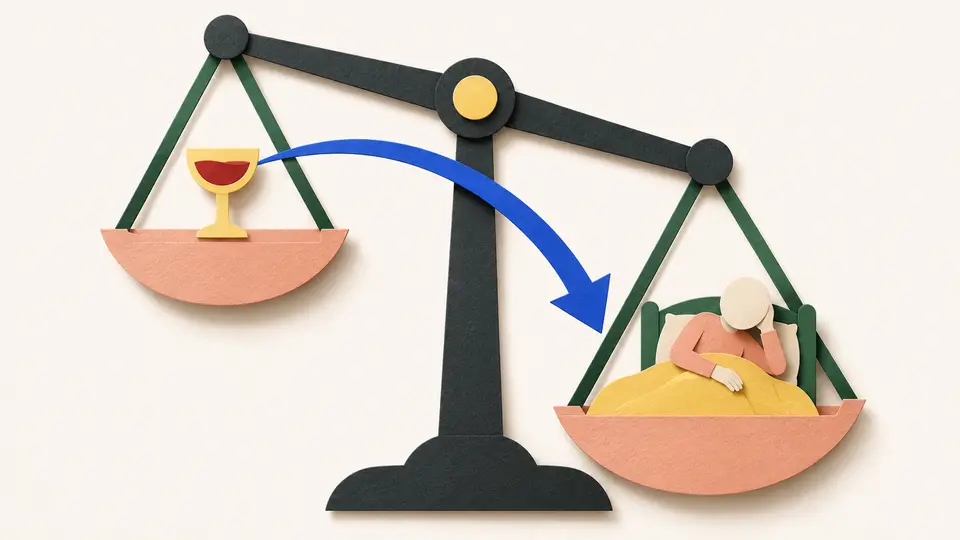
Is a meaningful life just a happy one? The philosopher Robert Nozick imagined an experience machine that feeds you any experiences you like while you float in a tank. You'd be happy. Very few philosophers think that life would be meaningful.
Susan Wolf, a philosopher who has written widely on this, calls meaning a third value, alongside happiness and morality. Someone who smokes pot all day, or does endless crosswords, may be perfectly content. Wolf says that doesn't make the life meaningful. A life spent caring for a frail, aging parent may be hard and still be deeply meaningful.
Try to recallWhy do philosophers treat meaning in life as different from happiness? Give an example.
A life can be happy without being meaningful. Someone hooked to Nozick's experience machine, or doing crosswords all day, may be content, yet few would call that life meaningful. A hard life caring for a frail parent can be meaningful without being especially happy.
The meaning of life asks what humanity is for. Meaning in life asks what makes one life matter, and it's a separate value from being happy or being good.
Lessons in this topic
The two questions inside the meaning of life
Learn to tell the meaning of life as a whole from meaning in one person's life, and why meaning isn't the same as happiness.
Where meaning might come from
Compare the main answers, from a purpose given by God to whatever you care about, and Susan Wolf's view that combines caring with worth.
Why life can look absurd, and why that may be fine
Follow Thomas Nagel's argument that absurdity comes from stepping back from your own life, and his reasons for meeting it with irony.
Tolstoy's crisis at fifty
Read how a famous, wealthy writer lost all sense of meaning, the four ways out he saw, and what philosophers take from his account.
Three quick stories from this topic
Nagel's mouse
Thomas Nagel argued that a mouse's life isn't absurd, but yours is
A mouse works hard to stay alive, yet it can't step back and see that it's only a mouse. You can step back from everything you care about and see it as arbitrary, and then you carry on caring anyway.
Not about size
Nagel rejected the idea that our smallness or short lives make us absurd. A life absurd at seventy would be infinitely absurd if it lasted forever.
Irony, not despair
If nothing matters from the stepped-back view, Nagel wrote, that doesn't matter either. So you can meet your absurd life with irony.
Sisyphus who loves his rock
Even a Sisyphus who loved rolling his boulder forever would lack meaning, says Susan Wolf
The philosopher Richard Taylor imagined the gods making Sisyphus adore his endless task. Wolf replies that loving it changes nothing about its pointlessness. For her, meaning needs something worth loving as well as your love for it.
Caring isn't enough
Wolf says a life of endless crosswords may be content without being meaningful. Meaning is a value of its own, apart from happiness.
Worth isn't enough either
If Sisyphus's rolling scared off vultures from a village he didn't care about, Wolf says his life would still lack meaning.
Tolstoy's "and what then?"
At the height of his fame, Tolstoy found that success couldn't tell him why to live
He was not yet fifty, with a loving wife, good children, a large estate and strong health. Yet every plan, from 300 horses to outshining Shakespeare, ran into the same question, because death seemed to cancel all of it.
A dragon in the well
Tolstoy pictured himself clinging to a twig in a well, with a dragon below and two mice gnawing the twig. The mice were day and night.
Where he found an answer
He found it among peasants and pilgrims whose faith gave their lives meaning. He concluded that faith is the strength of life.
Sources
- The Meaning of Life, Stanford Encyclopedia of Philosophy
- Meaning in Life and Why It Matters (Princeton University Press, 2010), Susan Wolf, copy hosted by the London School of Economics
- The Absurd (The Journal of Philosophy, 1971), Thomas Nagel, copy hosted by the University of Kentucky Department of Philosophy
- A Confession, translated by Aylmer Maude, Standard Ebooks