Business & Organizations · Sales & pricing
Pricing around value, costs and alternatives
A price has to cover costs and still beat what the customer would do without you. See why a 20% discount can need twice the sales, and what a retailer's cut leaves the maker.

What you will learn
- Explain why cost alone can't set a workable selling price.
- Identify the customer's alternatives as a limit on the price you can charge.
- Calculate contribution before and after a discount.
- Explain why higher revenue doesn't have to mean higher profit.
Lesson 1 of 4 · 4 min
Three questions to ask before setting a price
When Steve Jobs introduced the iPad in 2010, he first put $999 on the screen, the price the pundits expected. Then he replaced it with the real starting price, $499, and the crowd cheered. The audience had no way to judge what an iPad was worth, so the first number did it for them.
Buyers almost never know what a product cost to make, and they don't care. They judge a price against what they expected and what else they could do with the money.
So cost can't set a price alone. Say a workshop makes a desk lamp for 30 and is thinking of charging 45, in whatever currency you like. Cost tells the workshop what it has to recover. It can't say whether customers think the lamp is worth 45, or how attractive their alternatives are.
Customer value is the benefit a buyer gets in a particular use, so it changes from buyer to buyer. One person wants the lamp for its light quality. Another cares about its design.
That's why an extra feature doesn't earn a fixed markup just because it cost money to add. Say a dimmer costs 5 to fit. It's worth more than that to a buyer who reads in bed, and nothing to one who never dims the light.
A customer's alternatives include rival products. They also include doing nothing, or making do with something they already own. Someone may keep the lamp they have and buy a new bulb instead.
So the new lamp competes against that whole set for the buyer's money. If the workshop only checks the price of a similar-looking rival, it can miss the choice the buyer is really making.
Costs, value and alternatives pull on each other. Say buyers would gladly pay 28 for the lamp. At that price it sells well and loses 2 on every sale. At 60 each sale covers the cost twice over, and too few people buy.
A shop in the middle changes the sums again, because it keeps part of what the customer pays. So a price is a decision about the whole arrangement, from the workshop to the buyer's desk.
Try to recallA workshop prices its new desk lamp only by checking a rival's new lamp. Name one alternative the customer has that this leaves out, and say why it matters for the price.
The customer could keep their existing lamp and replace its bulb, borrow a lamp or decide they don't need another one. Those options cost little or nothing. So they limit what the customer will pay for a new lamp, even when the rival's lamp costs more.
Lessons in this topic
Three questions to ask before setting a price
See why buyers don't care what a product cost to make, and how their alternatives, including doing nothing, limit what you can charge.
Why a 20% discount can need twice the sales
Work out how many more sales a price cut needs just to keep contribution where it was, and why a busier shop can still earn less.
What a headline price leaves out
Compare offers by everything paid and everything promised, and see why a price that worked in one test may not work for a wider audience.
What the maker keeps after the retailer's cut
Work out what a producer keeps when a retailer takes a margin, and how selling through a channel changes both price and contribution.
Three quick stories from this topic
A 20% discount, twice the sales
A 20% discount can mean selling twice as much just to earn the same money
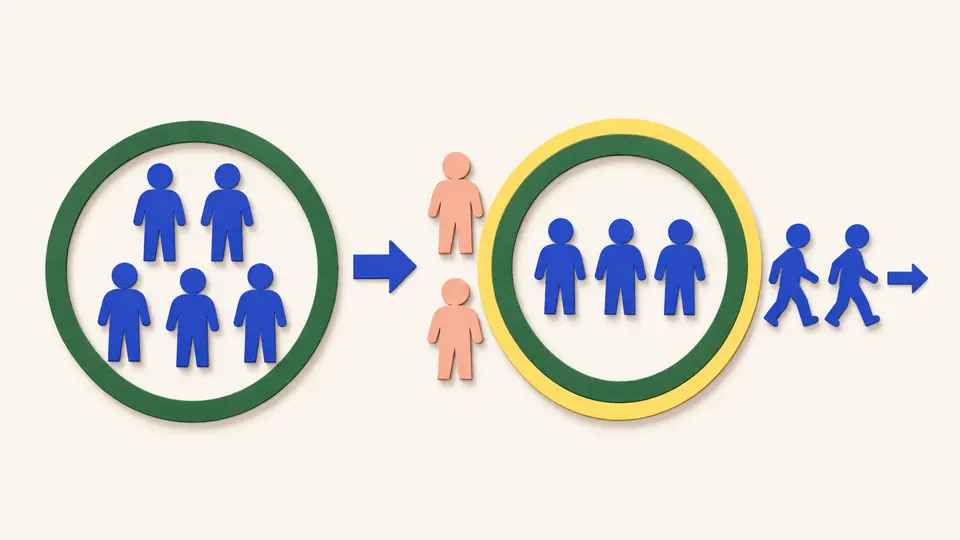
Say a lamp sells for 50 and each one costs 30 to make. Every sale leaves 20. Cut the price to 40 and every sale leaves 10, so it takes two sales to earn what one did. The whole discount comes out of what the seller keeps.
The volume hurdle doubles
On those numbers, twice as many sales are needed to keep the same total contribution. The price falls by a fifth, but contribution falls by half.
Test the assumptions
Extra production, promotion or delivery costs can change the comparison. A discount needs evidence about extra demand as well as arithmetic about each sale.
The iPad's two prices
Steve Jobs put $999 on the screen before revealing the iPad's real price of $499
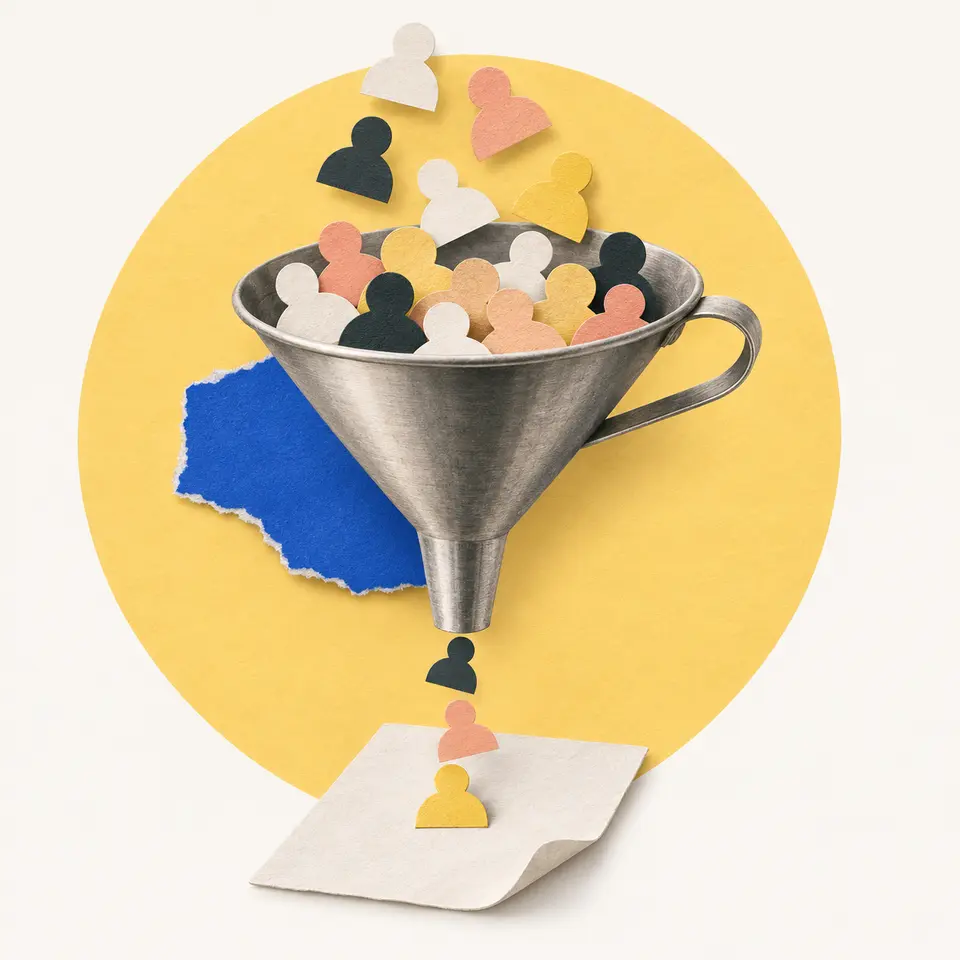
It was 2010, and $999 was what pundits expected. Beside that number $499 looked like a bargain, though nobody watching could say what an iPad was worth. Marketers call the first number an anchor, because buyers judge the next price against it.
Buyers don't see costs
Buyers almost never know what a product cost to make, and they don't care. They judge a price against what they expected and against their alternatives.
Why cost alone can't set a price
Cost tells a seller what it has to recover. It says nothing about what customers will pay, so a markup on cost can still produce a price nobody accepts.
The farm's share of a food dollar
US farms received 11.8 cents of each dollar spent on US-produced food in 2024
The other 88.2 cents paid for moving, processing and selling the food, by the US Department of Agriculture's count. Every company between a maker and a buyer takes its share out of the price the buyer pays, and the maker gets what's left.
The cut comes out of the price
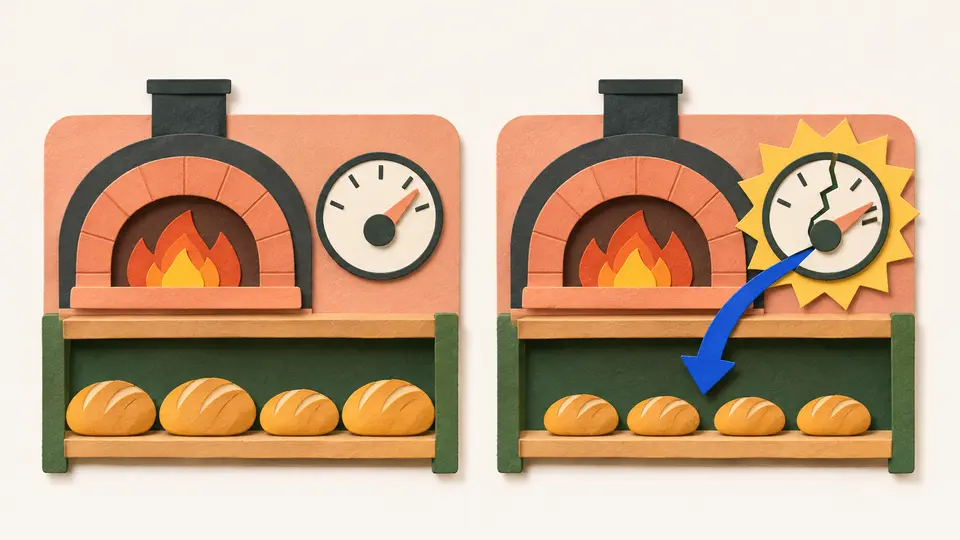
Say a lamp sells for 50 on a shelf and the retailer keeps 40%. The maker receives 30. If the lamp costs 30 to make, the maker earns nothing on it.
Why the maker can't just charge more
Customers compare the shelf price with their alternatives. A price they reject gives every company in the chain a margin on sales that never happen.
Sources
- 12.2 The Five Critical Cs of Pricing - Principles of Marketing | OpenStax, OpenStax, Rice University
- 12.1 Pricing and Its Role in the Marketing Mix - Principles of Marketing | OpenStax, OpenStax, Rice University
- 3.2 Calculate a Break-Even Point in Units and Dollars - Principles of Accounting, Volume 2: Managerial Accounting | OpenStax, OpenStax, Rice University
- Farms received 11.8 cents per dollar spent on domestically produced food in 2024, US Department of Agriculture, Economic Research Service (Charts of Note, April 28, 2026)