Mind & Psychology · Emotions & motivation
The fight-or-flight response, stress and anxiety
A threat sets off an alarm that reaches your heart, liver and pupils within moments. See what each change is for, what happens when the alarm stays on, and how to tell stress from anxiety.
What you will learn
- Trace the fight-or-flight cascade from the amygdala out to the body
- Explain each physiological change by the job it's doing
- Tell stress from anxiety the way the National Institute of Mental Health does
- Name the three signs that it's time to seek more help
Lesson 1 of 4 · 6 min
What your body does in the moment after a scare
Say a car swerves toward you as you step off a curb. You're back on the sidewalk, heart pounding, before you've had a thought about it. That's literally true. The body's alarm starts before the brain's visual centers have fully processed what you're seeing.
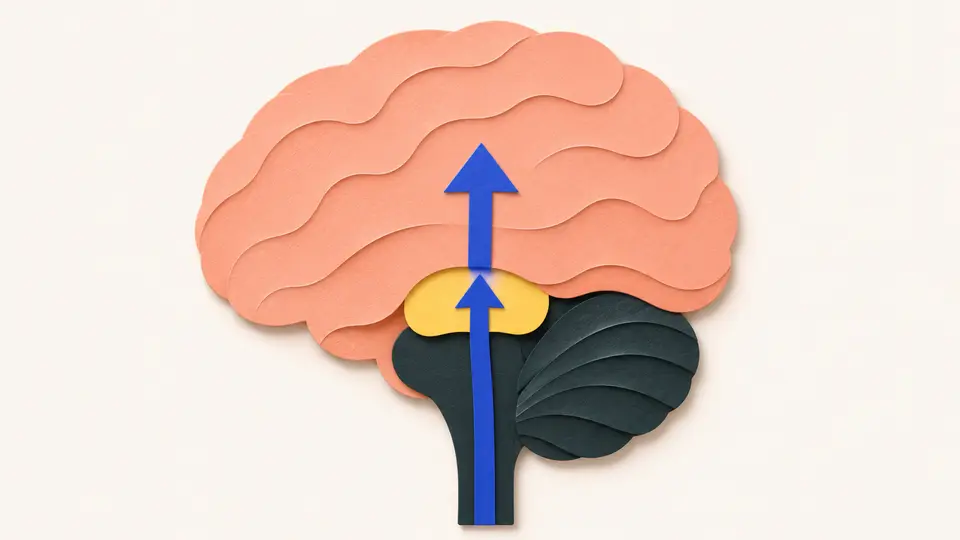
The alarm is the fight-or-flight response, the body's reaction to a perceived threat. Walter Cannon first described it in 1914 and gave it its name a year later. It begins in the amygdala, an area of the brain that helps process emotion. When the amygdala registers danger, it signals the hypothalamus, which works like a command center.
From there the alarm takes two routes at once. One runs along nerves. The sympathetic nervous system, the body's gas pedal, switches on the adrenal glands, which release epinephrine, also called adrenaline. That's the surge you feel within moments.
The other route runs through the bloodstream. The pituitary gland releases a hormone called ACTH, which leads to the release of cortisol. Cortisol raises blood pressure and blood sugar, and it keeps the body on high alert for as long as the brain still senses danger.
Both messengers free up fuel. Epinephrine binds to liver cells, which then produce glucose, the sugar your cells burn. Cortisol helps turn fatty acids into energy for the muscles.
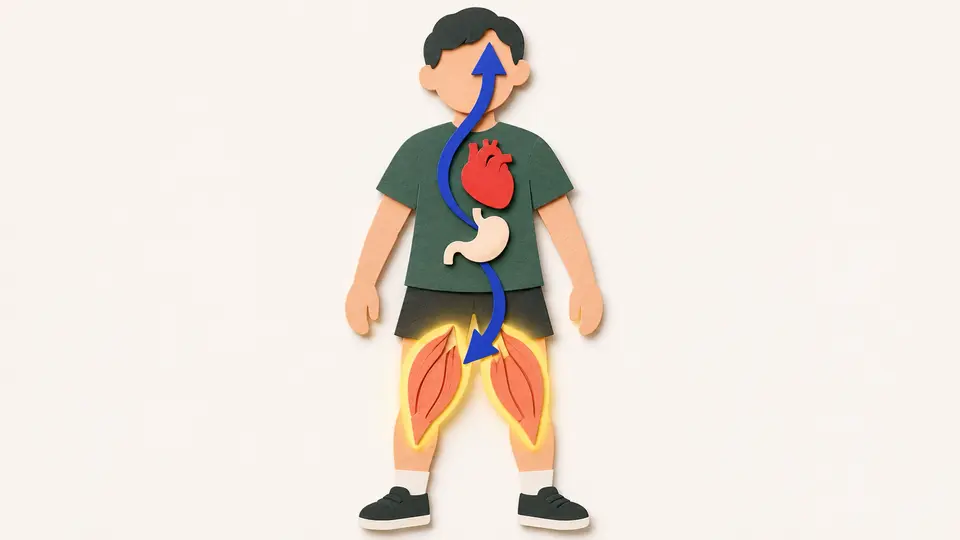
Every change in fight or flight has a job, and the jobs add up to one thing. They give the body more strength and speed right now.
Blood is diverted to the muscles and brain, which makes quick action easier. The digestive system gets less, so your appetite drops and so does your ability to digest food.
Heart rate and blood pressure rise to pump more blood. Breathing speeds up to supply the oxygen needed to burn the extra glucose. Your pupils widen to let in more light.
Your muscles tense for extra speed and strength, which can leave you trembling until the tension is released. Even your blood changes. It clots faster, which would limit bleeding if you were wounded.
When the threat passes, the parasympathetic nervous system takes over. It's the brake to the sympathetic system's gas pedal. It switches on the rest-and-digest response and returns the body to its normal steady state.
Try to recallBefore you speak in public, your hands shake and you can't face food, though there's no predator anywhere. In fight-or-flight terms, what is each of those?
Both are fight or flight doing its job. The shaking is muscle tension. Your muscles tense for extra speed and strength, and they can tremble until the tension is released. The lost appetite comes from blood being diverted to your muscles and brain and away from your digestive system. The response is set off by a perceived threat, so an audience is enough to start it.
One perceived threat reaches your heart, liver, lungs, pupils and blood within moments. The response evolved for life-threatening danger, and it also fires for traffic, a speech or an email. So shaky hands and a lost appetite before a big moment aren't a malfunction. They're the alarm working as designed, for a fight that isn't coming.
Lessons in this topic
What your body does in the moment after a scare
Trace the fight-or-flight response from the brain to the heart, liver and pupils, and learn the job each change does.
How to tell stress from anxiety
Stress and anxiety share the same symptoms. Learn what separates them, what long-running stress does to the body, and the three signs that it's time to ask for help.
Fight or flight leaves out freezing and fainting
Animals and people also freeze or faint under threat. See why researchers want a wider name, and what a tank of guppies does and doesn't prove about caution.
How your reading of a threat changes the response
The same email can start the alarm in one person and not in another. See how your reading of a situation, and of your own racing heart, shapes what your body does.
Three quick stories from this topic
Fear and blood clotting
When you're frightened, your blood starts clotting faster in case you get wounded
Faster clotting is part of the fight-or-flight response, along with a racing heart and wide pupils. The response prepares the body to fight or run, so it also gets ready to limit bleeding from an injury that hasn't happened.
Every change has a job
Blood moves to the muscles and brain, breathing speeds up to burn extra fuel, and the pupils widen to let in more light.
Built for a fight
The response gives the body more strength and speed for fighting or running. A perceived threat is enough to start it, so it fires for a speech too.
Freezing slows the heart
An animal frozen in fear has a slowing heart, the opposite of fight or flight
Fight or flight speeds the heart through the sympathetic nervous system. Freezing is run by the parasympathetic system, the one that normally calms the body. A 2017 review describes it as a brake on movement that lets the animal watch and prepare to act.
Not doing nothing
Freezing is a defensive mode of its own. In rodents it depends on connections from the amygdala to the brainstem, and brain scans suggest similar regions are involved in people.
Why the name falls short
Fight or flight names two responses. Researchers who also count freezing and fainting prefer neutral names such as the acute stress response.
Reading a pounding heart
People told a pounding heart helps them perform had hearts that pumped more efficiently
In a 2012 experiment, one group facing a stressful task was told to think of their arousal as the body getting ready. Compared with control groups, their hearts worked more efficiently, their blood vessels were less constricted, and they paid less attention to negative information.
Same task, different story
The stressful task was the same for every group. Only the instruction about how to interpret the arousal differed.
The reading starts the alarm
The stress response is set off by a perceived threat. So how you read a situation, and your own body, shapes how the response unfolds.
Sources
- Fight-or-flight response, Wikimedia Foundation
- Understanding the stress response, Harvard Health Publishing, Harvard Medical School
- I am So Stressed Out! Fact Sheet, National Institute of Mental Health
- Freeze for action: neurobiological mechanisms in animal and human freezing, Philosophical Transactions of the Royal Society B (PubMed record)
- Mind over matter: reappraising arousal improves cardiovascular and cognitive responses to stress, Journal of Experimental Psychology: General (PubMed record)