Politics & Law · Government & institutions
Parliamentary and presidential systems
Some countries elect a president for a fixed term. Others let parliament pick and remove the prime minister. See what each design does to deadlock, crises and democracy itself.
What you will learn
- Explain how a presidential system elects its leader separately for a fixed term
- Explain why a prime minister depends on the confidence of parliament
- Explain why a standoff between a US president and Congress can shut down the government
- Explain how a no-confidence vote and an early election end a deadlock in a parliamentary system
Lesson 1 of 4 · 4 min
Who picks the leader, and who can fire them
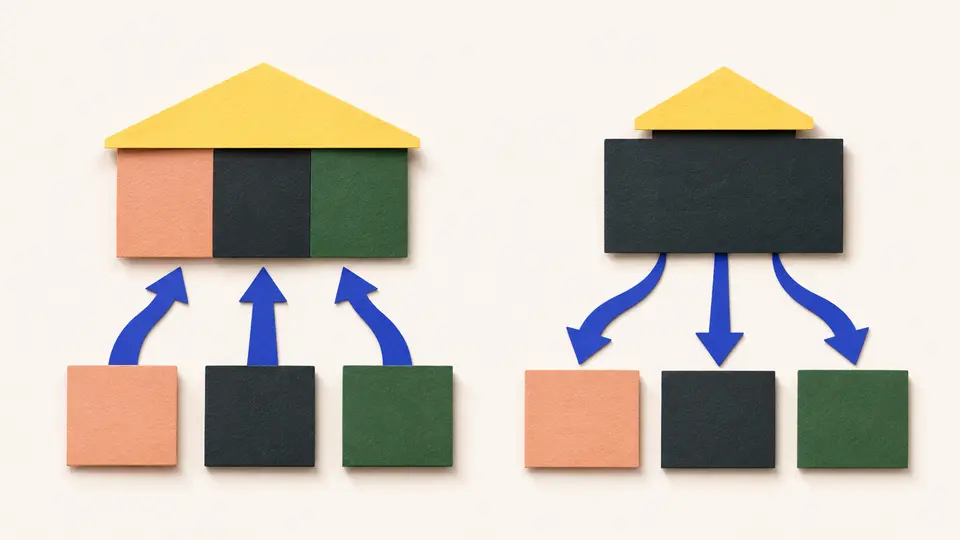
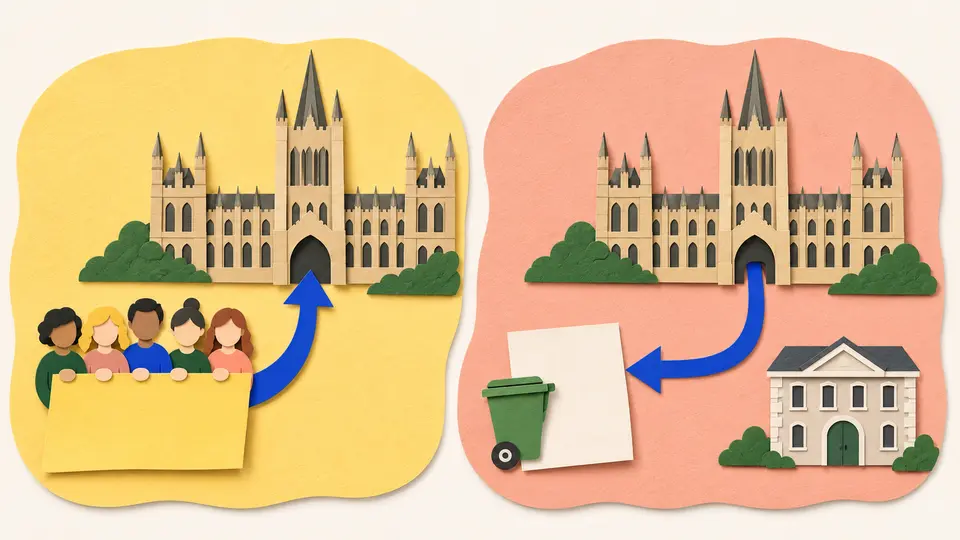
The US Constitution gives the president a four-year term. Voters choose the president in an election separate from the vote for Congress. Political scientists call this design a presidential system.
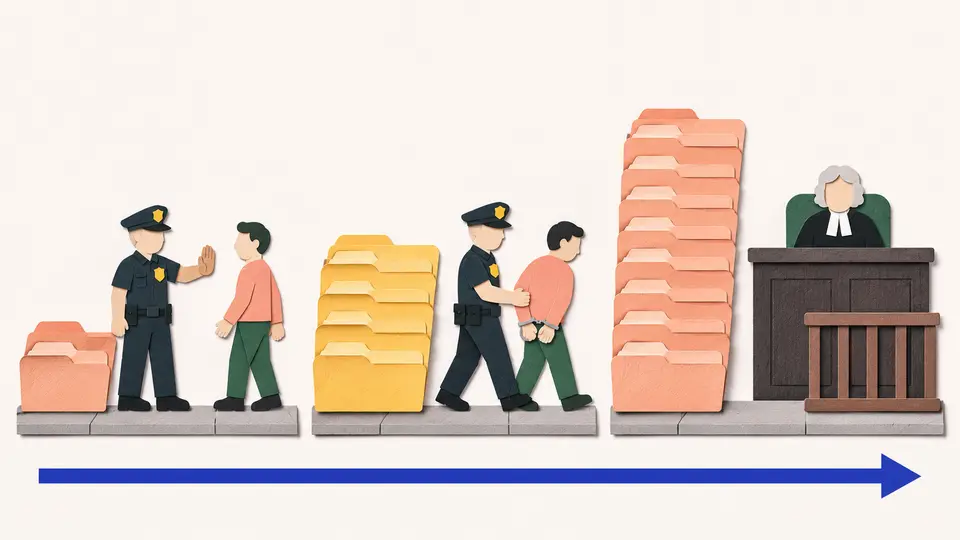
Because the president's mandate comes straight from voters, Congress can't fire a president for being unpopular. The only way out mid-term is impeachment, a trial for serious wrongdoing. The House brings the charges, and two-thirds of the senators present must vote to convict.
The two branches are kept apart in person too. Nobody holding federal office may sit in Congress at the same time. So the president runs the executive branch, and Congress writes laws and votes money, each on its own clock.
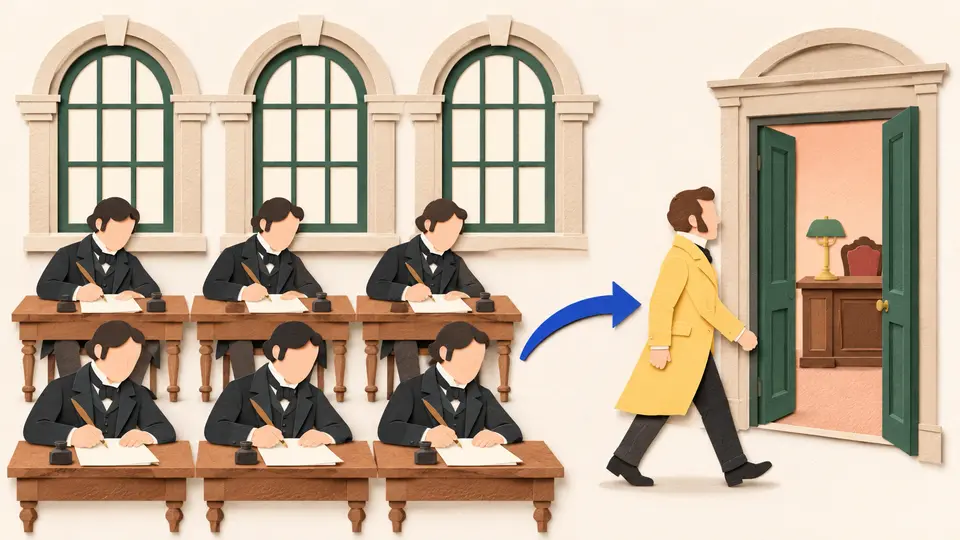
Britain works differently. Voters elect members of parliament, and the prime minister is whoever can command a majority of them. That's usually the leader of the biggest party. This design is a parliamentary system.
The prime minister stays only while parliament keeps its confidence, meaning its support on the votes that matter. If a majority votes against the government, it has to resign or call an election. Ministers usually sit in parliament themselves.
Try to recallWhy can a parliamentary country like Britain change its prime minister without holding a general election?
A prime minister holds office only while they have the confidence of parliament. Voters elect the members, and the members' majority decides who leads. If the governing party swaps its leader and the majority backs the new one, that person takes over.
A president answers to voters on a fixed timetable. A prime minister answers to parliament and can go whenever its majority does.
Lessons in this topic
Who picks the leader, and who can fire them
See how a president wins office in an election of their own, while a prime minister lasts only as long as parliament's majority backs them.
Shutdowns and snap elections, two ways to break a deadlock
Learn why a US budget fight can close the government for weeks, and how a no-confidence vote settles a standoff in a parliamentary system.
France's two leaders and what happens when they clash
See how France splits power between an elected president and a prime minister who answers to parliament, and what happens when they come from rival camps.
Are presidential systems riskier for democracy?
Weigh Juan Linz's famous warning about presidential systems against the evidence that came after, from military legacies to impeachments in Latin America.
Three quick stories from this topic
The 43-day shutdown
The US federal government shut down for 43 days in 2025, the longest full shutdown yet
It began on October 1, when the Senate couldn't pass a funding bill. About 750,000 federal workers were sent home without pay. A law from 1870 bars officials from spending money Congress hasn't approved.
Why it can happen
The president and Congress are elected separately, so either side can hold out. Neither can remove the other to break the standoff.
Parliaments differ
In a parliamentary system, a government that can't pass its budget can be voted out, which forces a new government or an election.
Brazil's first impeachment
The first president elected under Brazil's 1988 constitution was driven out by impeachment
Fernando Collor faced corruption charges in 1992. In the Chamber of Deputies, 441 members voted to open impeachment, and Collor resigned the day his Senate trial began. The Senate barred him from office for eight years anyway.
No coup this time
Aníbal Pérez-Liñán found that as military coups receded in Latin America, impeachment became the main way to remove unpopular presidents.
A presidential exit
A president can't be voted out by a simple majority, so impeachment for wrongdoing is the formal way to end a term early.
France's 62-year gap
France's parliament brought down a government only once in 62 years, then did it in 2024
In 1962 the National Assembly censured Georges Pompidou's government, and de Gaulle answered by dissolving it. The next successful censure came on December 4, 2024, when 331 deputies voted out Michel Barnier's government.
A high bar
A censure motion needs an absolute majority of all deputies. For decades presidents usually had a friendly majority, so motions failed.
Two leaders
France's president is elected directly, but the prime minister's government needs the Assembly's backing to survive.
Sources
- Presidential system, Wikipedia
- The Constitution of the United States: A Transcription | National Archives, US National Archives
- Parliamentary system, Wikipedia
- Confidence motions and parliament, Institute for Government
- Liz Truss, Wikipedia
- Government shutdowns in the United States, Wikipedia
- Impeachment of Fernando Collor de Mello, Wikipedia
- Motion of no confidence, Wikipedia