Politics & Law · Rights & constitutions
Human rights and the Universal Declaration
What the 1948 Universal Declaration lists, how a statement with no legal force grew into binding treaties and courts, and where the idea of rights owed to everyone came from.

What you will learn
- Explain why the United Nations wrote the Universal Declaration after World War II and how it was adopted
- Describe the main kinds of rights the Declaration's 30 articles cover
- Explain how a declaration differs from a treaty, and why the Declaration's rights were split into two covenants
- Describe how the Declaration's rights reached regional treaties and national constitutions
Lesson 1 of 4 · 4 min
What the world agreed in Paris in 1948
The United Nations Charter of 1945 promised respect for human rights, rights every person holds simply by being human. But it never said what those rights were. After the scale of Nazi atrocities became clear, member states wanted a list.
In 1946 the UN set up a Commission on Human Rights with 18 members. Its drafting committee, chaired by Eleanor Roosevelt, began work in February 1947. John Humphrey of Canada drew up the blueprint, and René Cassin of France wrote the first draft. The whole text took less than two years.
On 10 December 1948, at the Palais de Chaillot in Paris, the General Assembly voted. Of 58 members, 48 voted yes, none voted no and eight abstained. Saudi Arabia objected to the right to change religion. South Africa, which had just begun apartheid, objected too. Six communist states said the text didn't condemn fascism strongly enough.
Article 1 opens with "All human beings are born free and equal in dignity and rights." Article 2 says the rights belong to everyone, whatever their race, sex, religion or opinion.
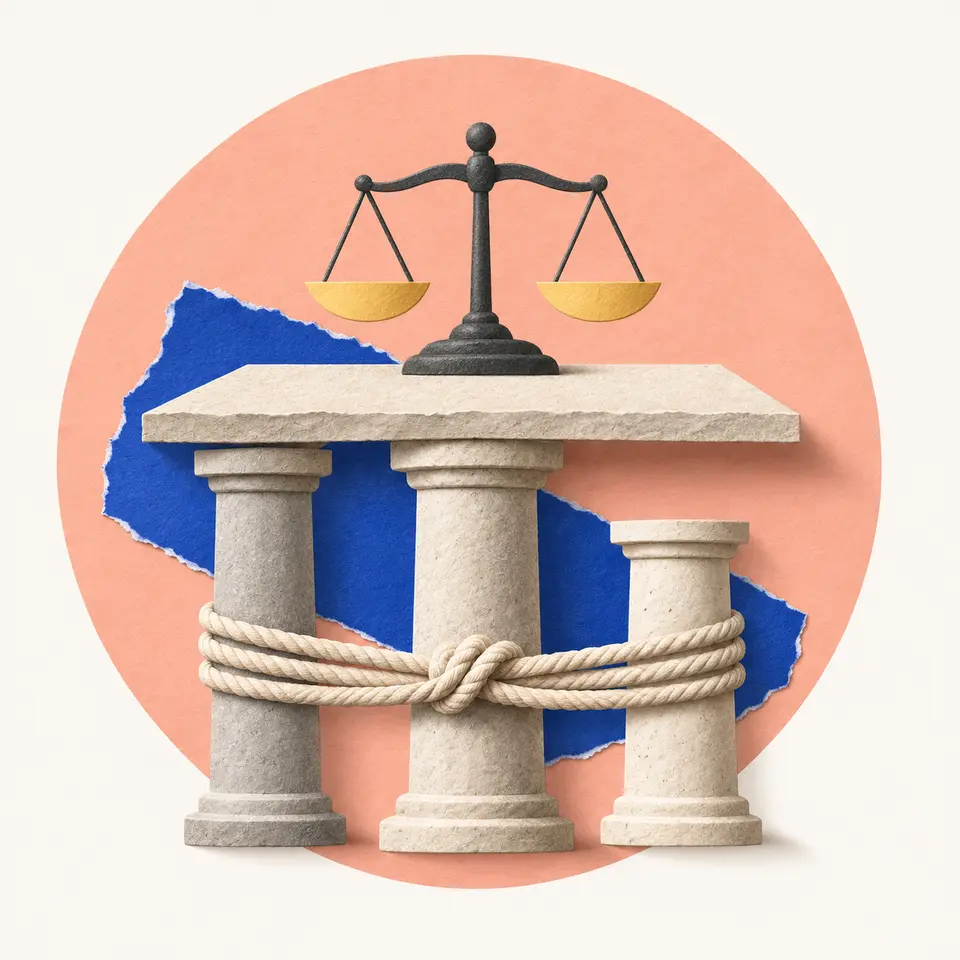
Cassin compared the 30 articles to a Greek temple. Articles 1 and 2 are the foundation. Four columns hold up the rest. The first covers the individual, with the right to life and bans on slavery and torture. The second covers people in society, such as freedom of movement, nationality and asylum.
The third column holds political freedoms, such as religion, expression, assembly and taking part in government. The fourth holds economic and social rights, such as work, education, housing and medical care. Article 24 even promises rest and "periodic holidays with pay." The last three articles, the roof, set out duties to the community.
Try to recallRené Cassin pictured the Universal Declaration as a temple with four columns. What kinds of rights do the four columns hold?
The first holds individual rights such as life and freedom from slavery and torture. The second holds rights in society such as movement, nationality and asylum. The third holds political freedoms such as religion, expression and voting, and the fourth holds economic and social rights such as work, education and housing.
After the war, the UN turned the Charter's vague promise into a list of 30 articles, adopted in 1948 with no votes against. That list joins freedom from torture and free speech with rights to education, housing and paid holidays.
Lessons in this topic
What the world agreed in Paris in 1948
Learn why the new United Nations wrote a list of rights after World War II, how it was adopted, and what its 30 articles promise.
How a promise with no legal force became law
See why the Declaration was split into two binding covenants in 1966, and how its rights reached regional treaties and national constitutions.
The older ideas behind the Declaration
Trace the claim that all people share rights back to the French declaration of 1789, see who it left out, and meet the drafters who argued over the 1948 text.
Who makes countries keep their rights promises
See how UN committees press countries to respect rights, why regional courts can do more, and why many violations still go unpunished.
Three quick stories from this topic
Equal, but not voting
France's 1789 rights declaration let only about 4.3 million of 29 million people vote
It declared that men are born and remain free and equal in rights. But political rights went only to French men aged 25 or more who paid a set amount of tax. Women, servants, the poor and enslaved people were left out.
An answer from women
In 1791 Olympe de Gouges wrote a declaration of the rights of women. It followed the original article by article.
Closing the gap
The 1948 Universal Declaration changed "all men" to "all human beings." Hansa Mehta of India is widely credited with that change.
A right to a holiday
The Universal Declaration of Human Rights includes a right to paid holidays
Article 24 promises everyone rest, leisure, reasonable working hours and "periodic holidays with pay." It sits among the economic and social rights the drafters placed beside free speech and the ban on torture.
More than freedoms
The 1948 text also lists rights to work, housing, medical care and free elementary education. Hernán Santa Cruz of Chile pushed for these against some Western opposition.
Why it's there
The drafters treated a decent life as part of human dignity. That view later became its own binding treaty, the economic, social and cultural covenant of 1966.
Rulings left waiting
By 2016 nearly 10,000 European human rights judgments hadn't been carried out
The number of unimplemented judgments of the European Court of Human Rights rose from 2,624 in 2001 to 9,944 at the end of 2016. States have promised to obey its rulings, but the court can't strike down a national law itself.
A slow reply
In 2005 the court ruled that Britain's blanket ban on prisoners voting was unlawful. Britain made only a minimal change, in 2017.
Paying without fixing
Russia often paid the compensation the court ordered but didn't fix the problems behind it. It was expelled from the Council of Europe in 2022.
Sources
- Universal Declaration of Human Rights, Wikipedia
- History of the Declaration, United Nations
- Drafters of the Declaration, United Nations
- Universal Declaration of Human Rights, text, United Nations
- Declaration of the Rights of Man and of the Citizen, Wikipedia
- European Court of Human Rights, Wikipedia