Politics & Law · Courts, crime & justice
Criminal cases and civil cases
The state prosecutes crimes and punishes. Private parties sue each other for compensation. See how the two tracks differ, how one event can lead to both, and where the line blurs.
What you will learn
- Explain who brings a criminal case and a civil case and what each one seeks
- Describe how the outcomes of the two tracks differ, from verdicts to who gets paid
- Explain why an acquittal doesn't stop a civil lawsuit over the same act
- Explain why a civil jury could find O. J. Simpson liable after a criminal jury acquitted him
Lesson 1 of 4 · 4 min
Prosecuted or sued, and why it matters which
Say a man punches a stranger outside a bar and breaks his jaw. Two separate cases can follow, and they work on different logic.
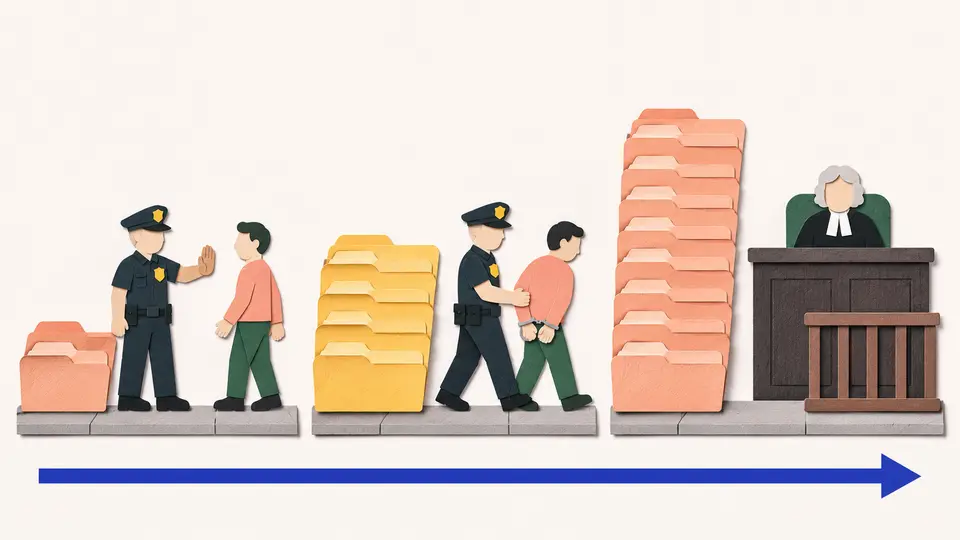
The first is a criminal case. A crime counts as a wrong against society, so the state brings it. In US federal courts only the government can start a criminal case. Its goal is to punish the person who did it.
The second is a civil case. The injured man, now the plaintiff, sues the puncher himself. He's asking for compensation, money for his medical bills and lost pay. A civil case can also ask a court to order someone to stop doing something.
Law students learn the split as aims. Criminal law punishes. The civil law of wrongs, called tort, compensates.
The two tracks end differently. A criminal court finds the defendant guilty or not guilty. A guilty defendant gets a sentence, which can mean prison, a fine paid to the government and restitution to the victim.
A civil court finds the defendant liable or not. A liable defendant pays damages to the plaintiff, or obeys an order. England and Wales have called the plaintiff the claimant since 1999.
The prosecution also has a much heavier burden of proof than a civil plaintiff. Another topic covers how heavy.
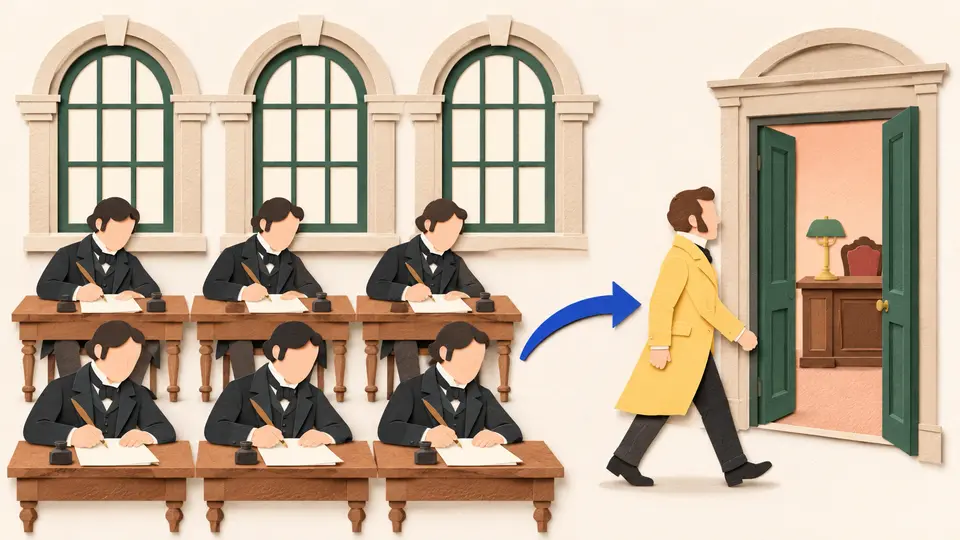
Most cases on both tracks never reach a verdict. More than 90% of US federal criminal defendants plead guilty. Civil judges push the parties to settle, and many do.
Try to recallA shop owner is assaulted during a robbery. Describe how a criminal case and a civil case over the attack could each end.
The criminal case could end with the robber found guilty and sentenced to prison, a fine paid to the government or restitution to the shop owner. The civil case could end with the robber found liable and ordered to pay the shop owner damages. Either could also end early, by a guilty plea or a settlement.
The state prosecutes crimes to punish, and the result is guilty or not guilty. Private parties sue to be compensated, and the result is liable or not liable, with damages paid to the person who sued.
Lessons in this topic
Prosecuted or sued, and why it matters which
Learn who brings a criminal case and who brings a civil one, what each is trying to get, and the different words and outcomes on each track.
Not guilty, then liable, in the O. J. Simpson cases
Follow the criminal and civil trials over the 1994 killings of Nicole Brown Simpson and Ron Goldman to see how one event can lead to two cases and two different verdicts.
Public law, private law and the cases in between
See how lawyers split all law into public and private, why civil law has two meanings, and what courts do in cases against the government and in family disputes.
Where punishment and compensation blur
Meet the cases that don't fit the two tracks neatly, from civil awards meant to punish to fines from regulators and prosecutions brought by private companies.
Three quick stories from this topic
Most never go to trial
More than 90% of US federal criminal defendants plead guilty instead of going to trial
A defendant who pleads guilty skips the trial, often in return for dropped charges or a lighter sentence recommendation. Civil cases thin out the same way, as judges push both sides to settle.
The plea bargain
A guilty plea traded for dropped charges or a lenient recommendation is called a plea bargain.
The civil version
To save cost and delay, judges encourage settlement, mediation and arbitration, and many civil parties agree.
The $4 million paint job
An Alabama jury awarded $4 million in punishment over a repainted BMW worth $4,000 less
Ira Gore's new car had been repainted before sale, part of BMW's policy on minor damage. The US Supreme Court ruled in 1996 that the award broke due process, and it ended at $50,000.
Punishment in a lawsuit
Punitive damages punish and deter, yet the money goes to the person who sued.
Not everywhere
German courts don't award punitive damages, and England allows them only in narrow cases.
Acquitted, then liable
A civil jury found O. J. Simpson liable for two deaths after a criminal jury acquitted him
The 1997 jury awarded the families $33.5 million. Simpson had to testify this time, because the acquittal meant he could never be tried for the murders again.
Different rules
The civil judge admitted Nicole Brown Simpson's diary, which the criminal trial had excluded as hearsay.
A lighter burden
The families had a lighter burden of proof than the prosecutors, so the same events could produce a different verdict.
Sources
- Criminal Cases, United States Courts
- Civil Cases, United States Courts
- Tort, Wikipedia
- Plaintiff, Wikipedia
- BMW of North America, Inc. v. Gore, Wikipedia
- Punitive damages, Wikipedia
- Murder trial of O. J. Simpson, Wikipedia
- Murder of Nicole Brown Simpson and Ron Goldman, Wikipedia