Philosophy & Ethics · Reality & existence
Plato and the theory of Forms
Plato held that the things you see are imperfect copies of unchanging Forms known by thought alone. See why he believed it, what the cave story is for, and the objections he raised against himself.
What you will learn
- Explain how Socrates' "What is X?" questions led Plato to the idea of a Form
- Explain why Plato thought visible things fall short of the Forms, which only thought can grasp
- Describe the scene in Plato's cave and the stages of the freed prisoner's climb out
- Explain what the cave story claims about knowledge, opinion and education
Lesson 1 of 4 · 4 min
Why Plato looked past beautiful things to beauty itself
Plato was born in Athens in the 420s BC into a rich, well-connected family. As a young man he joined the circle around Socrates, who spent his days questioning people about how to live. Athens prosecuted Socrates, and he died in 399 BC. That ended Plato's plans for a life in politics.
In the 380s BC Plato founded a school in a grove outside the city, the Academy. Aristotle studied there for 20 years. Plato wrote dialogues, scripts of conversations, and Socrates leads most of them. Plato himself never speaks, so you meet his ideas through his characters.
Again and again, Plato's Socrates asks a question of one shape, "What is X?" He asks what courage is, or what beauty is. When someone answers with an example, like a brave soldier or a lovely painting, Socrates isn't satisfied. He wants the one thing that all brave acts, or all beautiful things, have in common.
Plato's answer is that there really is such a thing, and he calls it a Form. Beauty itself is the Form of beauty. A painting, a face and a song are each beautiful because they share in that one Form. Philosophers call this the "one over many". There's one Form and many things that have it.
In the Phaedo, Socrates points to pieces of wood that look equal. The same pieces can look equal at one time and unequal at another, he says. But equality itself is never unequal. So your idea of perfect equality can't have come from the wood.
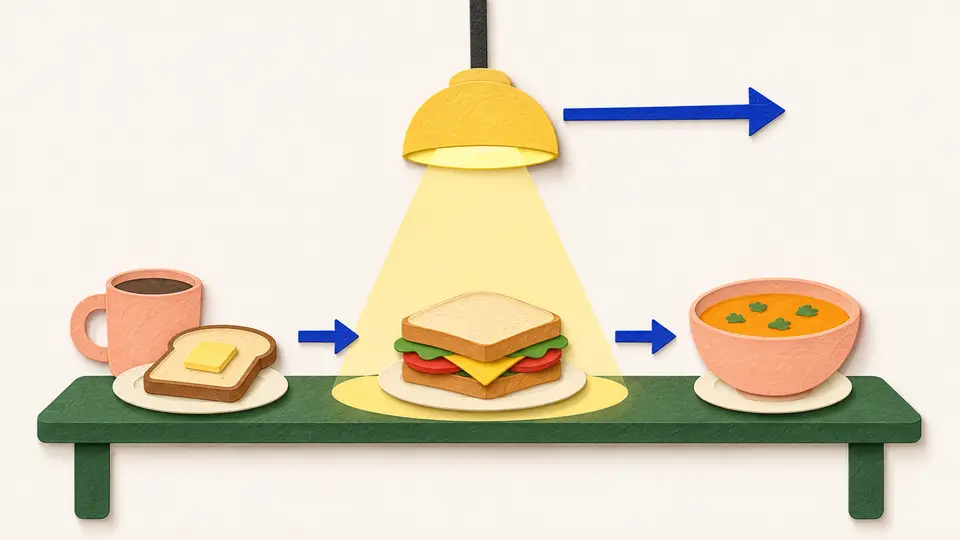
Say a dog is large next to a cat and small next to a horse. The dog is large and not large at once. Plato thought every visible thing falls short like this, and it keeps changing besides. A Form never does. Beauty itself is perfectly beautiful and never stops being so.
Try to recallWhy did Plato think you can't learn the Form of equality just by looking at equal things?
Equal things, like two pieces of wood, can look equal at one time and unequal at another, so they fall short of perfect equality. You can tell they fall short, so you already have an idea of equality that didn't come from them. Plato concluded that it comes from thought, which grasps the Form.
A Form is the one perfect, unchanging thing that many changing things share, like Beauty itself behind every beautiful face. You know Forms by thought, and Plato held they're more real than anything you see.
Lessons in this topic
Why Plato looked past beautiful things to beauty itself
Meet Socrates' pupil who wrote philosophy as conversations, and see how one stubborn question led him to the Forms.
Prisoners in a cave and the shadows they call real
Walk through Plato's most famous story step by step, and see what it says about knowledge, opinion and what education really does.
The Third Man and other attacks on the Forms
See how Plato let his own characters pull the Forms apart, why Aristotle said they explain nothing, and what scholars make of Plato's reply.
Do numbers exist? The modern Platonists
Learn why many mathematicians say they discover truths rather than invent them, the hardest objection to that view, and the rivals who deny numbers exist at all.
Three quick stories from this topic
Prime because it is
G. H. Hardy wrote that 317 is prime because it is, not because we think so
In his 1940 book A Mathematician's Apology, Hardy called proved theorems "simply our notes of our observations". He held that mathematical reality lies outside us, waiting to be discovered, a view he traced back to Plato.
Mathematical Platonism
The view says numbers exist outside space and time and don't depend on anyone's mind. So truths about them are found, not made.
The catch
Things outside space and time cause nothing. Critics ask how mathematicians could ever learn about them.
The prisoners who'd kill
In Plato's cave story, the prisoners would kill anyone who tried to lead them out
A freed prisoner climbs into the sunlight, then goes back to free the rest. His eyes now fail in the dark, so they decide the climb ruined him. They'd sooner kill a guide than follow one.
Shadows for reality
Chained since childhood, the prisoners have only ever seen shadows of carried figures. They take the shadows for all there is.
What it stands for
The climb out is the mind rising from the visible world to the Forms. For Plato, education is that turning around.
Forms of hair and mud
Plato's young Socrates doubted that hair, mud and dirt have Forms of their own
In the Parmenides, a 19-year-old Socrates is sure there are Forms of beauty and goodness. He's unsure about humans, fire and water. The old Parmenides tells him he'll stop looking down on lowly things once philosophy has a firmer hold on him.
Then the attack
The same dialogue goes on to pull the theory of Forms apart, including the endless regress Aristotle later named the Third Man.
Plato against Plato
Plato wrote these objections himself. Scholars still argue over whether he thought he could answer them.
Sources
- Plato, Wikipedia
- Platonic Academy, Wikipedia
- Plato, Stanford Encyclopedia of Philosophy
- Plato's Middle Period Metaphysics and Epistemology, Stanford Encyclopedia of Philosophy
- Phaedo, translated by Benjamin Jowett, Project Gutenberg
- A Mathematician's Apology (Cambridge University Press, 1940), G. H. Hardy, scan at the Internet Archive
- Allegory of the cave, Wikipedia
- The Republic, translated by Benjamin Jowett, Project Gutenberg
- Parmenides (dialogue), Wikipedia
- Parmenides, translated by Benjamin Jowett, Project Gutenberg