Arts & Culture · Film & photography
How editing changes a scene's meaning
The order and length of shots guide what viewers infer. See how a cut can change what a face means, hide itself, skip months or set two images against each other to make an argument.
What you will learn
- Explain how neighboring shots can suggest a relationship that neither shows alone
- Tell an editing cue apart from direct evidence of the relationship it suggests
- Explain how a match on action links separate shots into one continuous event
- Explain why filmmakers keep screen direction consistent
Lesson 1 of 4 · 4 min
How a cut changes what a face means
Around 1920, the Soviet filmmaker Lev Kuleshov took one shot of the film star Ivan Mosjoukine's expressionless face and cut it against a bowl of soup, a girl in a coffin and a woman on a divan. His colleague Vsevolod Pudovkin described the audience raving about the acting. They praised the pensive mood over the soup, the sorrow over the child and the lust for the woman. The face was the same shot each time.
No copy survives, and accounts of the experiment differ. But in a 2006 brain-imaging study, people rated identical faces differently depending on the pleasant or upsetting image shown first.
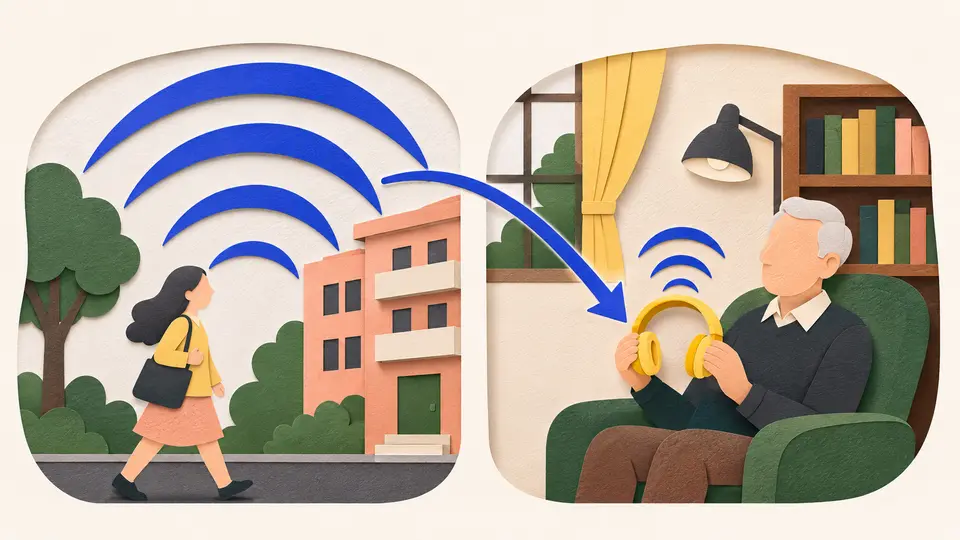
Say a film shows a person looking offscreen, then a cake on a table, then the person smiling. You'd infer that the person sees the cake and likes it. Yet no shot shows both. The edit invites you to connect them.
Now swap the cake for a broken window and leave the person's shots untouched. The smile may look like satisfaction at the damage. The actor's expression hasn't changed. The image beside it has changed what it can mean.
An eyeline match is the everyday version. One shot shows someone looking off in some direction, and the next shows what they seem to see. The direction of the gaze places the second image, so two shots read as one space. A filmmaker can also hold back the second shot, so you don't yet know what caught the character's eye.
The edit is only a cue. It can't prove the shots were filmed together, or that what you infer really happened.
In Dario Argento's 1996 film The Stendhal Syndrome, Anna stands in Florence's Uffizi Gallery gazing at a painting, The Fall of Icarus. Argento filmed in the real Uffizi, but the painting isn't in its collection. Yale's film-analysis guide says what you see is probably a reproduction shot in a studio.
Fiction does this all the time. In news or documentary footage, ask what the images directly show and what their order encourages you to fill in.
Try to recallWhy doesn't a film cut from a person looking to an object prove, by itself, that the person actually saw that object during filming?
The two shots may have been filmed separately. Putting them together creates an eyeline relationship for the viewer, but it doesn't independently establish how the filming actually happened.
So at every cut, part of what you see is your own inference. Mosjoukine's face never changed. The soup and the coffin did the work.
Lessons in this topic
How a cut changes what a face means
Put one shot next to another and viewers connect them, even when neither shot shows the connection. See the experiment that made this famous, and why a cut is a cue and never proof.
How films hide their cuts
Continuity editing matches movement and screen direction so that separate shots feel like one event. See how a match on action and the 180-degree rule do it, and how a film can cheat.
How editing skips, splits and stretches time
A cut can drop months, jump between two places or refuse to come at all. See how leaving time out differs from crosscutting, and why fast cutting isn't the only way to build tension.
When the cut wants to be seen
Jump cuts and graphic matches are meant to be noticed, and montage can build an idea out of shots that have nothing to do with each other.
Three quick stories from this topic
The hidden cuts in Hitchcock's Rope
Hitchcock hid cuts in his 1948 film Rope behind the back of a man's jacket
He wanted the film to play like one continuous take, but a camera held only about 10 minutes of film. So a take ends by moving in on a jacket or a piece of furniture until it fills the screen, and the next starts from the same spot.
What a long take does
A long take runs for an unusually long time before the next cut. Holding a shot keeps viewers waiting, which can build tension without any fast cutting.
Half hidden, half shown
The trick masks about half of Rope's cuts. At each reel change for the projector, Hitchcock cut openly to a new camera setup.
The Godfather's baptism sequence
The Godfather intercuts Michael becoming a baby's godfather with the murders he ordered
At his nephew's baptism, the film keeps cutting away to his hitmen killing the heads of rival families. Yale's film guide reads the cutting as a statement about Michael. He wins acceptance in both his families, one through religion and the other through violence.
Why it isn't about timing
Yale notes it's highly unlikely that every rival could be caught off guard at exactly the same time. The alternation suggests Michael's dual nature and his commitment to both of his families, as he gains acceptance in each on its own terms, through religion and through violence.
An echo of Soviet montage
Yale places the sequence among the worldwide echoes of Soviet montage, which puts images side by side to create ideas that neither shot holds alone. Crosscutting can mark time. Here it makes an argument, and the meaning belongs to the relationship between the two lines of action.
The Kuleshov effect
Soviet filmmakers said audiences saw grief and lust in one unchanged shot of a face
Around 1920 Lev Kuleshov cut a film star's blank face against a bowl of soup, a girl in a coffin and a woman on a divan. Audiences raved about the acting, his colleague Pudovkin wrote. No copy survives, but a 2006 brain-imaging study found a similar effect.
Two shots make a third meaning
Viewers get more from two shots in a row than from either one alone. They read their own reaction to the second image into the actor's face.
A cue, not proof
The cut suggests the actor was looking at the soup or the coffin. Kuleshov's film was assembled from old footage that had never been shot together.
Sources
- Part 4: Editing, Yale University Film Analysis
- Kuleshov effect, Wikimedia Foundation
- The Kuleshov Effect: the influence of contextual framing on emotional attributions, Social Cognitive and Affective Neuroscience, via PubMed Central
- Rope (film), Wikimedia Foundation
- Long take, Wikimedia Foundation
- The Godfather, Wikimedia Foundation