Body & Health · Movement & fitness
Bones and the skeleton
Bone is living tissue that rebuilds itself all your life. Learn what your skeleton does besides hold you up, how bones grow and heal, and why they thin with age.
What you will learn
- List the main jobs of the skeleton beyond support
- Explain how bones keep the calcium level in the blood steady
- Describe how bone cells remove and rebuild bone in remodeling
- Explain why load strengthens bone and lack of load weakens it
Lesson 1 of 4 · 4 min
What your skeleton does besides hold you up
A newborn has around 270 bones. An adult has around 206, because some bones fuse together as you grow. Whatever the count, the skeleton is doing far more than standing you up.
Support is the obvious job. Without bones and cartilage, you'd be a limp mass of organs, muscle and skin. Movement is the second. Muscles pull on bones, which act as levers, while joints act as the pivots.
Protection is the third. The skull surrounds the brain, the ribs guard the heart and lungs, and the spine encloses the spinal cord.
The other two jobs happen inside. Most bones are filled with marrow, a soft tissue that comes in two kinds. Red marrow makes your blood. Red cells, white cells and platelets all come from it.
Yellow marrow is mostly fat, an energy store. And the hard bone itself is a mineral store, holding calcium and phosphorus that can be released into the blood.
Calcium is the most abundant mineral in your body. You need a steady level of it in your blood for your heartbeat, blood clotting, muscle contraction and nerve signals. Too little and the heart can skip beats.
Your body can't make calcium. It can only come from food. So the skeleton works like a calcium bank. When blood calcium runs high, the body deposits it in bone. When it drops, a hormone from the parathyroid glands, called parathyroid hormone, sets bone-dissolving cells to work, releasing calcium into the blood.
That's why a poor diet can thin your bones before you notice anything else. The body protects the blood level first and draws on the bank to do it.
Try to recallHow does the skeleton keep the calcium level in the blood steady?
Bone stores calcium. When blood calcium is high, the body deposits calcium in bone. When it falls, parathyroid hormone makes cells break down bone and release calcium into the blood.
Your skeleton supports you, moves you, protects your organs, makes your blood and stores fat and minerals. It also acts as a calcium bank that keeps your blood level steady, drawing on bone when food falls short.
Lessons in this topic
What your skeleton does besides hold you up
See the five jobs your bones do, from protecting your brain to making blood, and how they act as a bank that keeps your blood calcium steady.
Your bones are alive and rebuilding all the time
Meet the cells that dissolve and rebuild bone every day, and see why loading a bone makes it stronger while rest makes it weaker.
How bones grow longer and knit back together
See how growth plates lengthen bones until early adulthood, and follow a broken bone through the stages of healing.
Why bones thin with age, and how it's measured
Learn why bone mass peaks around 30, why women lose it faster after menopause, and what a bone density score means.
Three quick stories from this topic
Born with more bones
A newborn has around 270 bones, but an adult has only about 206
Nothing goes missing. Some of a baby's bones start as separate pieces that fuse together during growth, so the count drops as the skeleton matures.
Why babies need it
At birth the joints between the skull bones haven't closed, so the head can change shape on its way through the birth canal.
Bone keeps renewing
Almost the whole skeleton is replaced in the first year of life, and adults renew roughly a tenth of it every year.
Bones in orbit
In orbit, astronauts' weight-bearing bones lose 1% to 1.5% of their density each month
NASA reports that average loss in spaceflight. Bone builds itself to match the load it carries, and without gravity the legs, hips and spine carry almost none, so the body removes bone faster than it rebuilds it.
Same rule on Earth
A bone in a plaster cast loses minerals too, while the matching bone on the other side keeps them.
Use builds bone
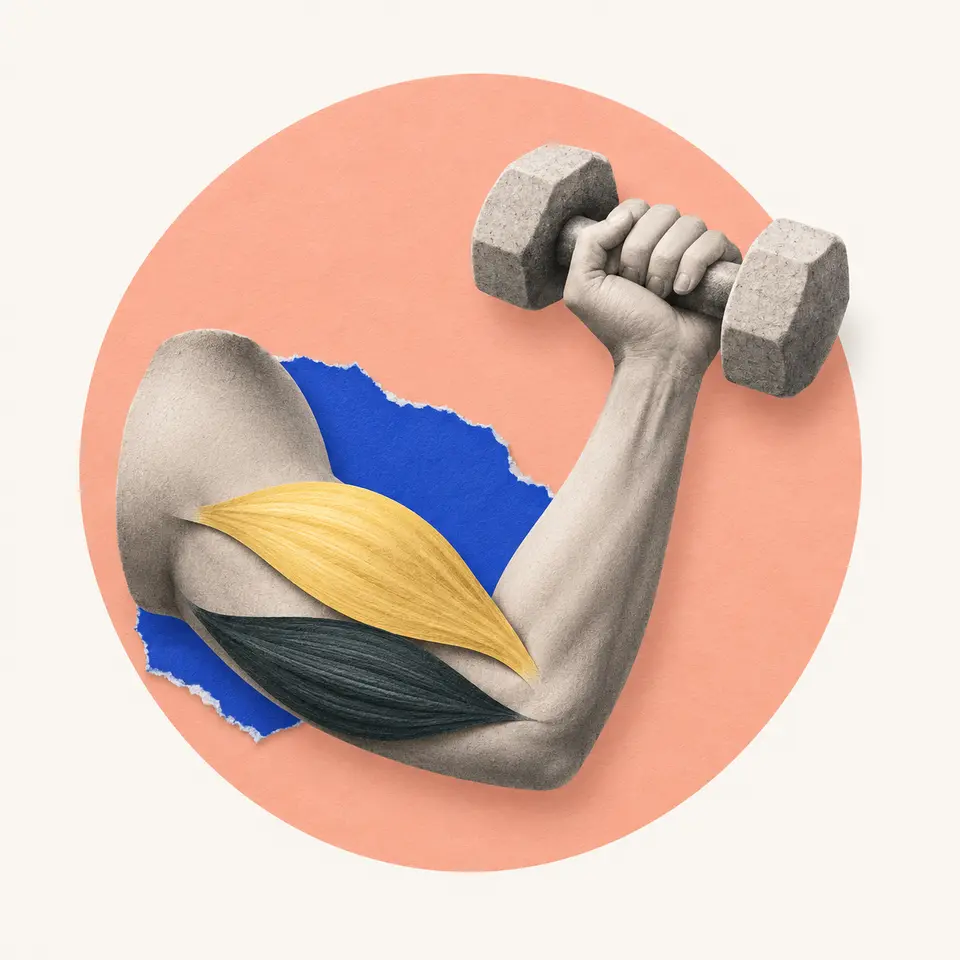
The racquet arm of a tennis player grows stronger bones than the other arm.
One in three women
Worldwide, 1 in 3 women over 50 will break a bone because of osteoporosis
The International Osteoporosis Foundation puts the figure for men at 1 in 5. Women lose bone faster after menopause, when the estrogen that supports bone building falls away.
No warning signs
Osteoporosis usually causes no symptoms until a bone breaks, most often at the hip, spine or wrist.
How it's caught
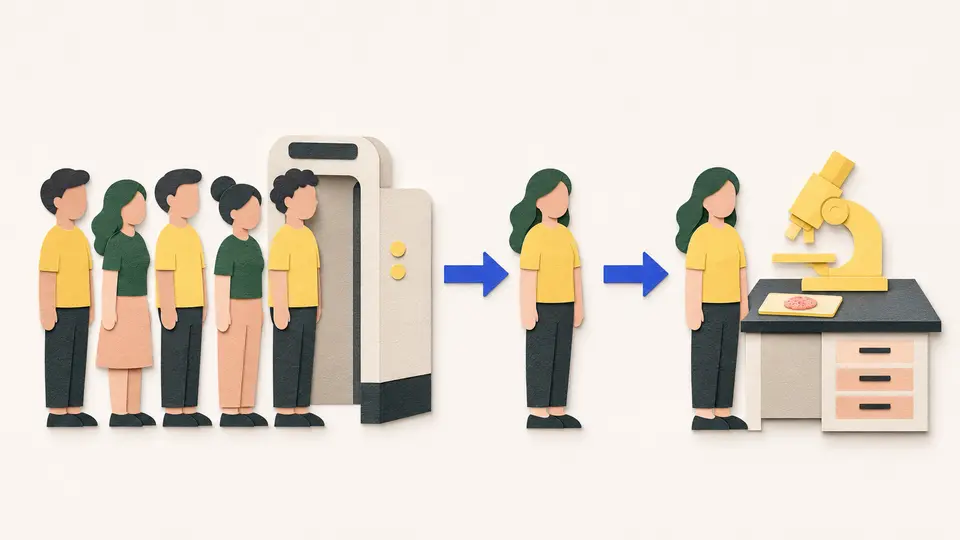
A DXA scan gives a T-score, and -2.5 or lower may mean osteoporosis.
Sources
- Human skeleton, Wikipedia
- Anatomy and Physiology 2e, 6.1 The functions of the skeletal system, OpenStax, Rice University
- Anatomy and Physiology 2e, 6.7 Calcium homeostasis, OpenStax, Rice University
- Anatomy and Physiology 2e, 6.4 Bone formation and development, OpenStax, Rice University
- Bone remodeling, Wikipedia
- The human body in space, NASA
- Wolff's law, Wikipedia
- Epidemiology of osteoporosis and fragility fractures, International Osteoporosis Foundation
- Anatomy and Physiology 2e, 6.6 Exercise, nutrition, hormones, and bone tissue, OpenStax, Rice University