Economics & Money · Work & wages
Why unemployment exists
Vacancies and job seekers exist at the same time, yet some people stay out of work. Separate the unemployment of searching, of mismatched skills and of recessions, and see what each one calls for.

What you will learn
- Explain why searching for a match leaves some people unemployed even in a booming economy
- Explain how paying more than workers' minimum keeps some people involuntarily unemployed
- Explain structural unemployment as a mismatch of skills or place that is slow to fix
- Explain cyclical unemployment as a shortfall of spending and say what policies target it
Lesson 1 of 4 · 4 min
Why open jobs and job seekers sit side by side
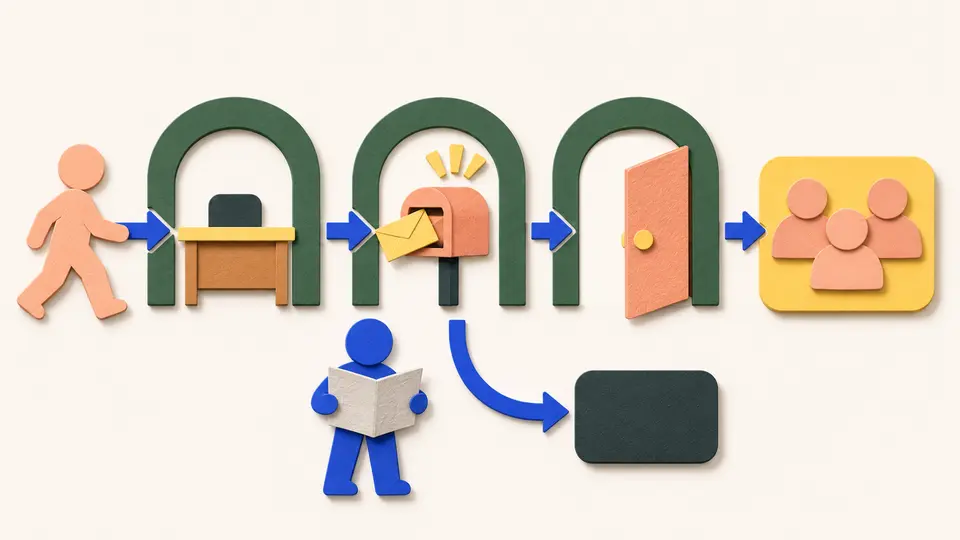
Say a hospital in one city needs a nurse, and a trained nurse is looking for work in another. Both exist, yet they haven't found each other. Real labor markets are full of such pairs, because jobs and workers differ in skills, place, hours and pay.
Finding the right match takes time and effort, so some people are always between jobs. Economists call this frictional unemployment, or search unemployment. Graduates and people returning to work go through it too. Even a booming economy has some, so full employment never means zero unemployment.
Peter Diamond, Dale Mortensen and Christopher Pissarides won the 2010 economics Nobel for modeling this search and matching. In their model, how fast matches happen depends on how many seekers and vacancies there are. Unemployment benefits, job agencies and hiring costs all change how long searches last.
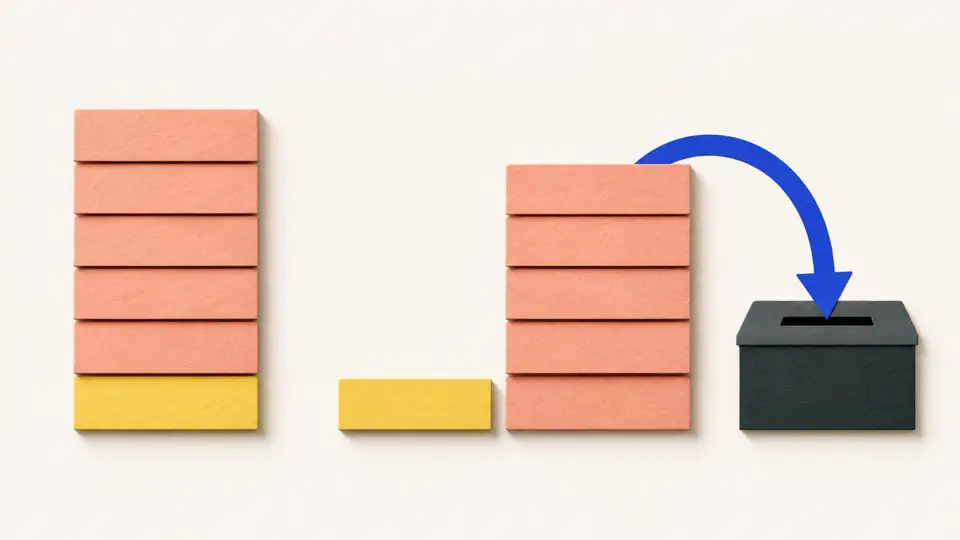
A second cause works even when firms are hiring. An employer can't write effort into a contract or watch everyone all day. So firms often pay more than the minimum that would get people to show up. Then a worker has something to lose if caught slacking and fired.
That means more people want these jobs at the going wage than there are jobs. The wage doesn't fall to close the gap, because a cut would weaken the reason to work hard. Economists call this an efficiency wage, and it leaves some people involuntarily unemployed. Critics reply that pay rising with seniority could do the same job.
Henry Ford gave a famous case in January 1914. After staff turnover hit 370% in 1913, he raised pay for qualifying workers from about $2.34 to $5 a day. Economists Daniel Raff and Lawrence Summers found that productivity and profits rose and long queues formed for Ford jobs.
Try to recallWhy might a firm pay more than it needs to fill its jobs, and what does that do to unemployment?
Effort can't be written into a contract, so a firm pays above the minimum to give workers something to lose if they're fired for slacking. At that wage more people want the jobs than there are jobs. The wage doesn't fall to clear the gap, so some people stay involuntarily unemployed.
Some unemployment exists even in good times. You can now explain it as the time it takes to search for a match and as the gap that opens when firms pay above what it takes to fill jobs.
Lessons in this topic
Why open jobs and job seekers sit side by side
Matching people to jobs takes time, and firms often pay more than they must. Both leave some people out of work even when business is good.
Mismatched skills and missing spending
Some jobs vanish for good, and in a recession whole economies stop buying. Tell structural from cyclical unemployment and see what each needs.
The curve that shows how well jobs get filled
Plot vacancies against unemployment and you get the Beveridge curve. Read it to tell a slump from a labor market that has stopped matching people well.
Why long spells without work leave scars
The longer someone is out of work, the harder rehiring gets, and losses last for years. See the evidence and how countries cushion the fall.
Three quick stories from this topic
The curve Beveridge never drew
William Beveridge never drew the famous curve that carries his name
Beveridge argued in 1944 that unemployment moved with the demand for workers. Christopher Dow and Leslie Dicks-Mireaux first plotted British vacancies against unemployment in 1958, and the name most likely came in the 1980s.
What the curve shows
When vacancies fall, unemployment rises, so the points trace a downward curve through the business cycle.
A health check
If vacancies and unemployment rise together, matching has worsened. The 2010 Nobel laureates' model made the curve a standard diagnostic tool.
Ford's fire-hosed job seekers
When Ford doubled pay in 1914, police turned a fire hose on 12,000 job seekers
Ford raised pay for qualifying workers from about $2.34 to $5 a day. A crowd formed overnight in a blizzard and was hosed down in freezing weather. The job hunters dried off and came back.
Why pay more
In 1913 turnover at Ford hit 370%. The company hired 50,448 men to keep an average workforce of about 13,623.
Wages above the market
Economists Daniel Raff and Lawrence Summers read the crowds as evidence for efficiency wages, pay set above what it takes to fill jobs.
Marienthal's missing watches
In an Austrian village without work, 88 of 100 men had stopped wearing a watch
Sociologists studied Marienthal in 1931 and 1932, after its factory shut. Watching from a window, they timed the men's walks and saw almost two-thirds stop at least twice along the street.
A village out of work
About half the workers were unemployed, and three-quarters of families were hit by unemployment.
The weary community
The study's main finding was that long unemployment breeds apathy, so people stop using even the few chances left to them.
Sources
- The Prize in Economic Sciences 2010, popular information, The Nobel Prize
- Frictional unemployment, Wikipedia
- 1.6 Wage setting and unemployment, CORE Econ, The Economy 2.0: Macroeconomics
- Efficiency wage, Wikipedia
- Did Henry Ford Pay Efficiency Wages?, National Bureau of Economic Research
- Beveridge curve, Wikimedia Foundation
- Marienthal: The Sociography of an Unemployed Community, Routledge (Jahoda, Lazarsfeld and Zeisel, with an introduction by Christian Fleck)
- The Marienthal Study, Archives for the History of Sociology in Austria, University of Graz