Economics & Money · Work & wages
Who counts as unemployed
Three tests decide who counts as unemployed in the US, so the rate can drop when people give up looking, and any one month's change comes with a margin of error.
What you will learn
- Classify a person as employed, unemployed or outside the labor force using the survey's tests
- Explain why unemployment insurance claims can't measure total unemployment
- Calculate an unemployment rate and a labor force participation rate from survey counts
- Explain why the unemployment rate can fall when discouraged job seekers stop looking
Lesson 1 of 4 · 5 min
Jobless isn't the same as unemployed
Say two neighbors are both out of work. One mailed three job applications last week and could start tomorrow. The other has decided to take a year off. In the official US numbers, only the first is unemployed.
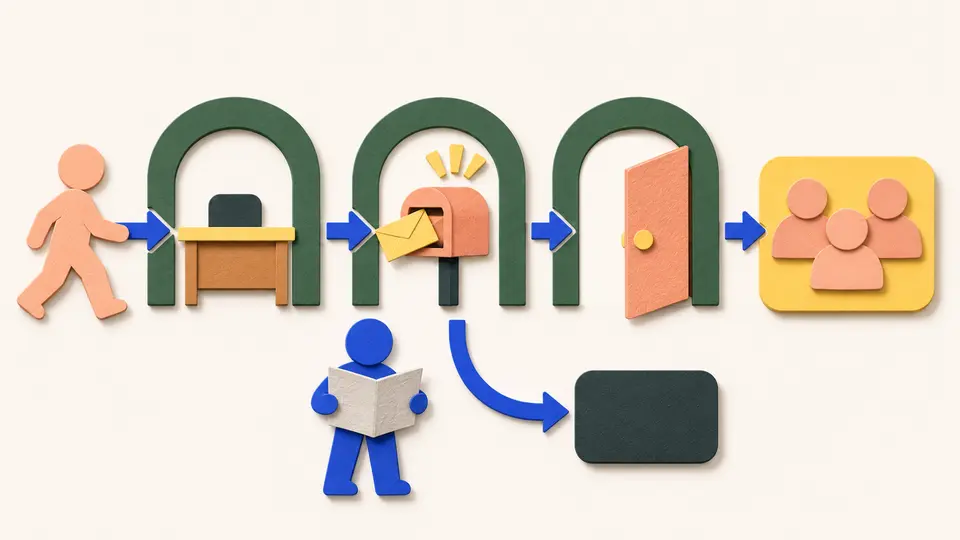
The count comes from a survey. Every month, Census Bureau interviewers ask about 60,000 households what each person aged 16 or over did during one reference week, usually the week that includes the 12th. Nobody is asked whether they're unemployed. The answers sort each person into one of three groups.
You're employed if you did any work at all for pay or profit that week, even a few hours. Someone who worked three days and then lost the job still counts as employed for that week. So does anyone with a job they were temporarily away from, or with 15 or more hours of unpaid work in a family business or farm.
You're unemployed only if you pass three tests at once. You had no job, you actively looked for work in the past four weeks, and you were available to start. Everyone else is counted as not in the labor force.
Active means something that could lead to an offer, such as contacting an employer or sending out resumes. Reading job listings doesn't count. The one exception is people on temporary layoff who expect to be recalled. They count as unemployed even if they aren't looking.
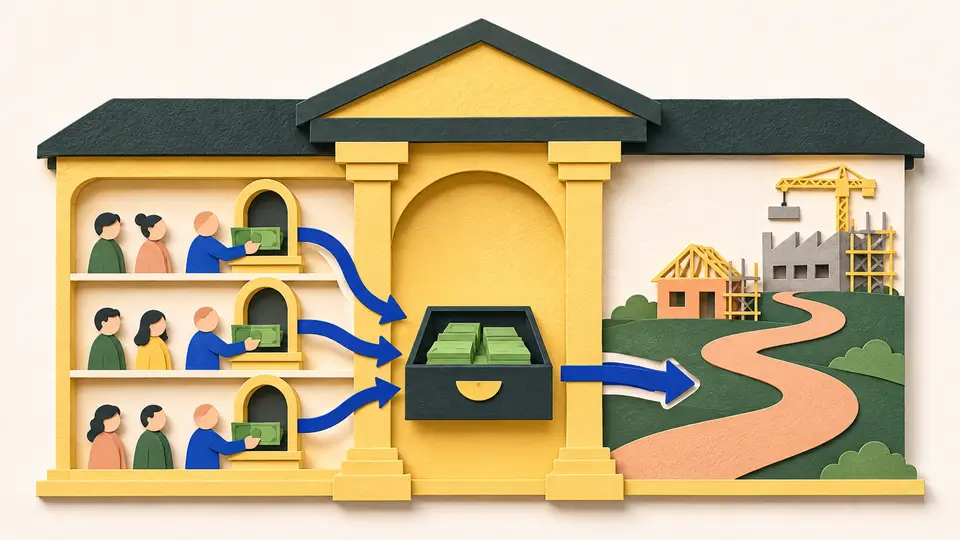
A common guess is that the government counts unemployment by adding up the people collecting unemployment insurance. It doesn't, because many jobless people never show up in those records.
Many aren't eligible. Self-employed workers and unpaid family workers aren't covered. People entering or returning to the workforce may not have earned benefit rights yet. Others never apply, and some are still jobless when their benefits run out.
The gap is large. When the Bureau of Labor Statistics looked across a decade, only about one-third of unemployed people, on average, had received regular benefits.
Weekly claims have a second blind spot. They count people who have just lost a job and applied. They don't subtract anyone who found work or stopped looking. A household survey picks up all of those moves, whether or not anyone qualifies for benefits.
Try to recallSomeone suggests measuring US unemployment by counting people who receive unemployment insurance. Give two reasons that count would miss many unemployed people.
Many unemployed people never appear in the benefit records. Some aren't eligible, such as the self-employed or people entering the workforce who haven't earned benefit rights. Others never apply, or are still jobless after their benefits run out. Only about one-third of the unemployed, on average, had received regular benefits. Weekly claims also count only people who just lost jobs, and don't subtract those who found work or stopped looking.
So 'unemployed' has a narrow official meaning. It's someone with no job who searched actively in the past four weeks and could start work. Stop searching and you drop out of the count, which is why the unemployment rate can fall without anyone finding a job.
Lessons in this topic
Jobless isn't the same as unemployed
Sort people the way the US labor survey does, and see why unemployment benefit claims miss so many jobless people.
The rate that falls when people give up
The unemployment rate divides the unemployed by the labor force, so it can fall when discouraged people stop looking even though nobody has found work.
Why a 50,000-job gain might be no gain at all
Use the survey's margin of error to judge whether a monthly change in jobs is real, and see what seasonal adjustment removes.
Why jobs sit open while people look for work
See why unfilled jobs and unemployed workers exist side by side, and read the curve that tracks them through the business cycle.
Three quick stories from this topic
A 50,000-job gain inside the margin
A reported gain of 50,000 US jobs in a month is too small to tell apart from zero
The payroll count comes from a sample, and its 90% margin on a monthly change is about 122,000 jobs either way. So the true figure behind a 50,000 headline could be anything from a loss of 72,000 to a gain of 172,000.
Where the range falls
With a margin of 122,000, a reported gain of 50,000 means the true change lies between a loss of 72,000 and a gain of 172,000, at 90% confidence.
What would be convincing
A reported gain of 250,000 puts every value in the range above zero. Estimates also get more precise when months are averaged into quarters or years.
The question the survey never asks
The US unemployment survey never asks anyone whether they're unemployed
Interviewers ask about 60,000 households what each person did in one week of the month. You count as unemployed only if you had no job, actively looked for work in the past four weeks and could start. Reading job ads doesn't count as looking.
Three tests at once
To be unemployed you must have no job, have actively looked for work in the past four weeks and be available to start. Just reading job ads doesn't count as looking.
One exception
People on temporary layoff who expect to be called back count as unemployed even if they aren't searching. Everyone else without a job has to meet the search test.
A falling rate with no new jobs
The US unemployment rate can fall without a single person finding a job
Only people who looked for work in the past four weeks count as unemployed. When job seekers give up, they leave the count and the labor force it's measured against. So the rate goes down while exactly the same number of people have jobs.
A town of 1,000 adults
Say 600 have jobs and 40 are searching. The rate is 40 out of 640, or 6.25%. If 10 of the searchers give up, it becomes 30 out of 630, about 4.8%, with the same 600 people working.
The broader measure
The Bureau of Labor Statistics also publishes U-6, which adds people who want work but have stopped looking and part-timers who want full-time jobs. In August 2026 it was 7.7%, against an official rate of 4.1%.
Sources
- How the Government Measures Unemployment, U.S. Bureau of Labor Statistics
- Employment Situation Technical Note - 2026 M08 Results, U.S. Bureau of Labor Statistics
- Table A-15. Alternative measures of labor underutilization - 2026 M08 Results, U.S. Bureau of Labor Statistics