History · Trade, migration & encounters
The Indian Ocean trading world
Follow seasonal winds, connected ports and merchant communities across the medieval Indian Ocean, and see how African coastal societies helped shape this world of exchange.
What you will learn
- Explain how seasonal winds influenced the timing of sailing voyages
- Distinguish a linked trading network from one merchant making every journey
- Work out what a seasonal wind pattern implies for the length of a voyage and where merchants stay
- Explain why Swahili coastal history can't be reduced to foreign arrivals
- Distinguish cultural exchange from a claim that one society simply copied another
- Match a kind of evidence to the question about a settlement it can actually answer
Lesson 1 of 4 · 5 min
Why Indian Ocean merchants waited for the wind
In the medieval Indian Ocean, Arab merchants carried travel guides that listed the best time to leave each port, down to the week and even the day. They could be that exact because of the wind.
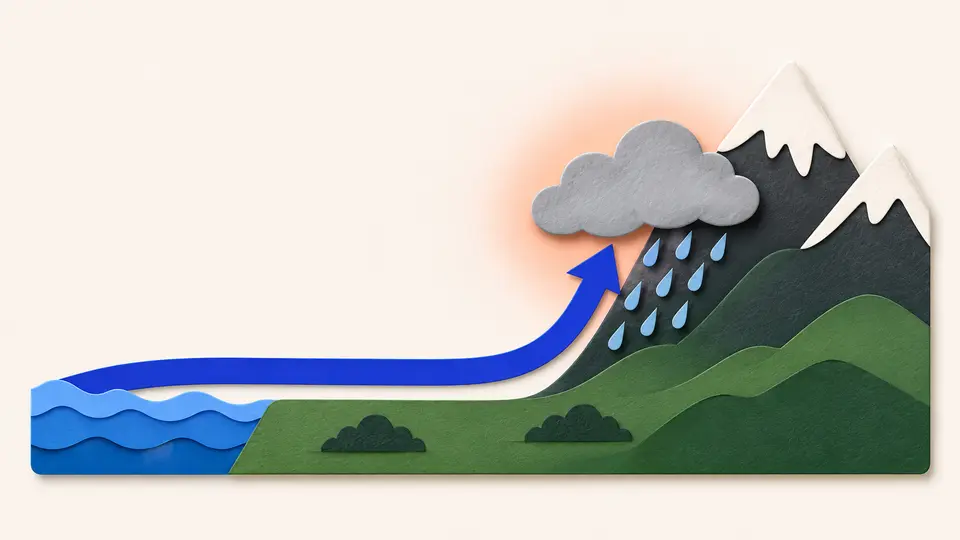
Across much of this ocean, monsoon winds change direction twice a year, at the same time every year. Sailors planned to travel one way in one season and back in another. So the calendar became part of the route.
In spring and summer the wind blows toward the northeast, toward India. In fall and winter it turns and blows toward the southwest. So a merchant who rode one wind out had to wait for the other to get home, however fast the cargo sold.
Knowing the pattern let merchants plan. It didn't guarantee an arrival date or remove the dangers of weather and navigation.
From 1200 to 1450 the Indian Ocean was the center of world trade. Linked ports ran from Mozambique in East Africa to Hormuz on the Persian Gulf, Calicut in India, Malacca in Southeast Asia and Quanzhou in China.
Chinese porcelain and silk, East African gold and ivory, and Southeast Asian spices were wanted far from where they were made. But few ships sailed from one end to the other. Most merchants worked shorter routes, and goods passed between traders from port to port, rising in price the farther they went.
Picture a porcelain jar changing hands at several ports before it reaches a distant buyer. The jar travels farther than any merchant who handled it. That's how a network works, with overlapping local and regional trips adding up to a much larger connection.
So to trace a trade route, follow the goods. They often went farther than any one ship or person.
Try to recallHow could an item of trade travel across the large Indian Ocean network when each merchant sailed only a shorter route?
It could be sold or handed on at ports along the way, with different traders carrying it along the next part of the journey.
Now follow what the reversal does to a round trip. The outward passage needs one wind and the return needs the opposite one. So the length of the trip depends on the turn of the season more than on the distance sailed.
A port two weeks away and a port six weeks away can mean the same thing for a merchant. You go now, and you come back when the wind comes back.
That one fact reshapes the business. A merchant who sails the whole way spends the waiting months far from home, living among strangers, storing goods and trading locally to make the time pay. A merchant who won't spend the year away has to hand the cargo on at a port along the way.
Both happened. Calicut, on India's west coast, sat halfway between the two ends of the ocean, and merchants from either side could ride the monsoon there and back within a single year. It became one of the busiest ports of all, full of people from distant regions.
The pattern has limits. It differs from one stretch of water to another, and the weather in any given year could refuse to cooperate. The wind explains the shape of the trade. It didn't dictate every voyage.
Two things connected the coasts of this ocean. A wind that reversed on schedule set when ships could sail. And handoffs between merchants carried goods farther than any one ship went, so a jar could cross from China to East Africa without anyone making the whole trip.
Lessons in this topic
Why Indian Ocean merchants waited for the wind
Monsoon winds reversed on schedule, so merchants sailed out in one season and home in another. See how that calendar, and a chain of handoffs, linked ports from East Africa to China.
Who built the towns of the Swahili coast?
East Africa's coastal towns were long credited to Arab settlers. See what language and archaeology show about the African societies that built them, and how to tell contact from origin.
How merchants trusted partners an ocean away
Selling a cargo in a port months away meant trusting someone you couldn't watch. See how shared language, community and courts made that possible, and who those protections left out.
Why China's treasure fleets didn't take over the trade
The Ming sent the largest fleets in the world across the Indian Ocean seven times and left its trade alone. Compare them with the Portuguese to see the difference between joining a network and trying to own it.
Three quick stories from this topic
Sailing guides timed to the day
Arab merchants' sailing guides named the best week, even the best day, to leave each port
They could be that exact because the Indian Ocean's monsoon winds change direction at the same time every year. A merchant sailed out on one wind, waited in port, and came home when it reversed.
A round trip in a year
Calicut, on India's west coast, sat halfway across the ocean. Merchants from either end could ride the monsoon there and back within a single year.
Why ports filled with strangers
Waiting for the wind meant months in a foreign port. Trading cities around the ocean became home to people from many distant regions.
Zheng He's treasure fleets
Zheng He's 1405 fleet carried up to 30,000 sailors, about half of London's population then
From 1405 to 1433 the Ming admiral led seven such fleets into the Indian Ocean. They went to display China's power and collect tribute from rulers, and merchants went on trading freely.
Power on display
The fleets showed China's might and gathered tribute, payment acknowledging the emperor's status, from rulers around the ocean. Some rulers sailed back to China to pay in person. The Ming had the naval means to dominate the trade and chose not to.
The ocean wasn't peaceful
The OER Project also notes that empires fought wars, pirates preyed on shipping and slavery was part of the system in every region. Its claim is only that no state in this period tried to assert dominance over the trade, a situation that Europeans arriving in search of a monopoly later challenged.
Where the name Swahili comes from
Swahili is an Arabic word for people of the coast, but the Swahili language is African
Kiswahili is a Bantu language that took in Arabic words through long contact across the sea. Many coastal East Africans began calling themselves Swahili only in the 19th and 20th centuries.
Borrowing isn't descent
Borrowed words record contact with other peoples. They don't change the family a language belongs to, and Kiswahili's family is Bantu.
An older story, corrected
The coast's towns were long credited to Arab immigrants. Scholars now see African societies whose inland and coastal sites match.
Sources
- Indian Ocean trade routes, OER Project
- The Swahili coast and Indian Ocean trade, Boston University African Studies Center